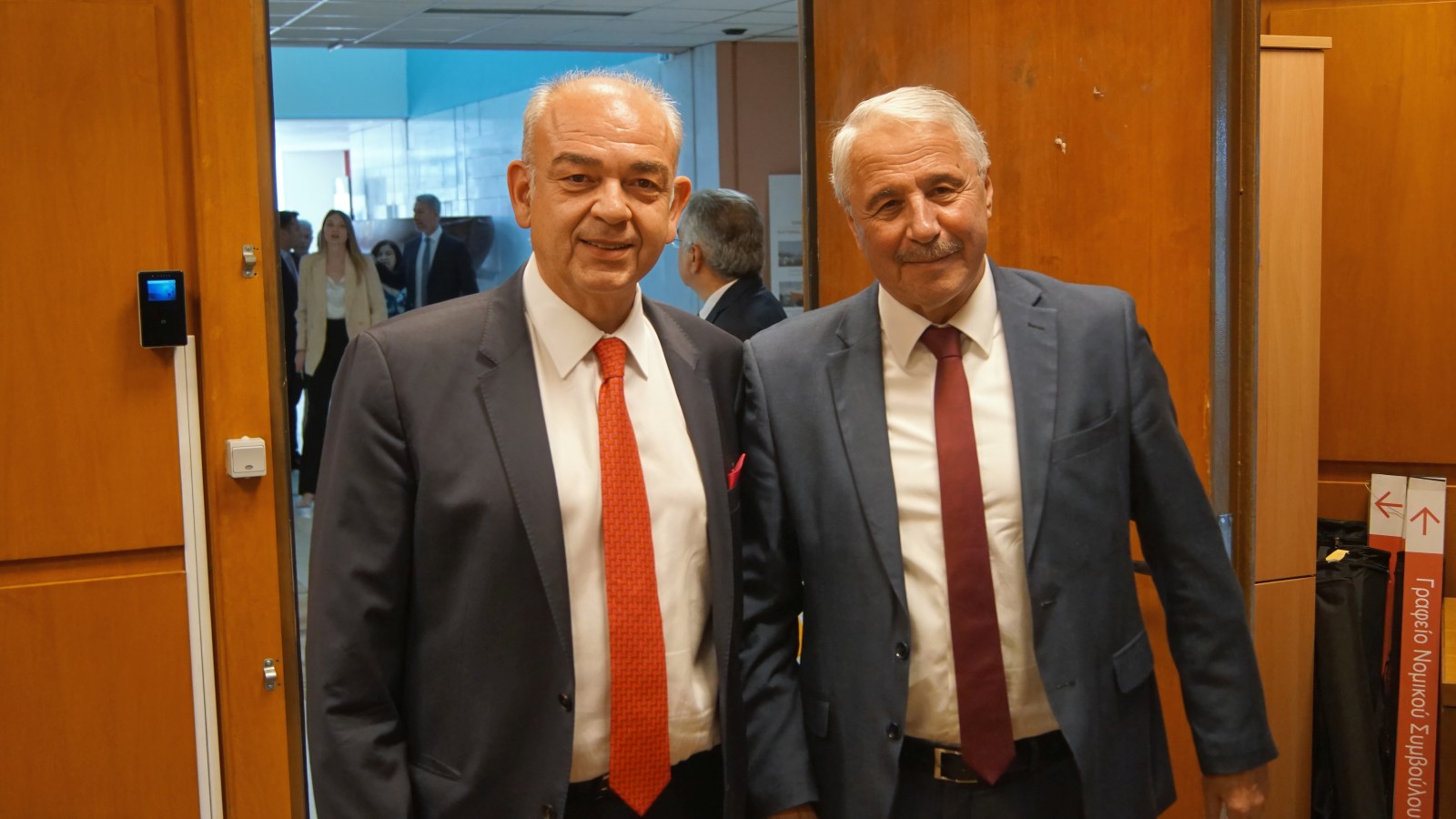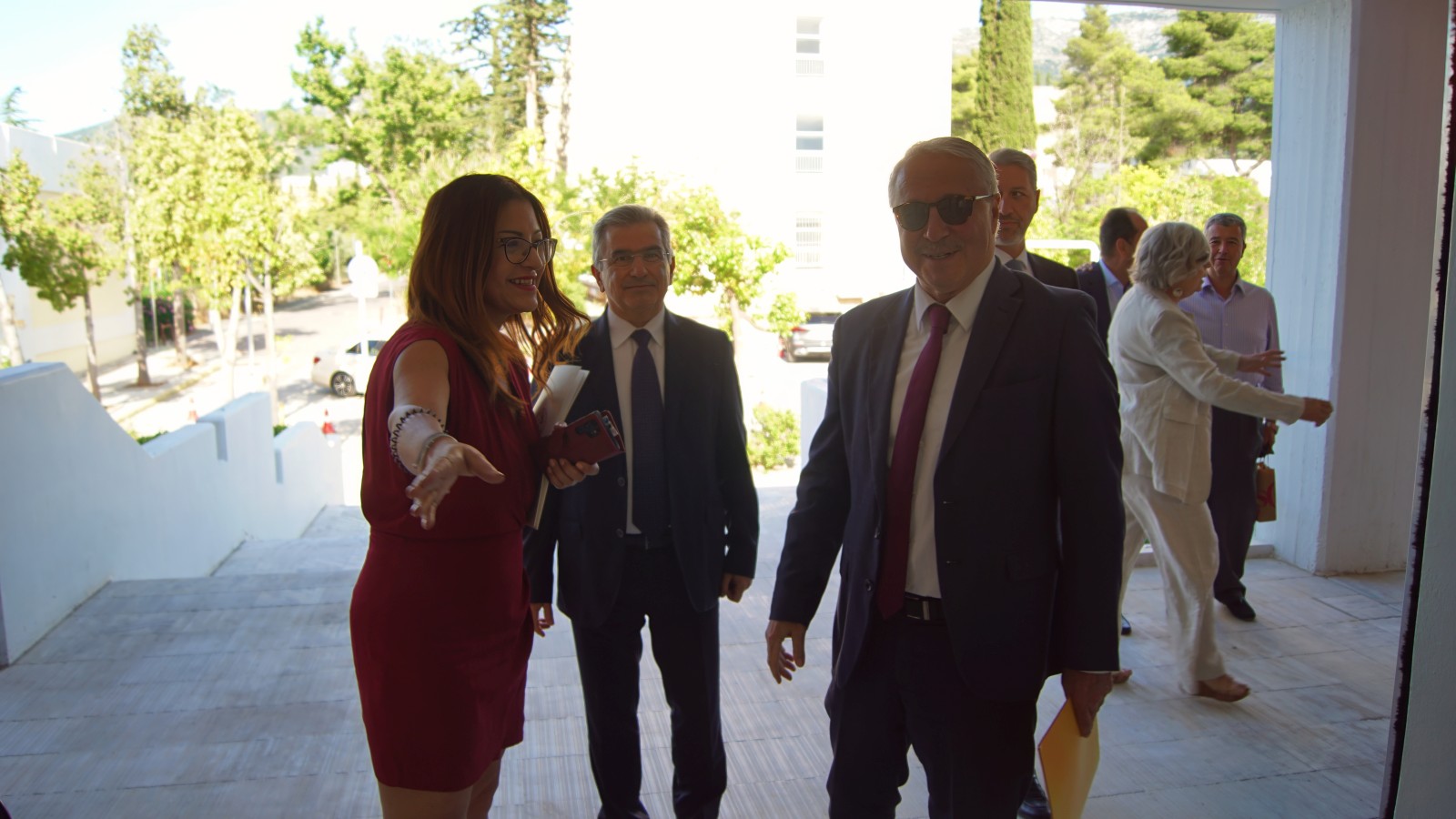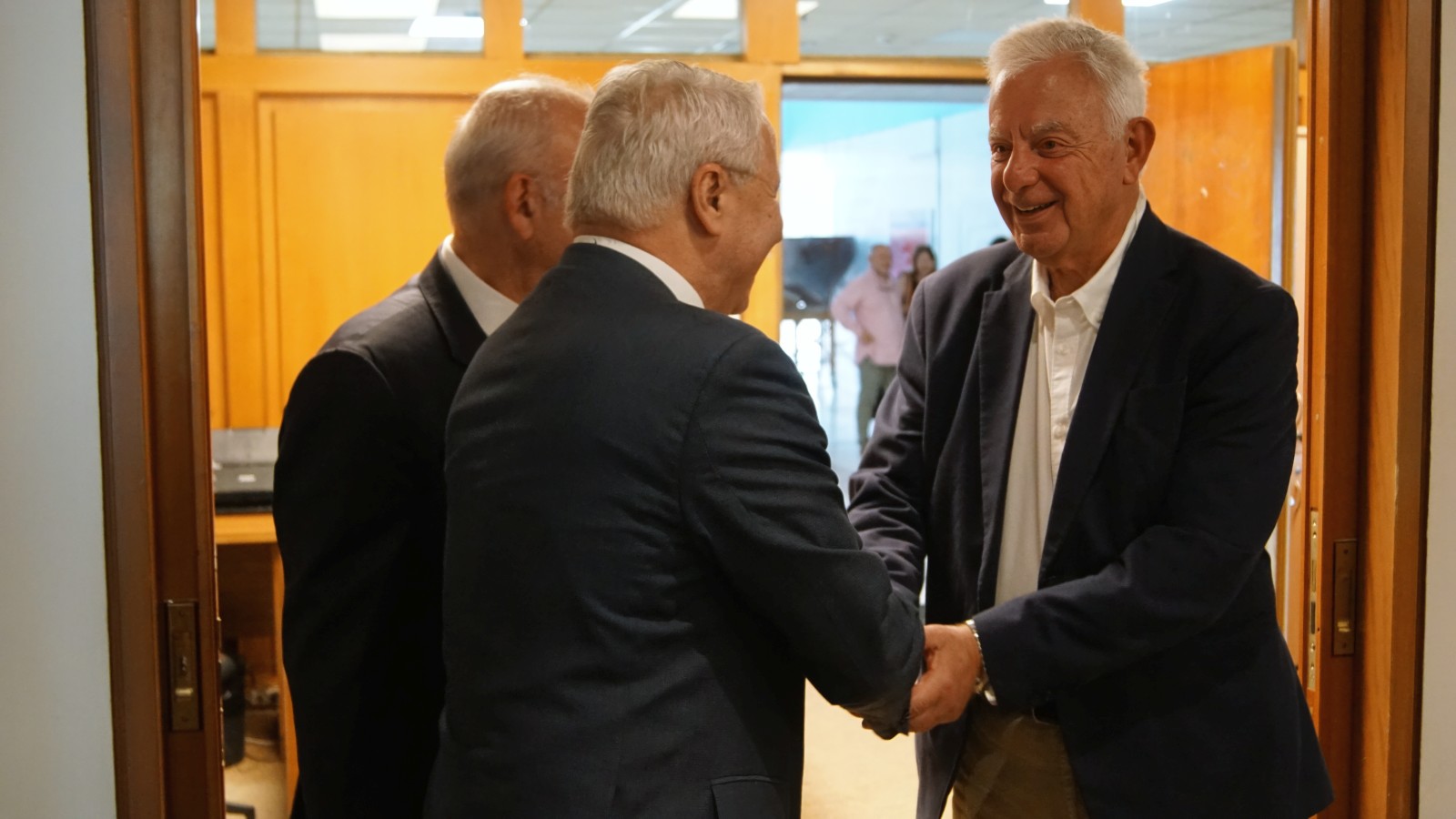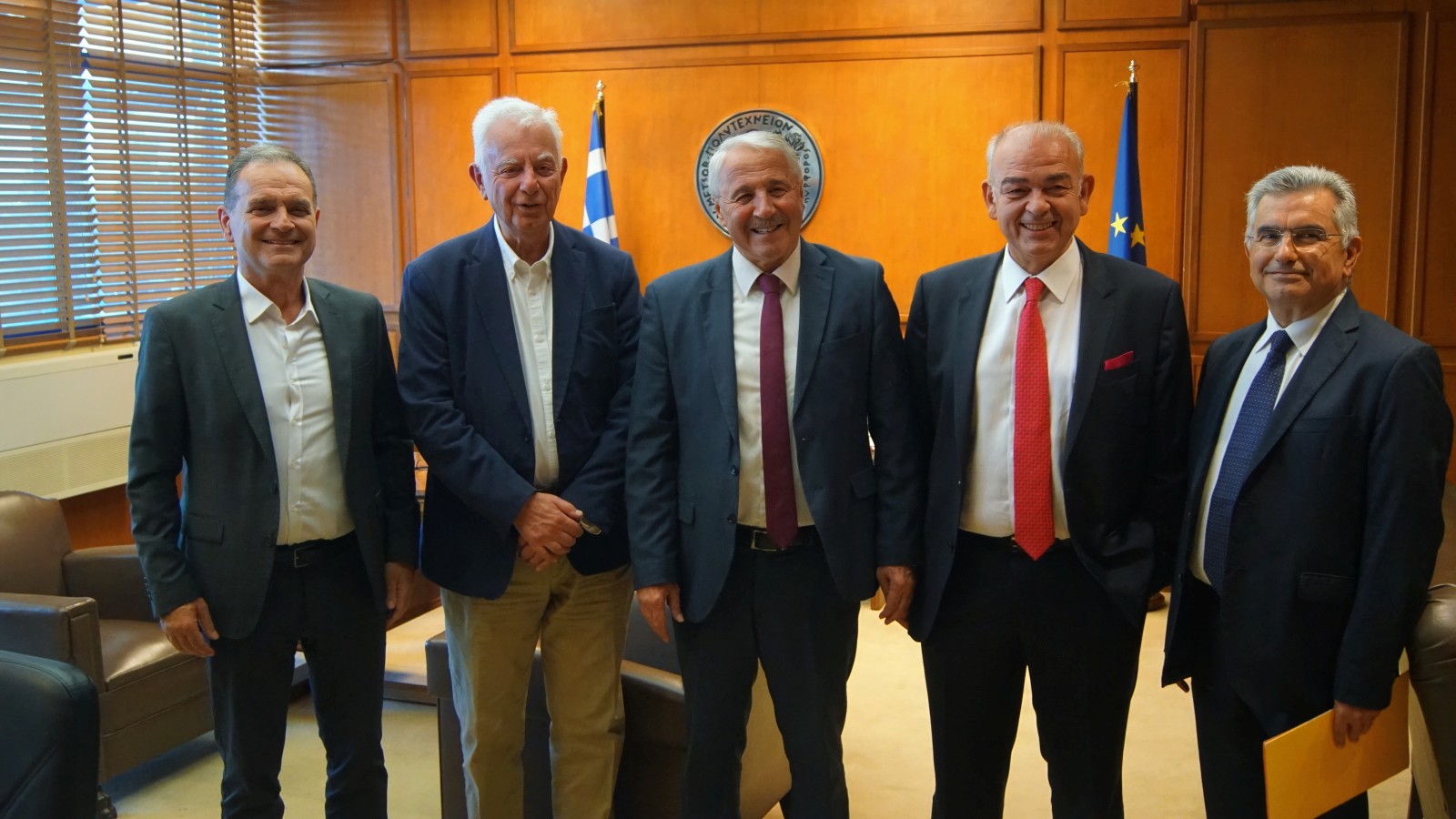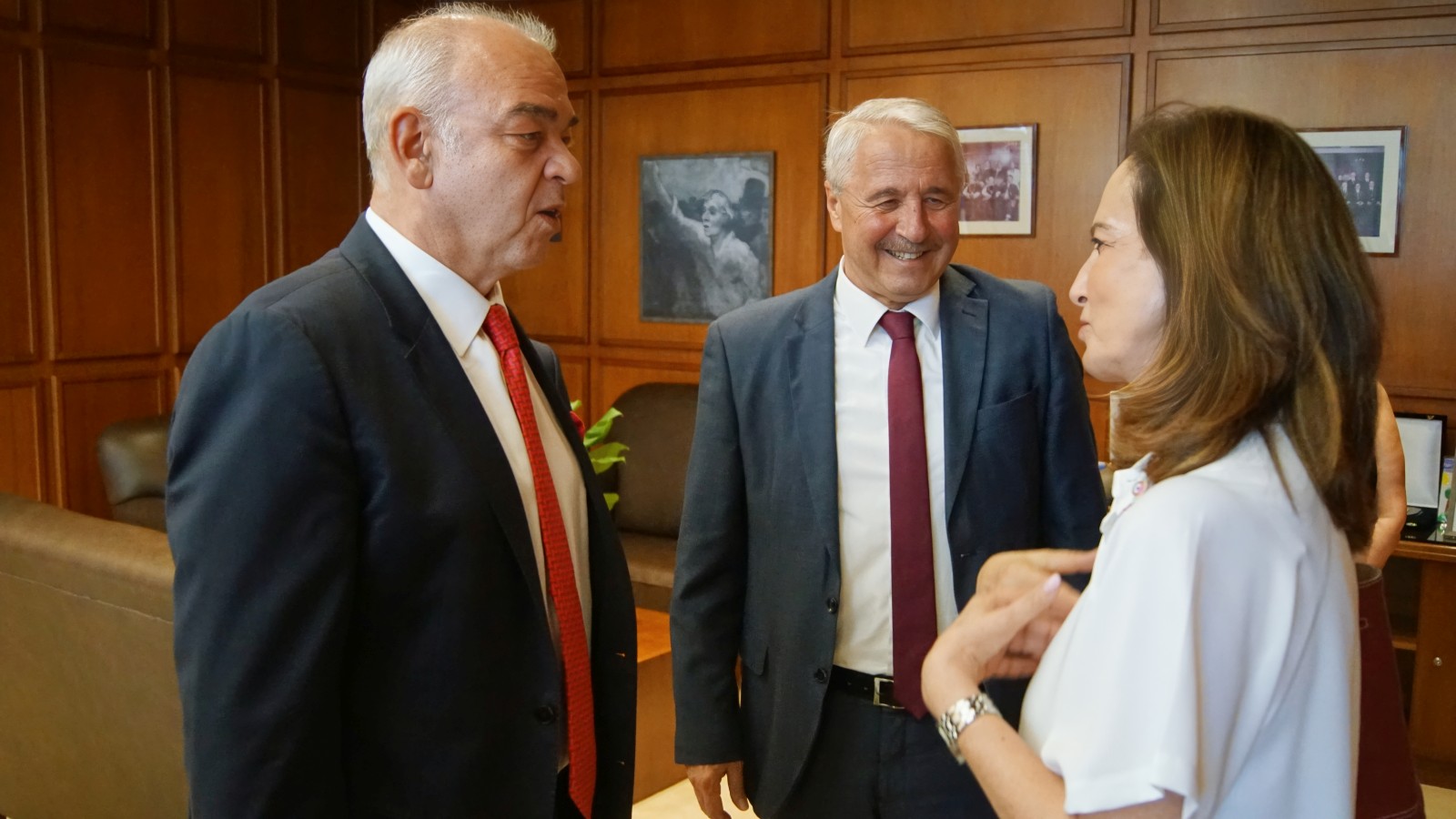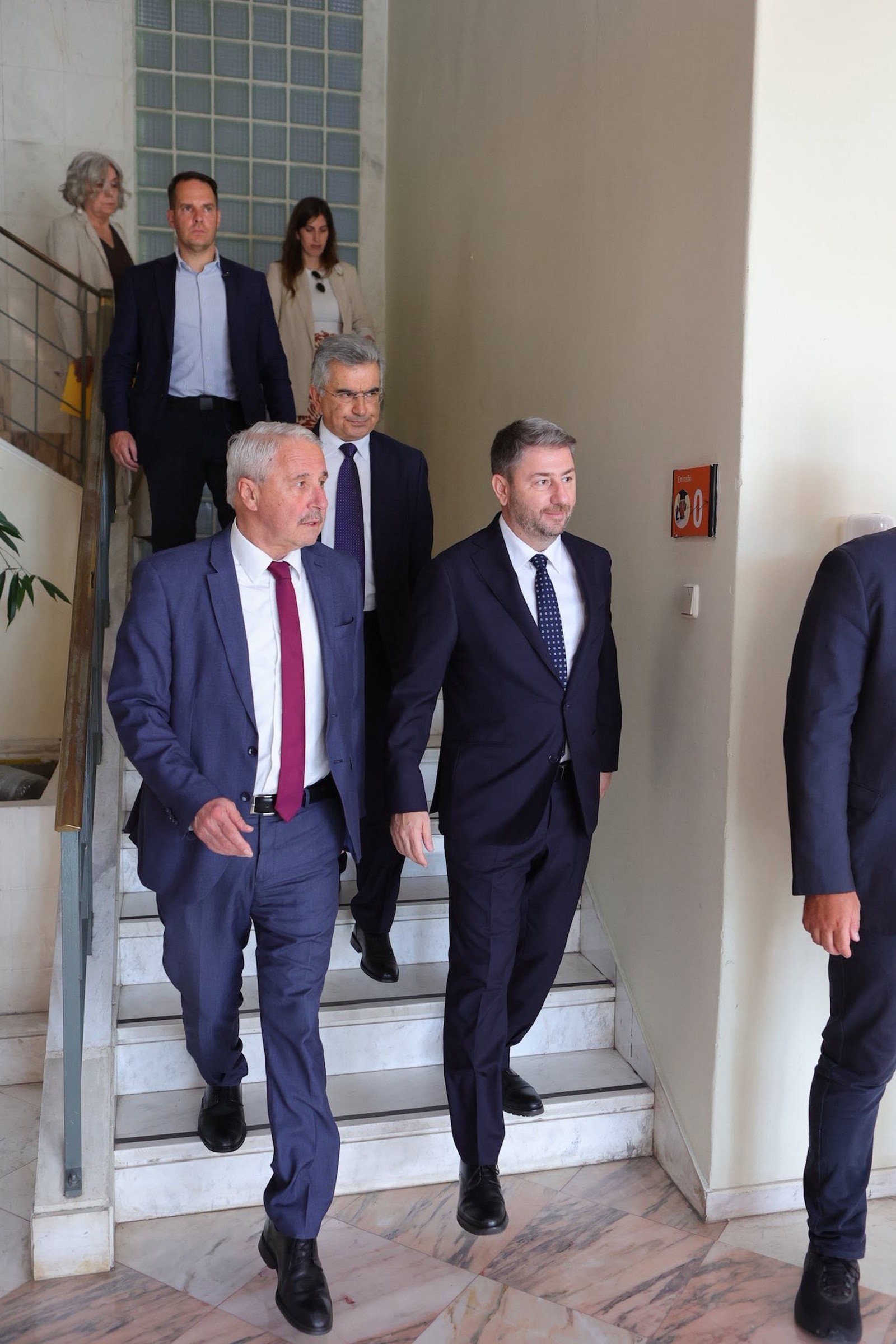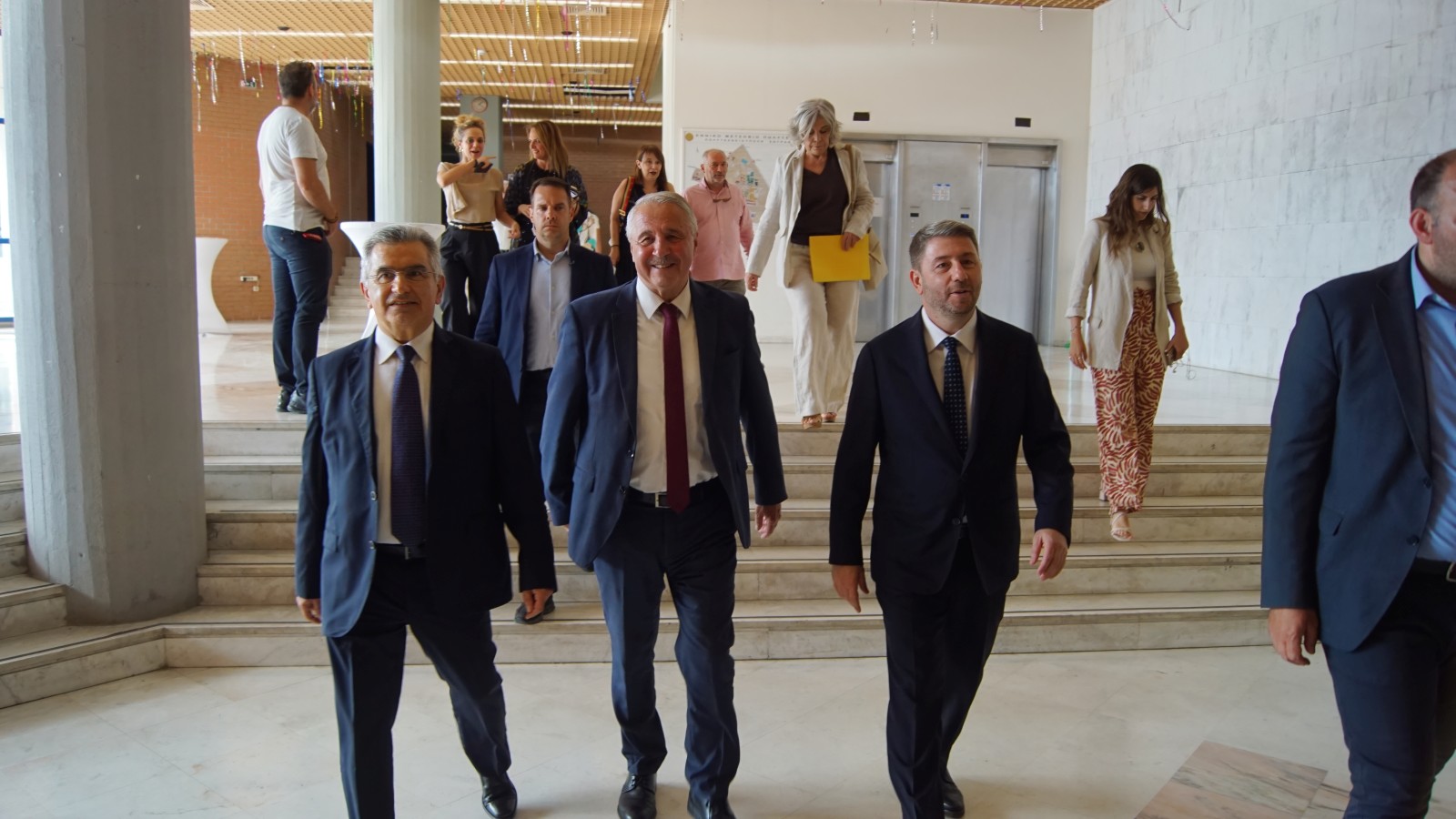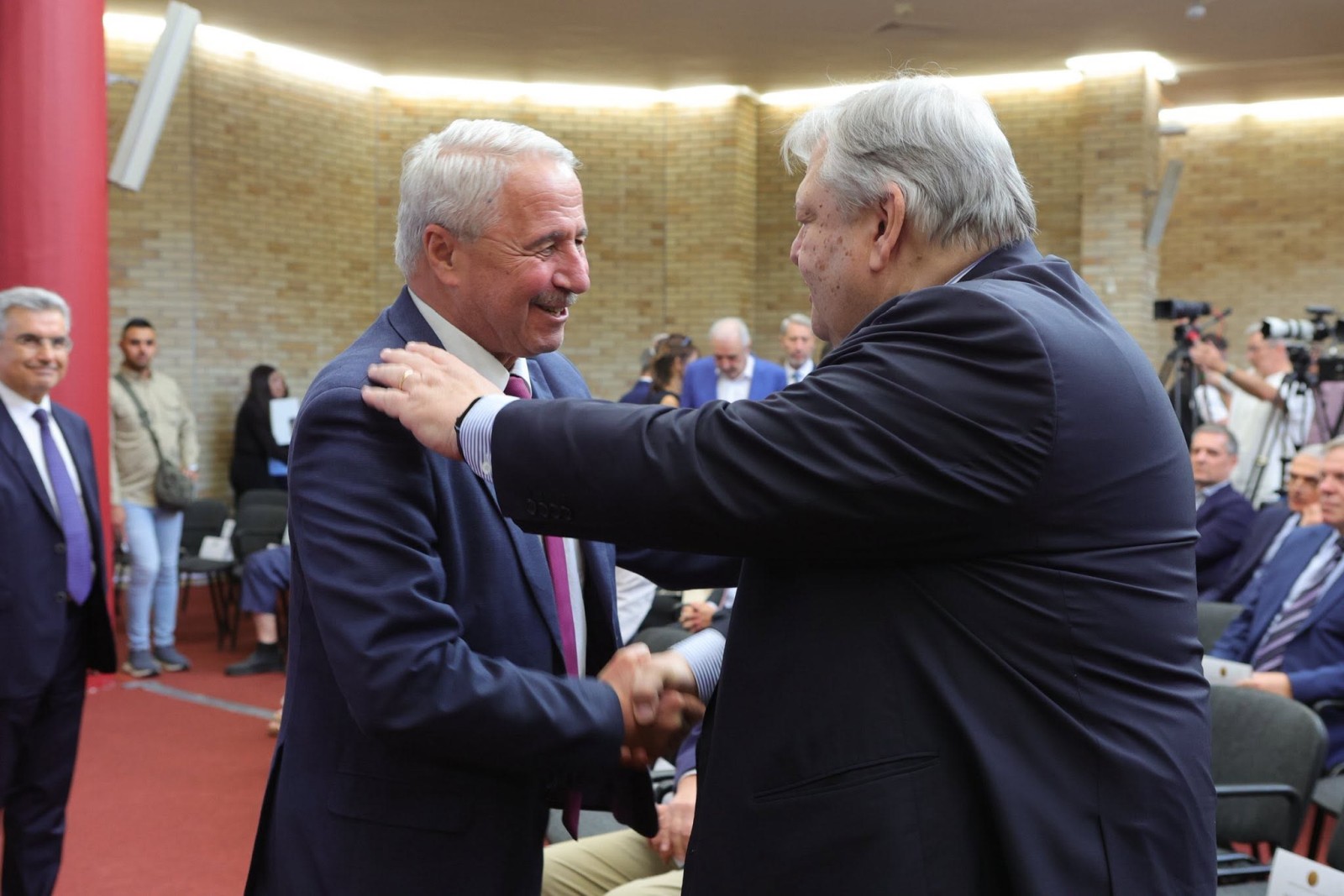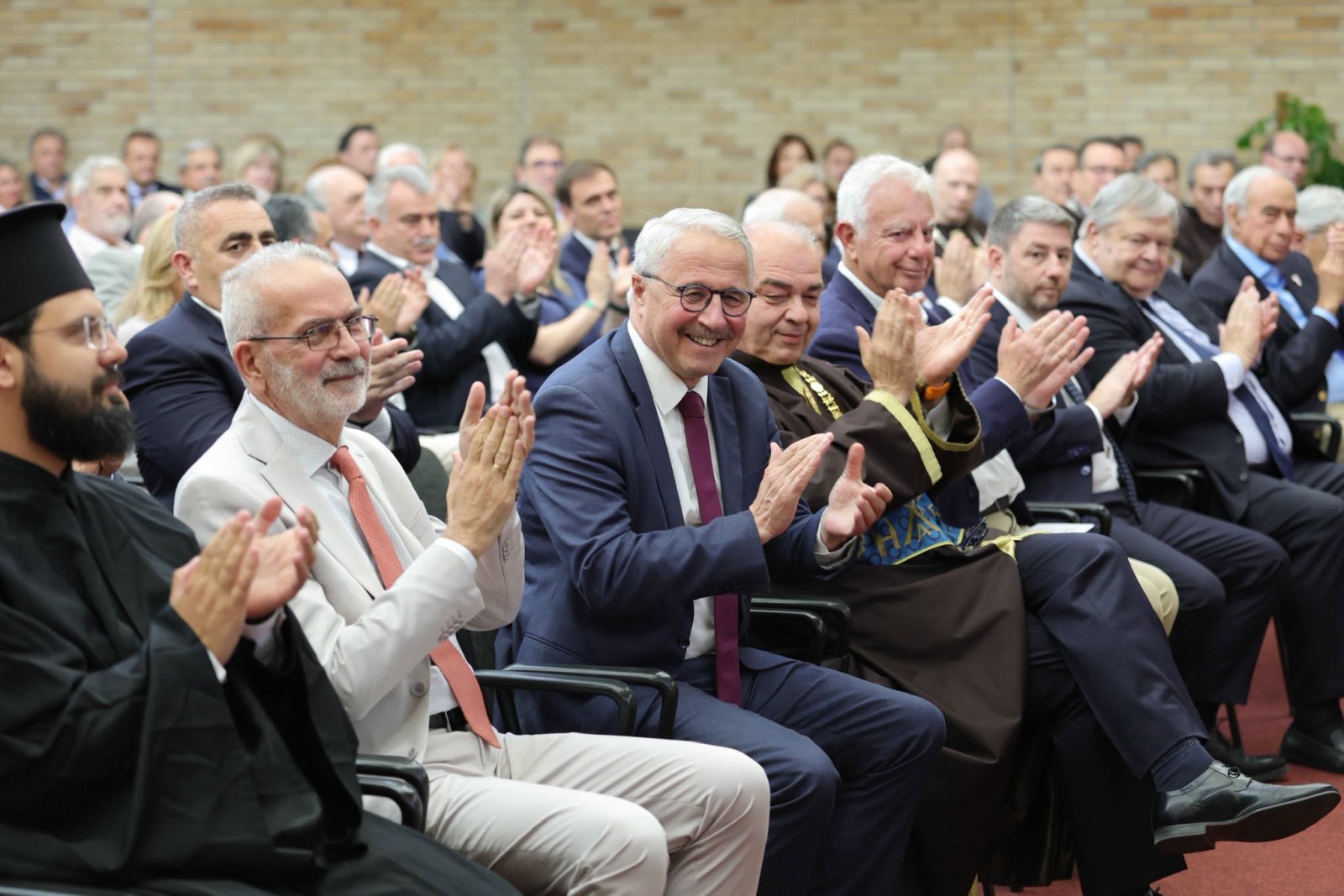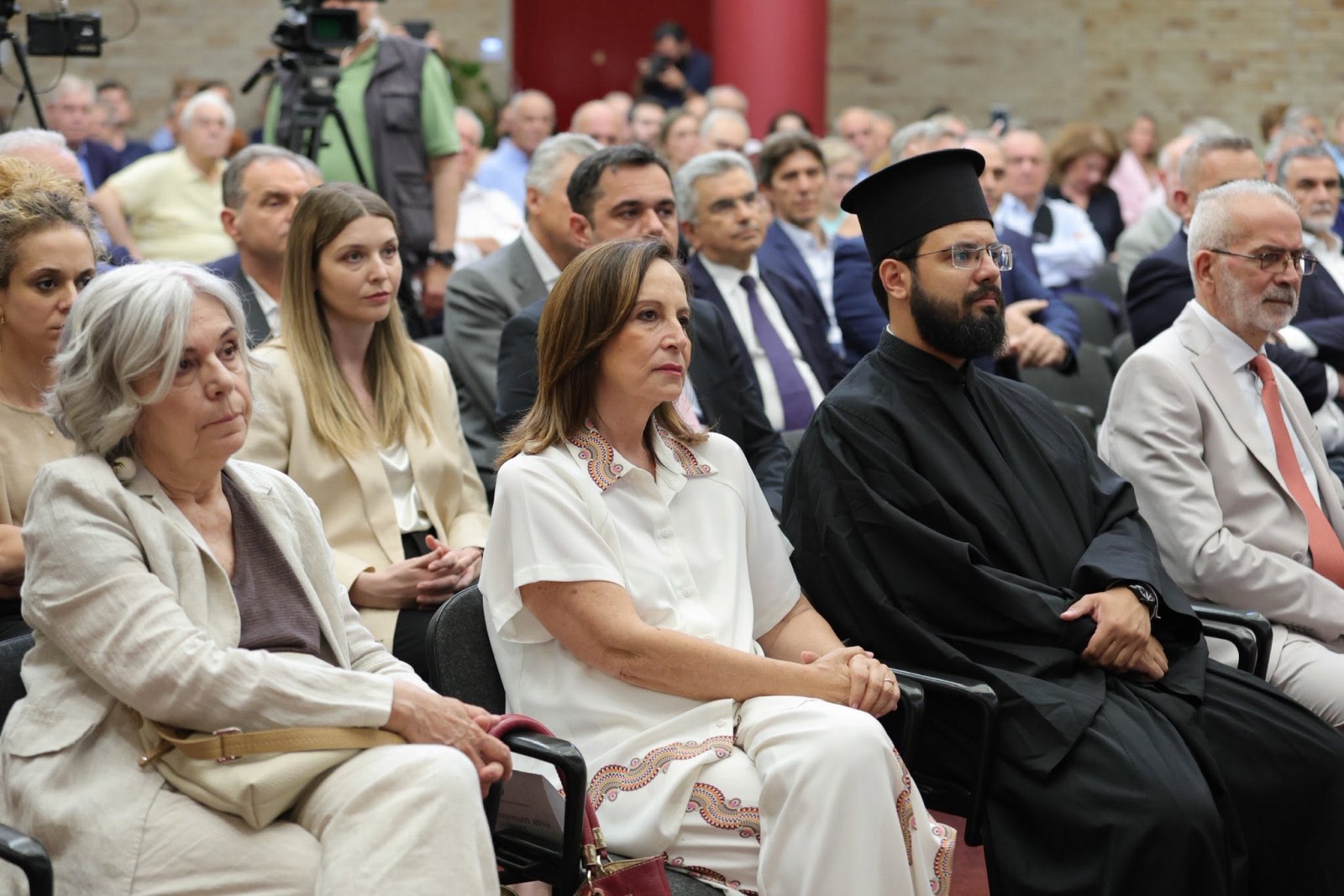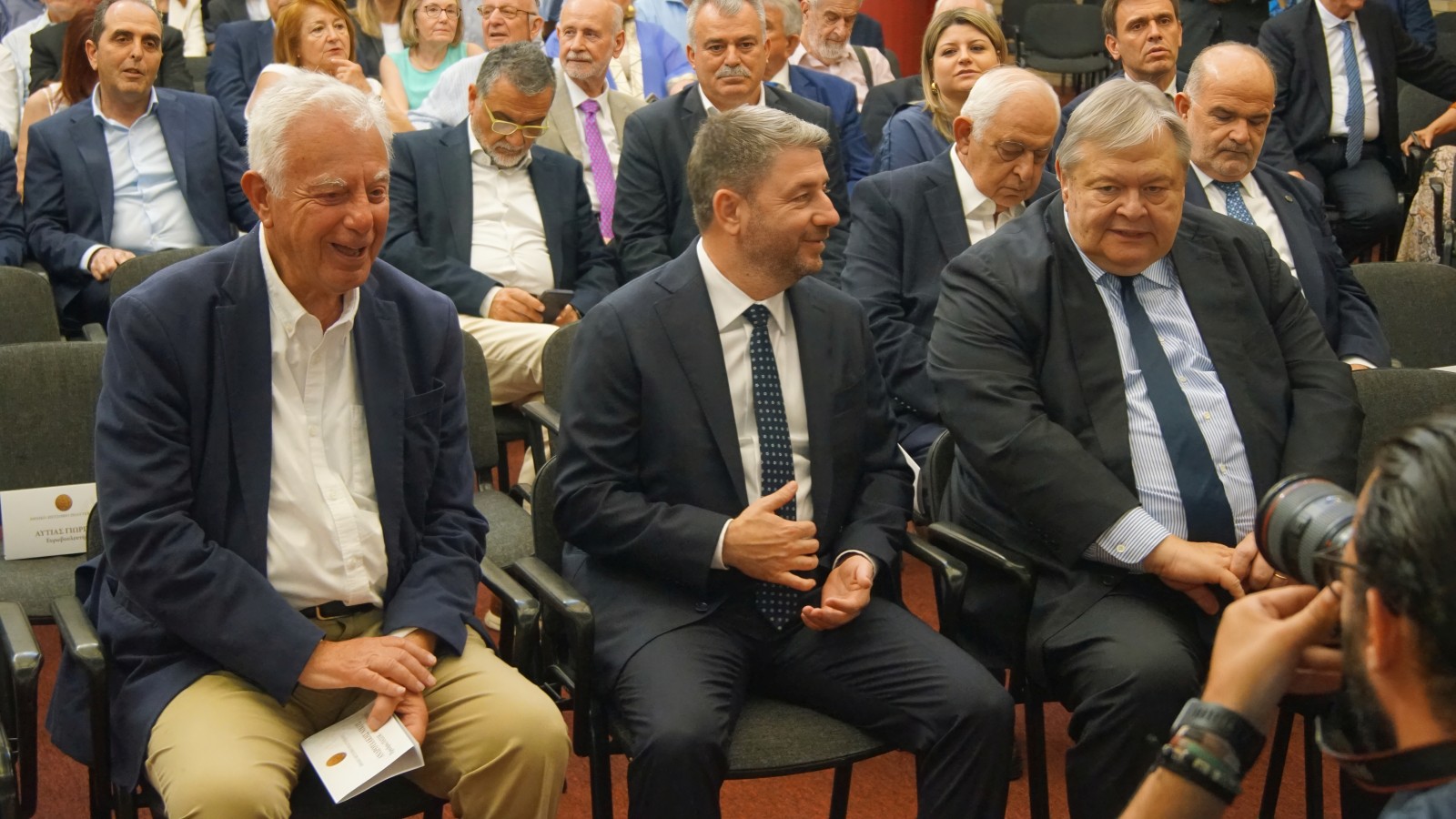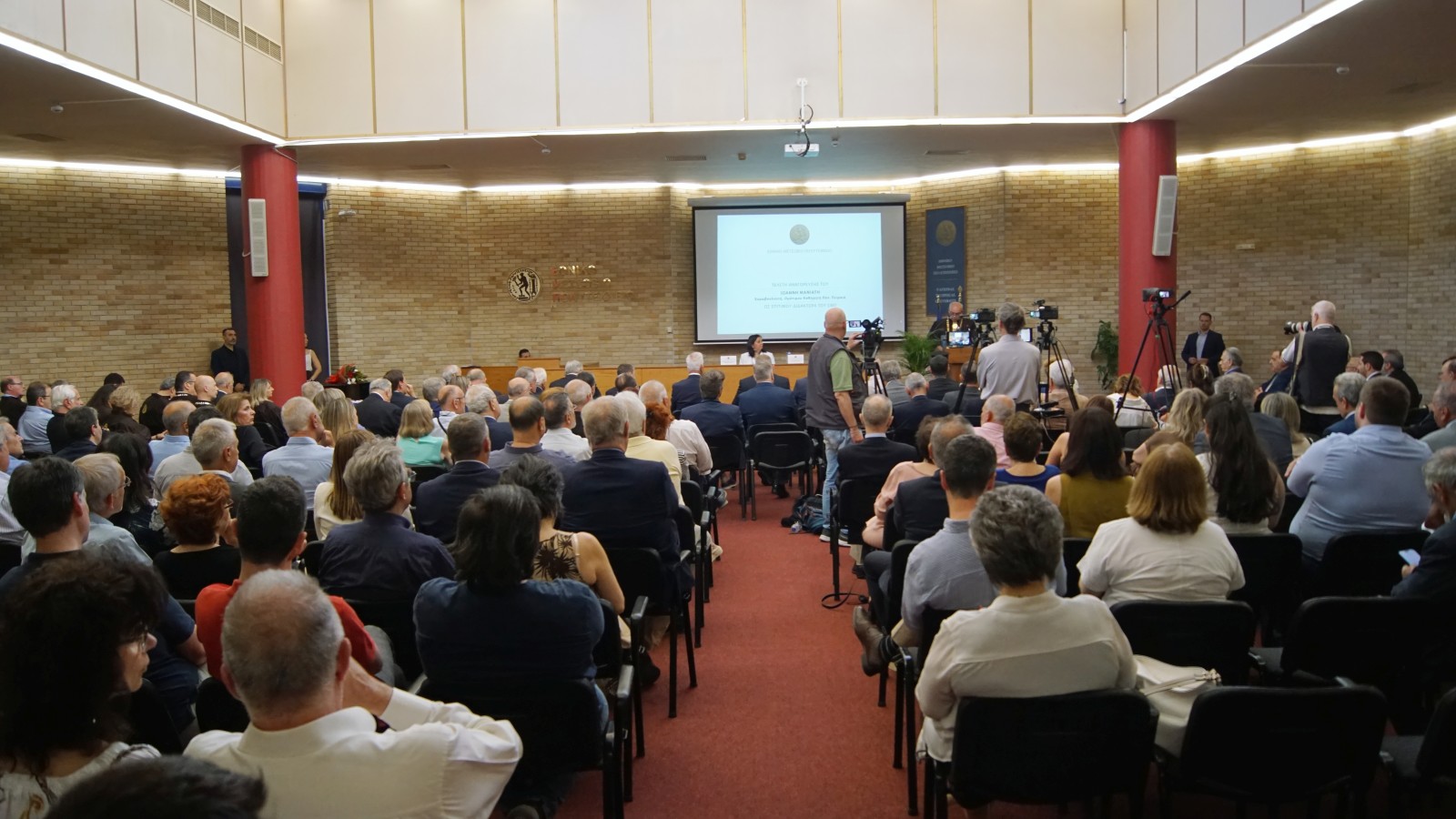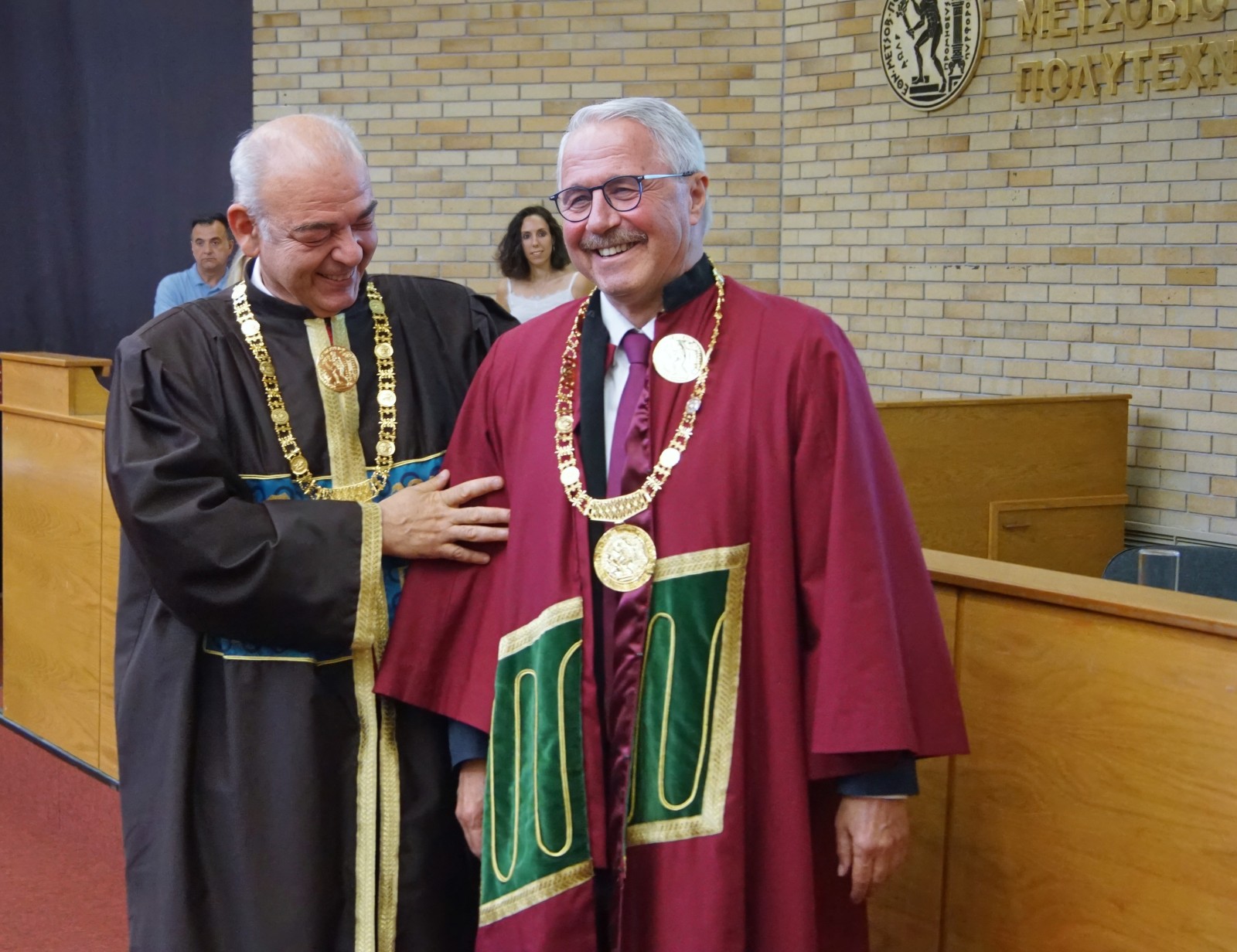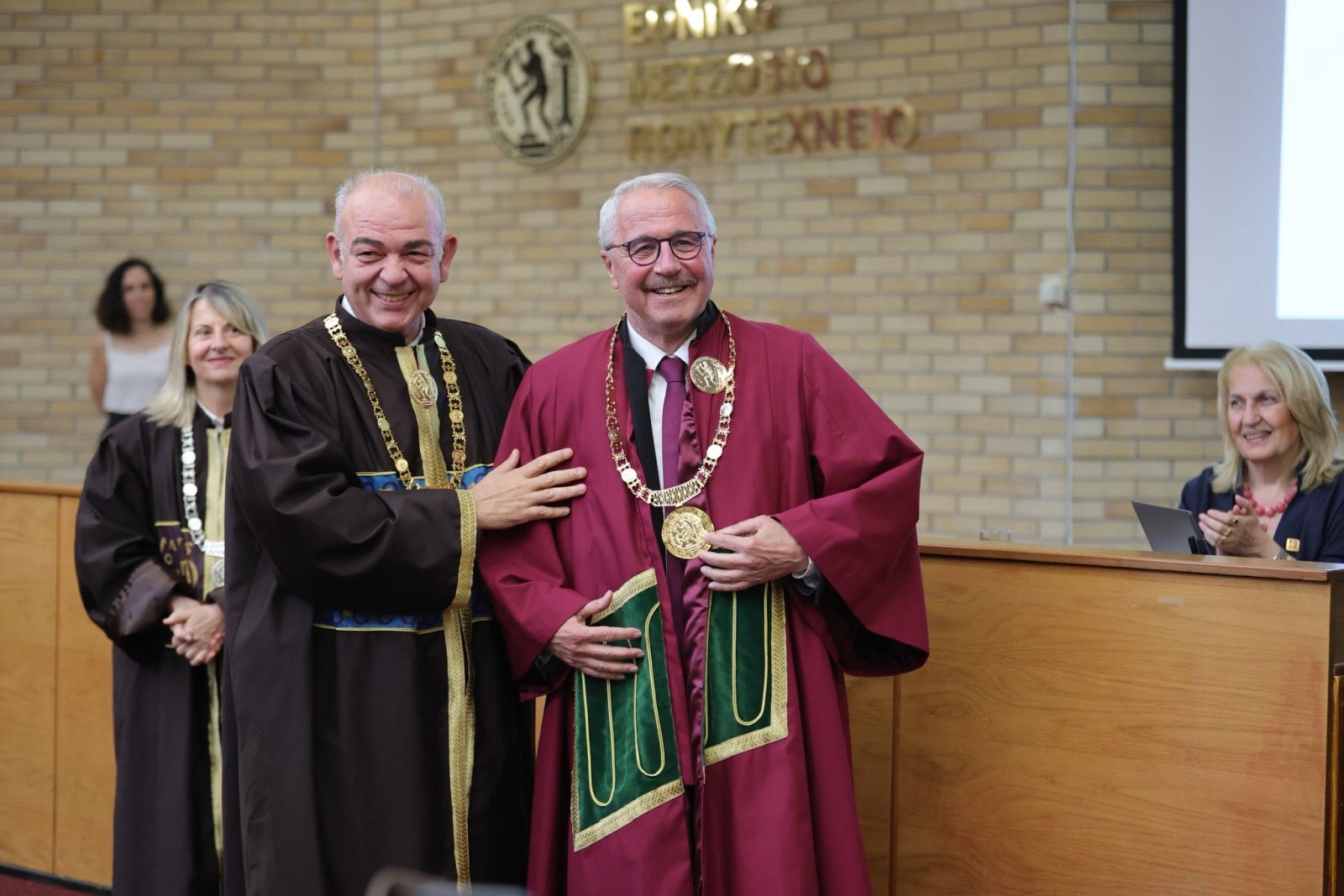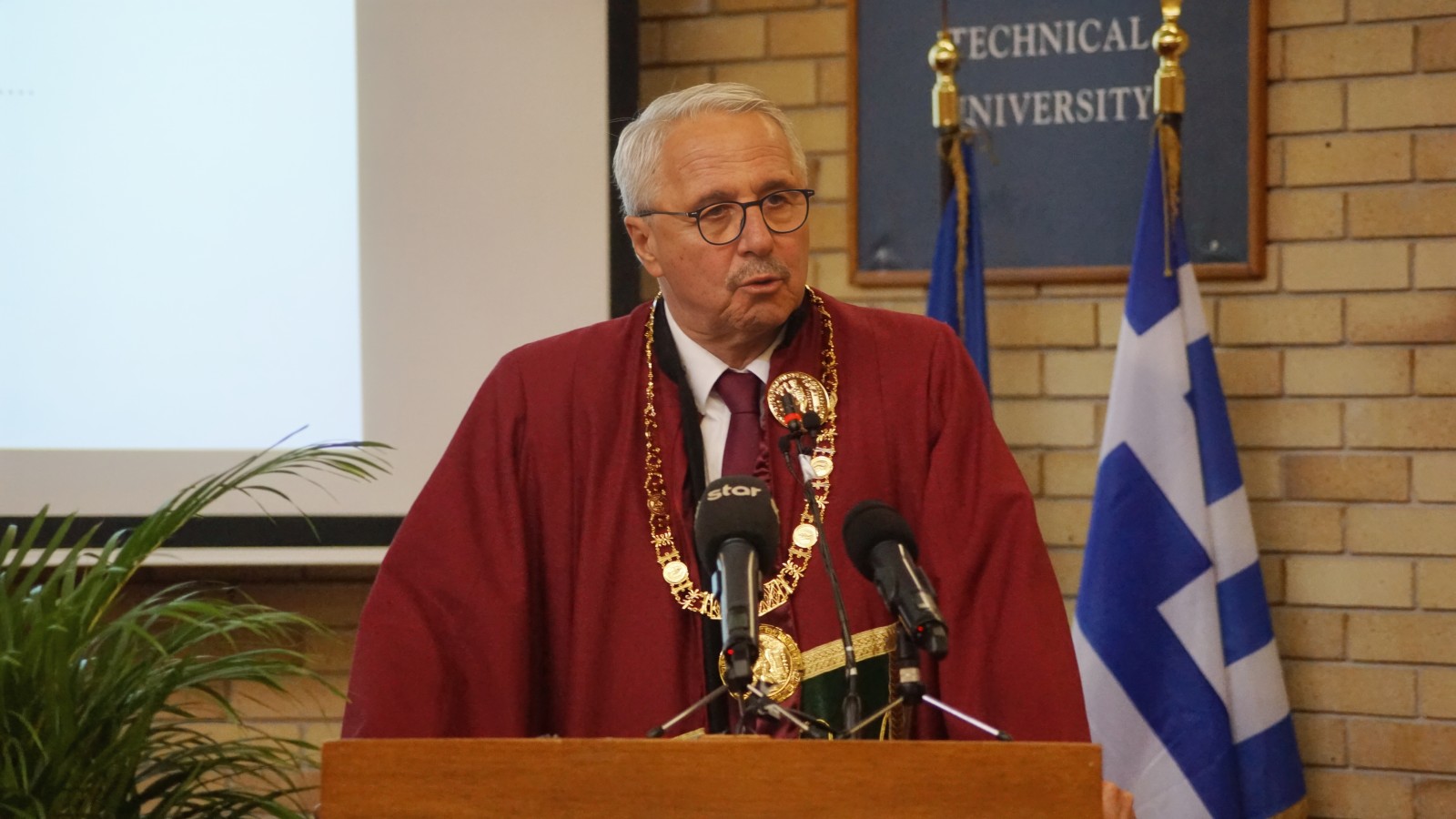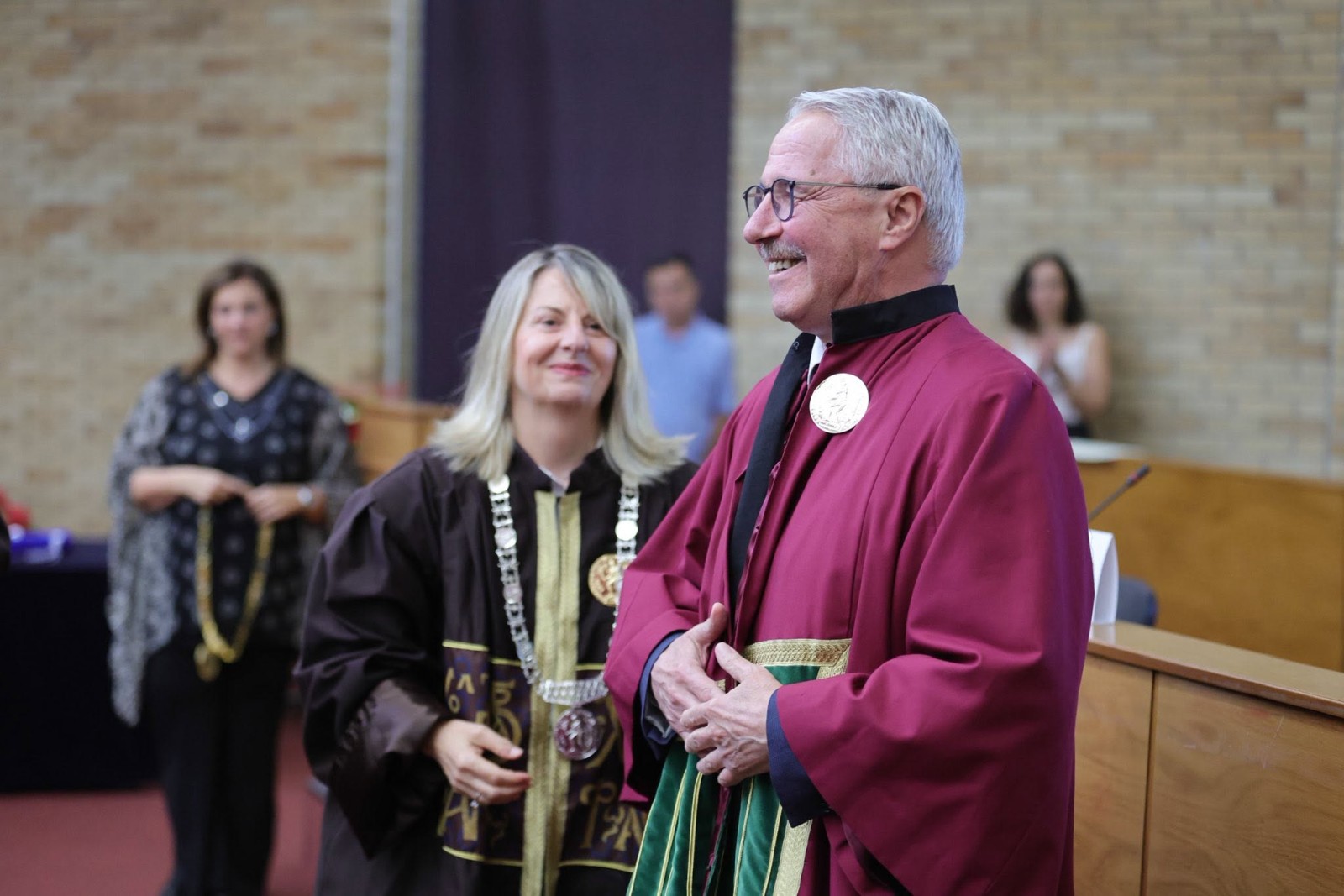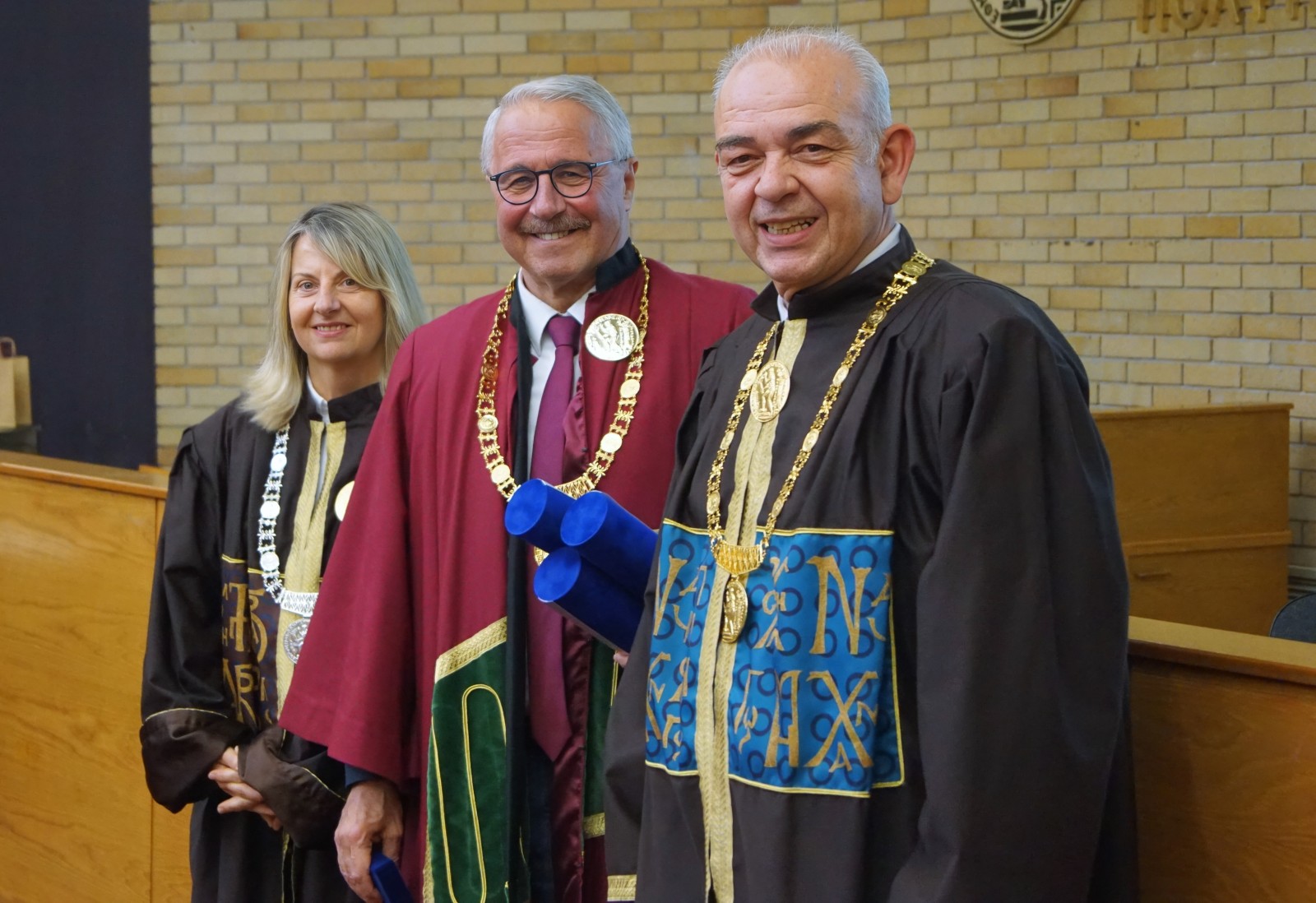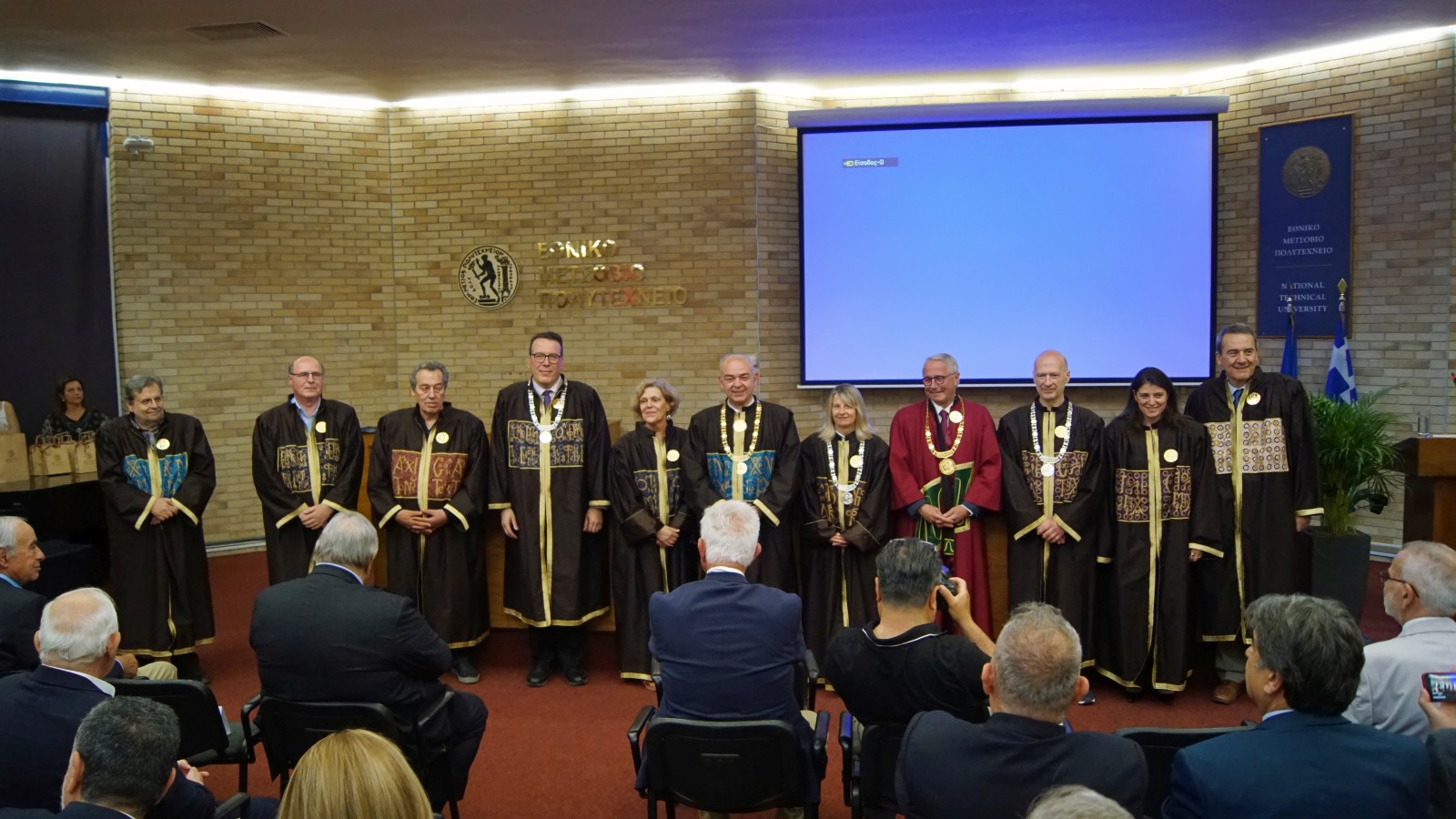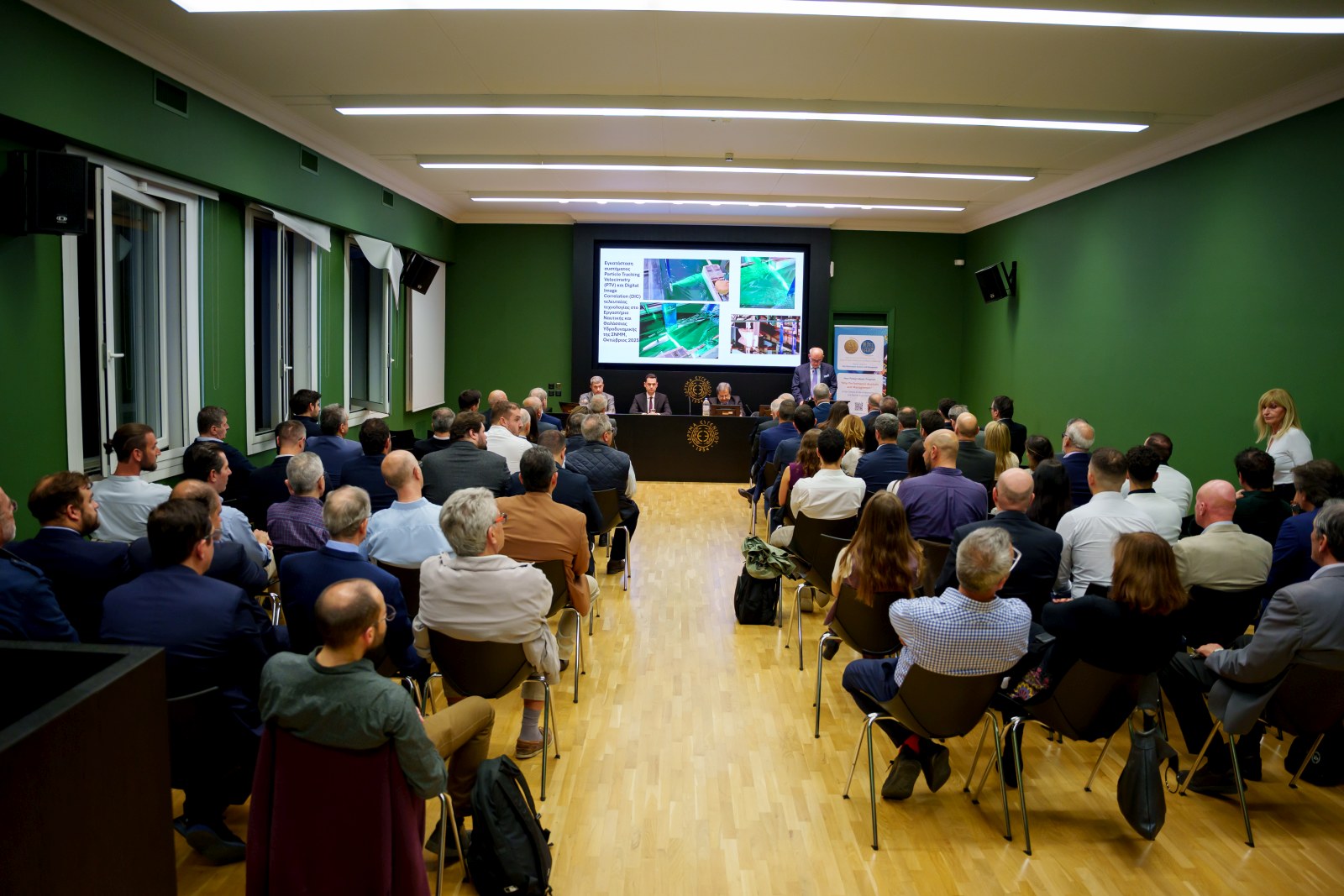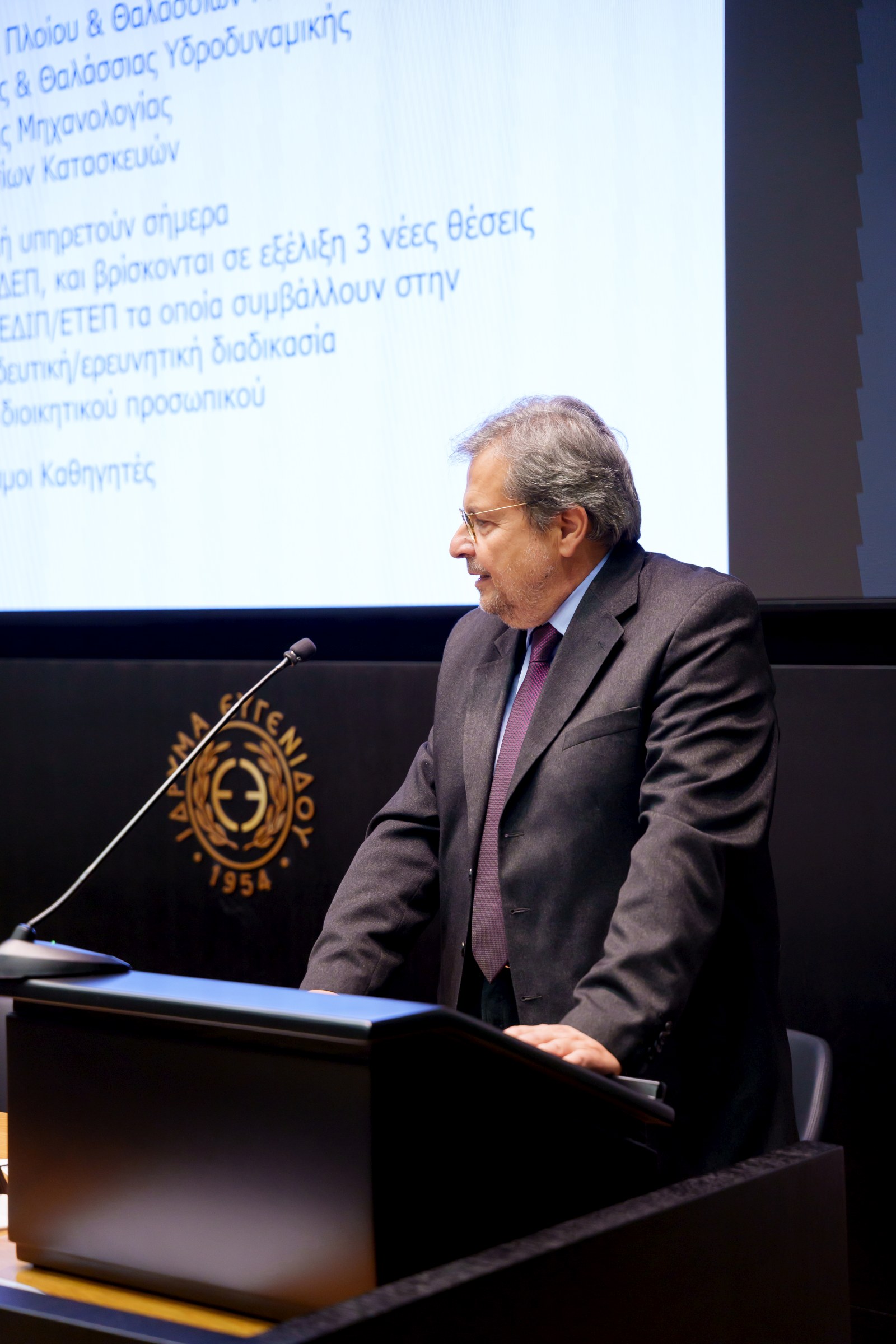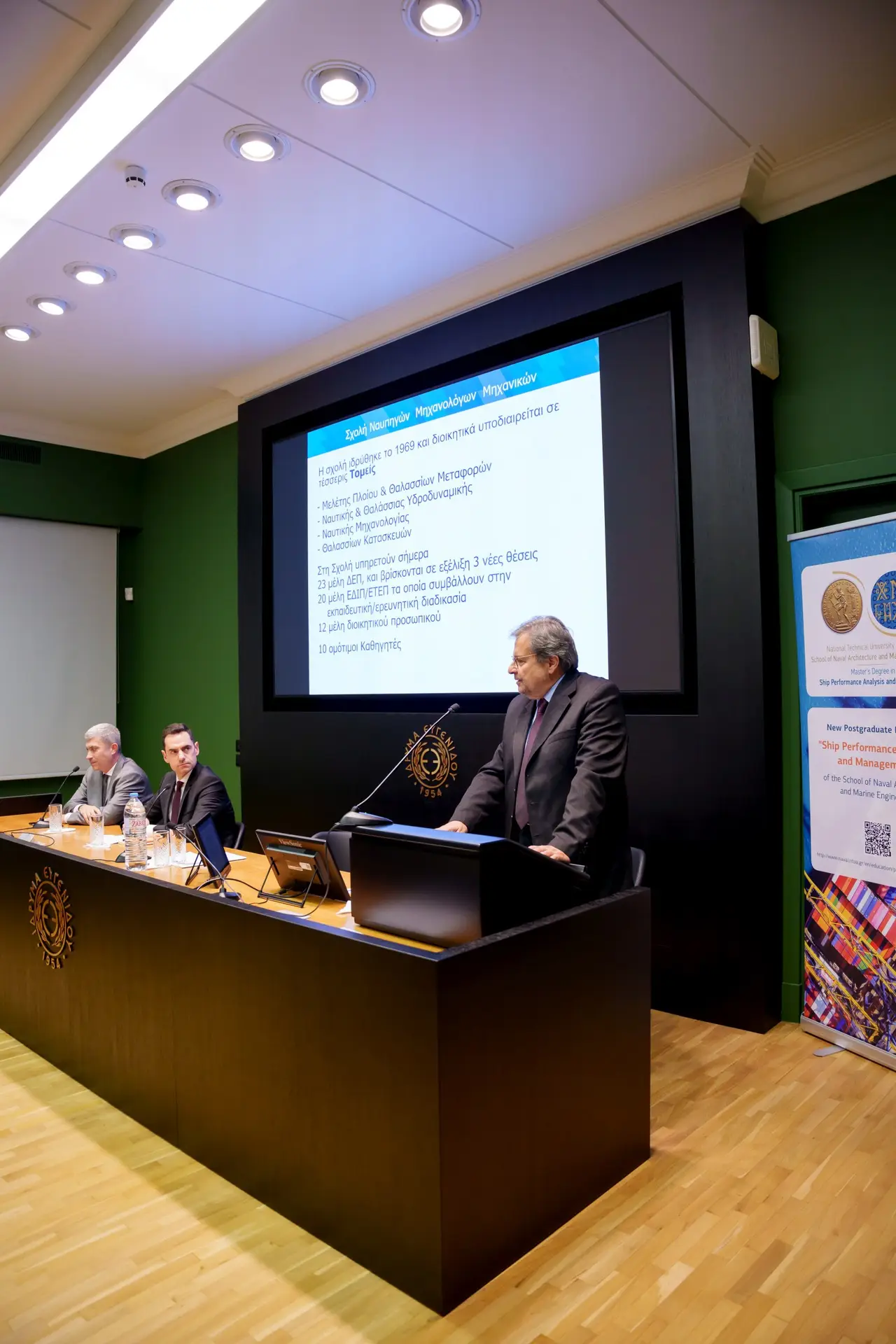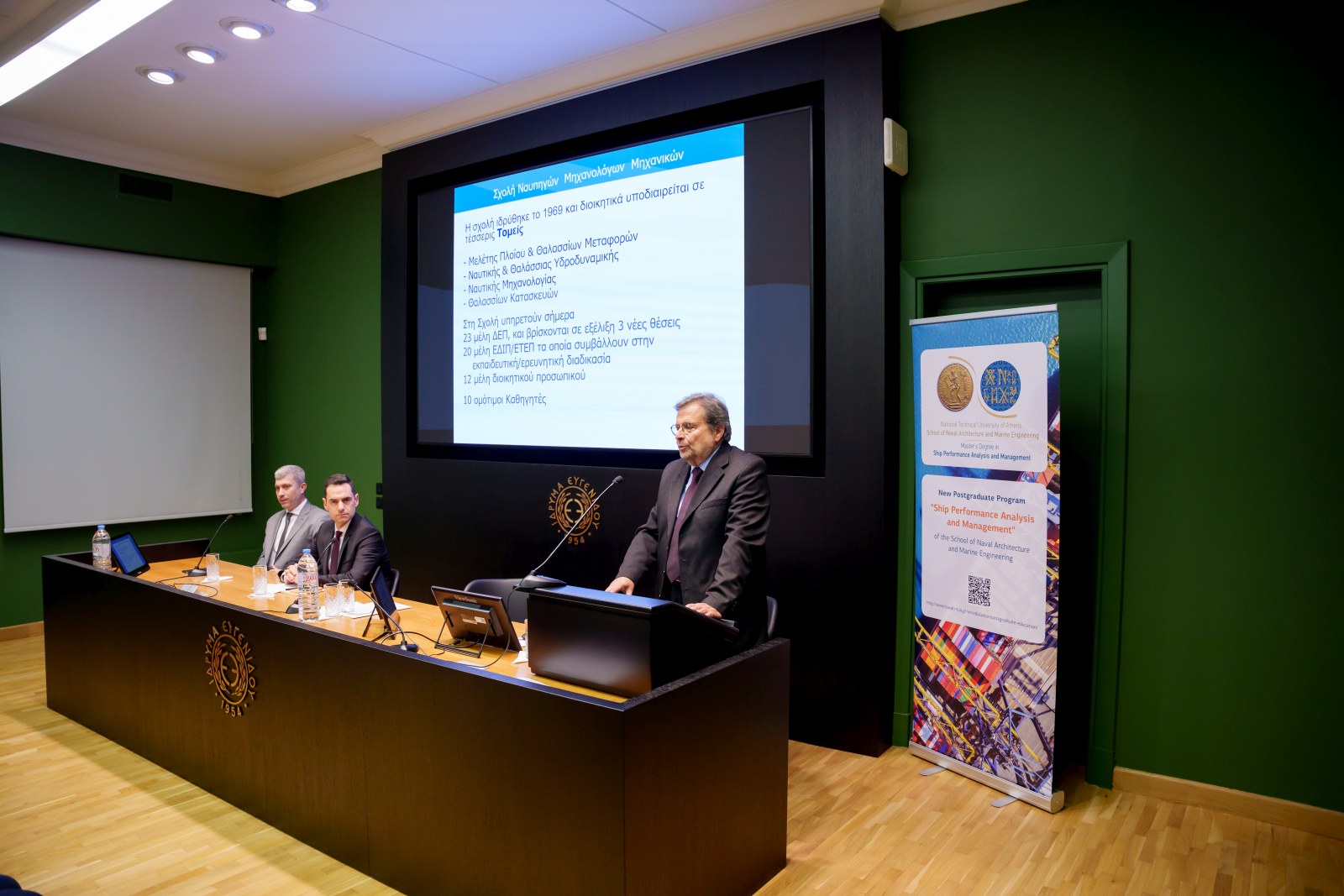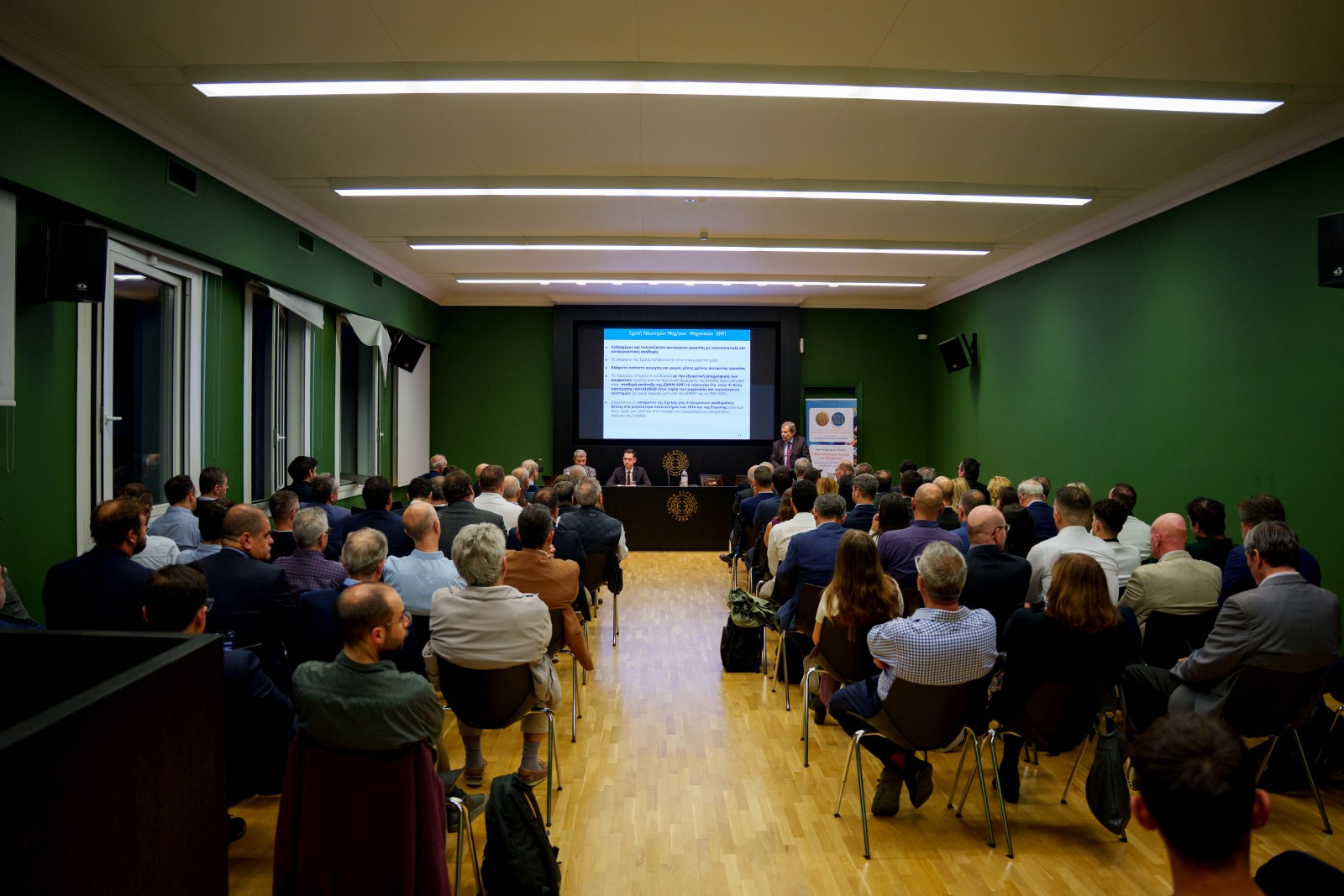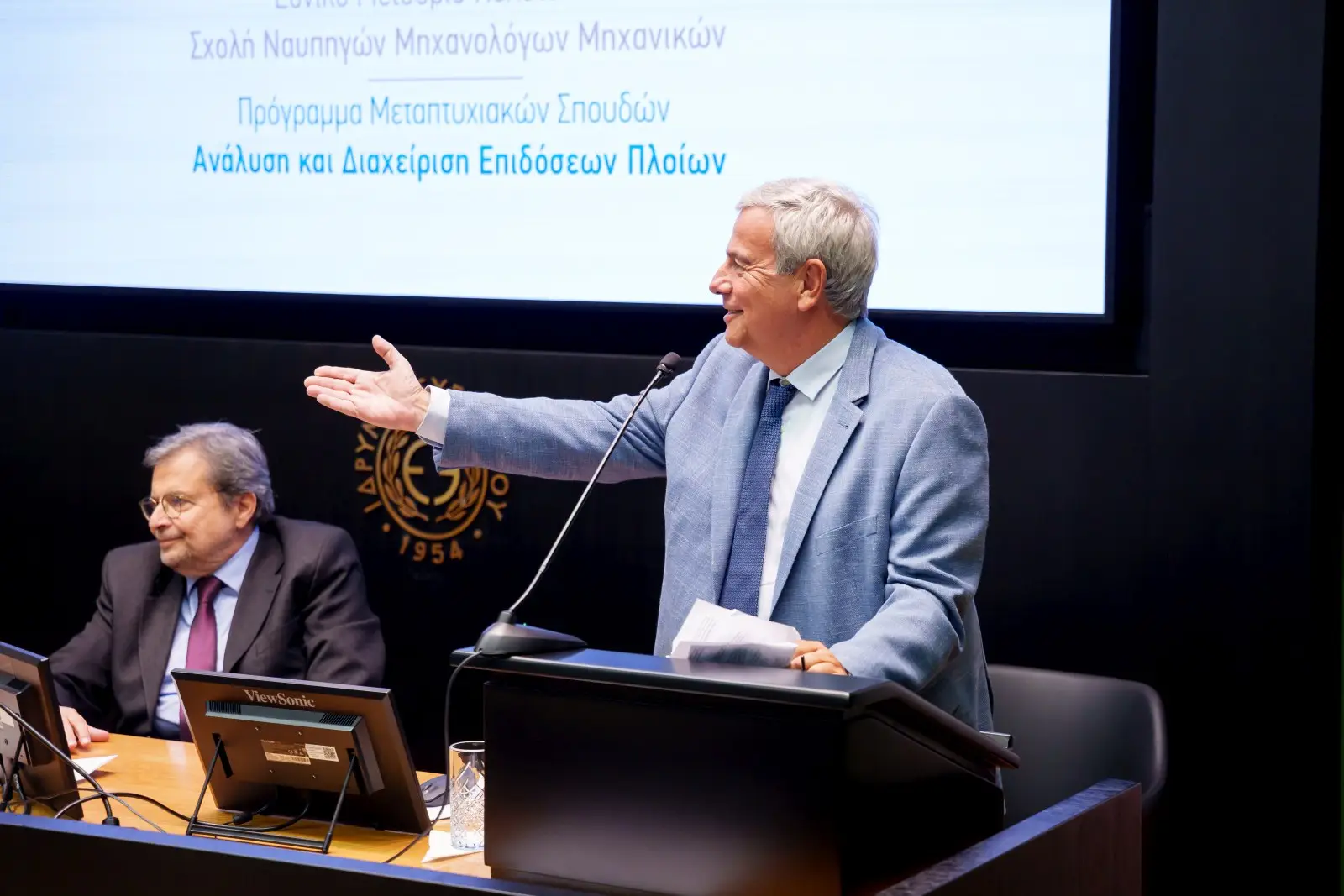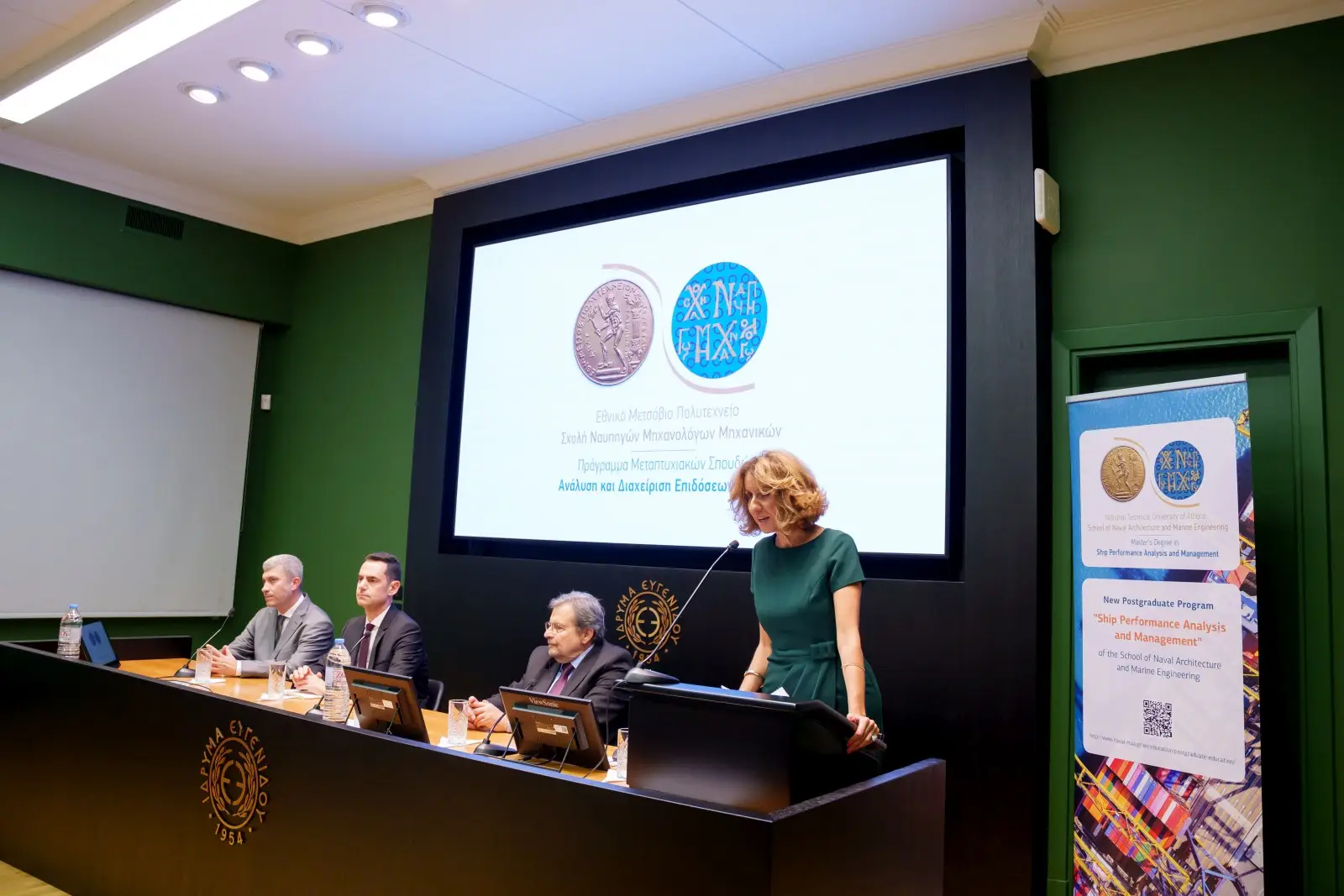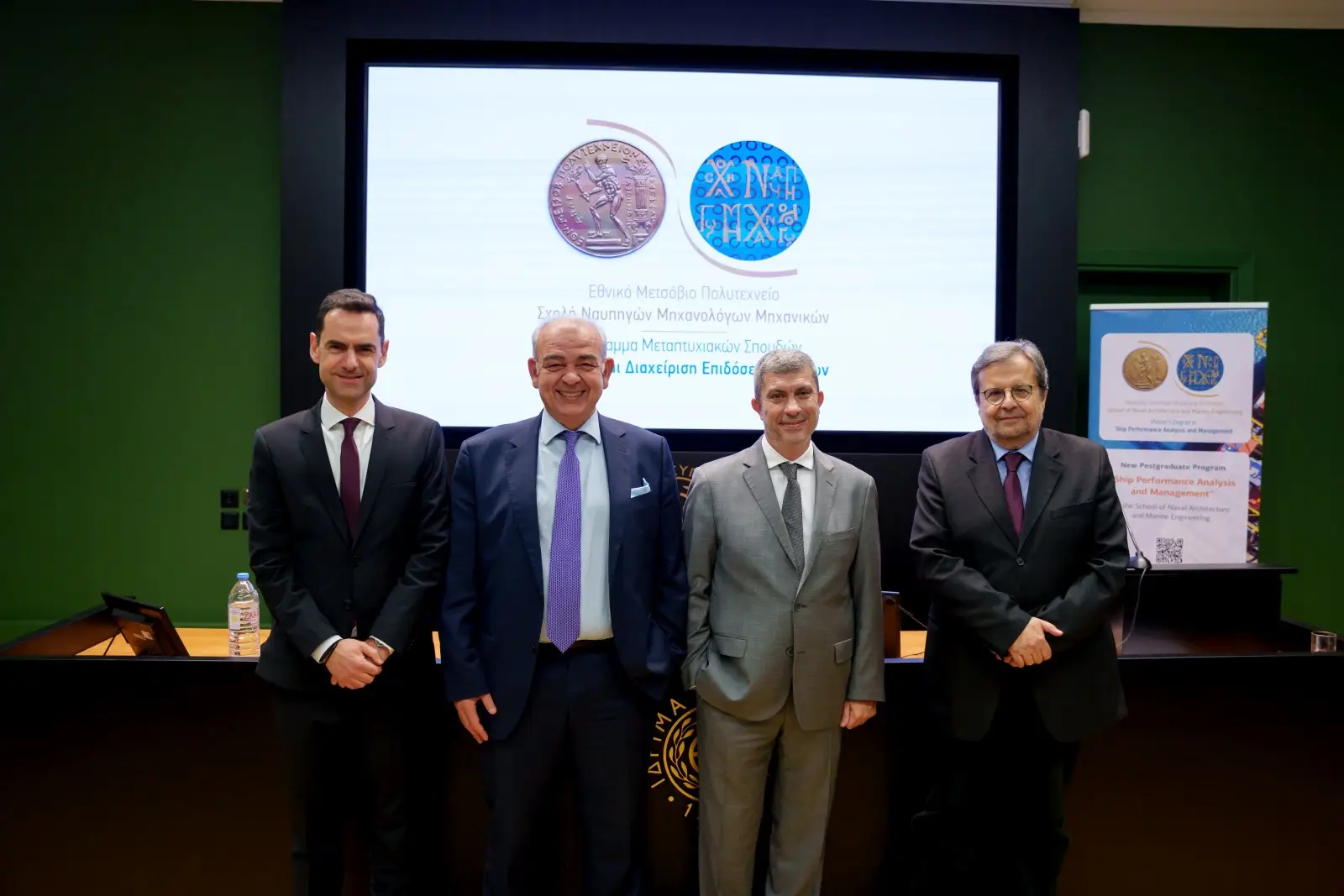
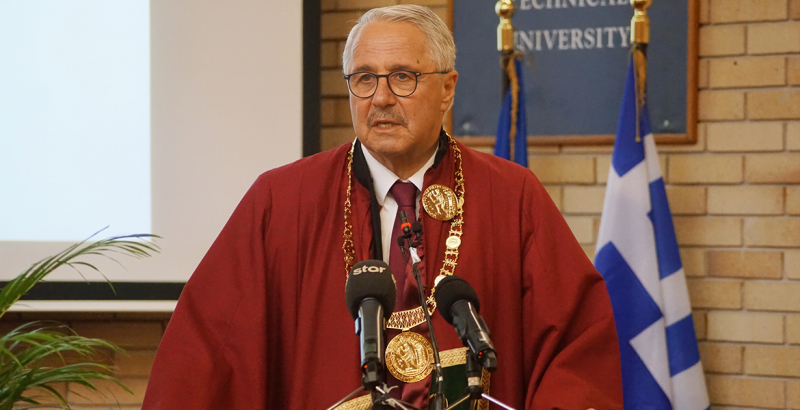
In an atmosphere befitting the distinguished scientific career and significant public contribution of the honouree, the conferral ceremony of Professor Ioannis Maniatis — an NTUA alumnus, Member of the European Parliament, and Emeritus Professor at the University of Piraeus — as Honorary Doctor of the School of Rural, Surveying & Geoinformatics Engineering of the National Technical University of Athens took place on Thursday, 11 June 2026, in the Events Hall of the Administration Building at the Zografou Polytechnic Campus.
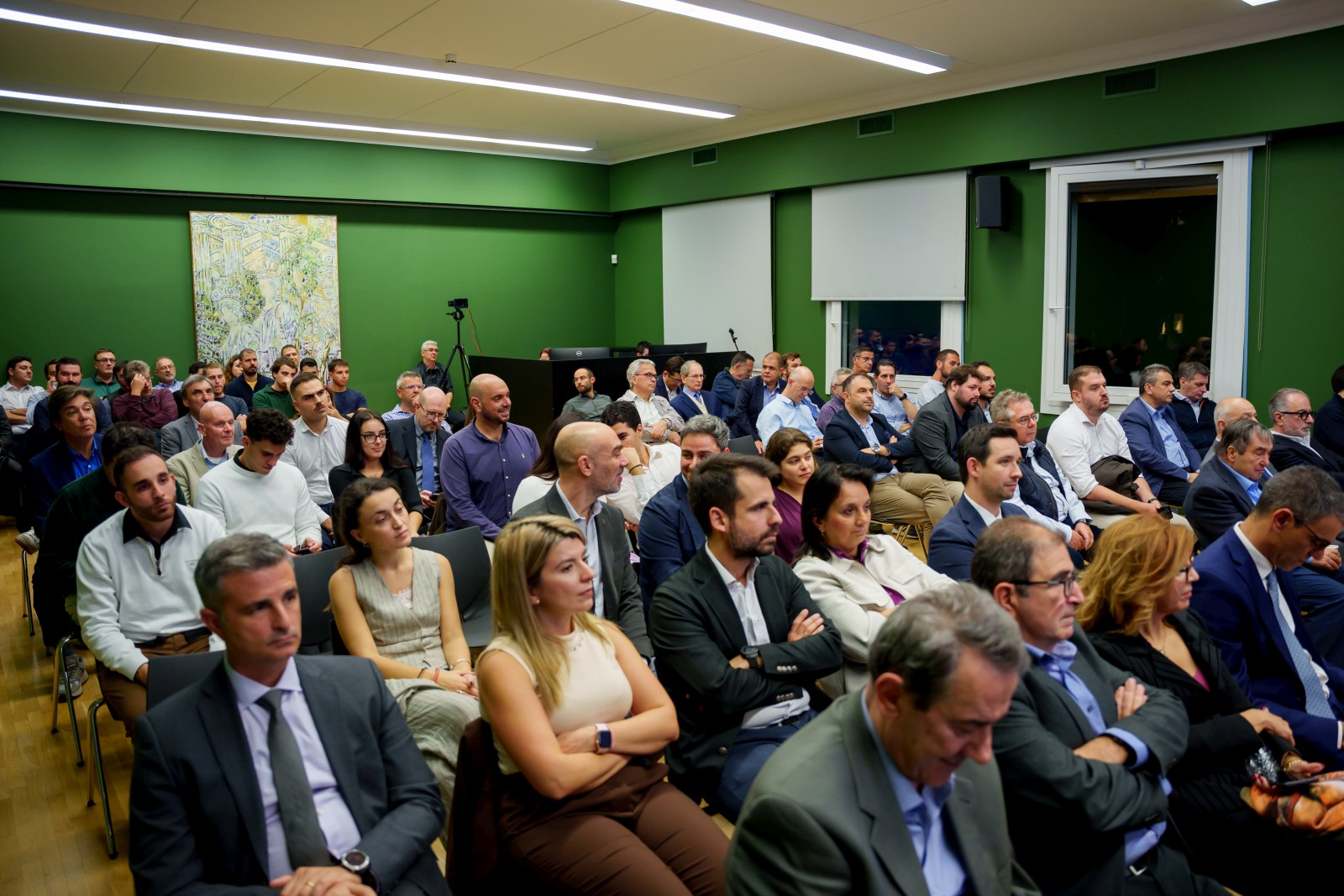
The ceremony was honoured by the presence of former Prime Ministers Panagiotis Pikrammenos and Ioannis Sarmas, the Venerable representative of the Archbishop of Athens and all of Greece, His Eminence Hieronymos, Father Ioannis Panopoulos, former Deputy Prime Minister Evangelos Venizelos, PASOK – Movement for Change President Nikos Androulakis, Members of Parliament and Members of the European Parliament, as well as representatives of the scientific and business communities. The full Rector’s Council of the Institution attended the ceremony, along with School Deans, members of the Board of Directors, as well as a large number of faculty members, researchers, and students of NTUA and representatives of other universities in the country.
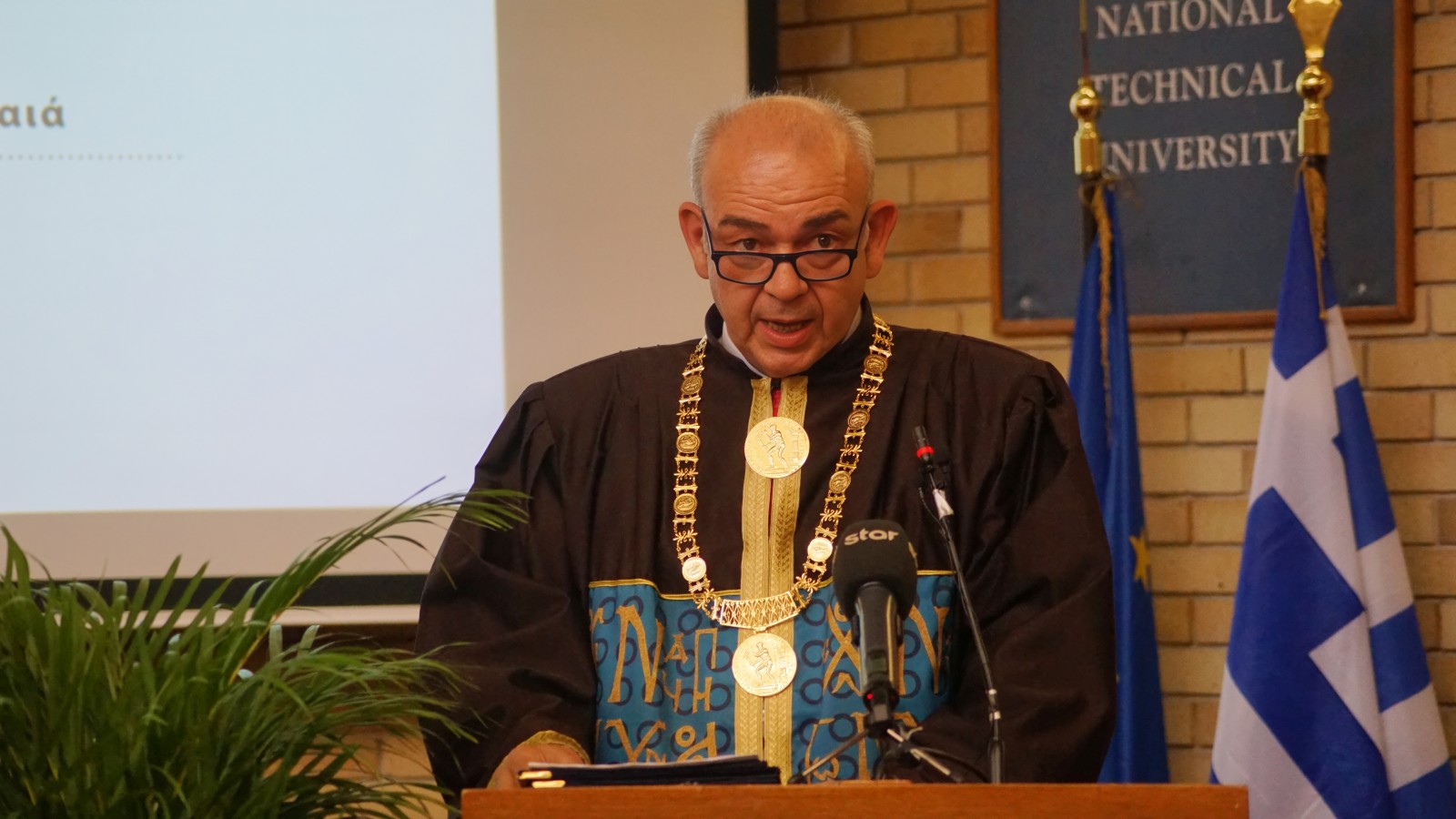
The event opened with an address by the Rector of the National Technical University of Athens, Professor Ioannis K. Chatzigeorgiou, who stressed that NTUA feels particular pride for its alumnus, as Ioannis Maniatis — even from his student years — shaped his character and course upon the solid foundations of knowledge, critical thinking, and practical application that the Polytechnic provides. He noted that the honouree is an authentic engineer, a man of action and effectiveness, who consistently transferred scientific knowledge into society and public life.
The Rector further noted that Ioannis Maniatis is an outstanding personality of contemporary Greece, successfully combining scientific training, academic contribution, and political action. He referred to his career, which spans three particularly demanding spheres: the academic community, the political arena, and European institutions. As a Professor and researcher, he distinguished himself in the fields of energy, the environment, and the climate crisis, while as a politician he made a decisive contribution to shaping the country’s energy strategy, advancing significant reforms and projects with developmental and geopolitical impact.
The Rector also dwelt on the personal qualities of the honouree, underscoring his integrity, grace, and modesty. As he noted, his career stands as a model of a scientist who translated knowledge into practice and a politician who is grounded in evidence, vision, and service to society and the country.
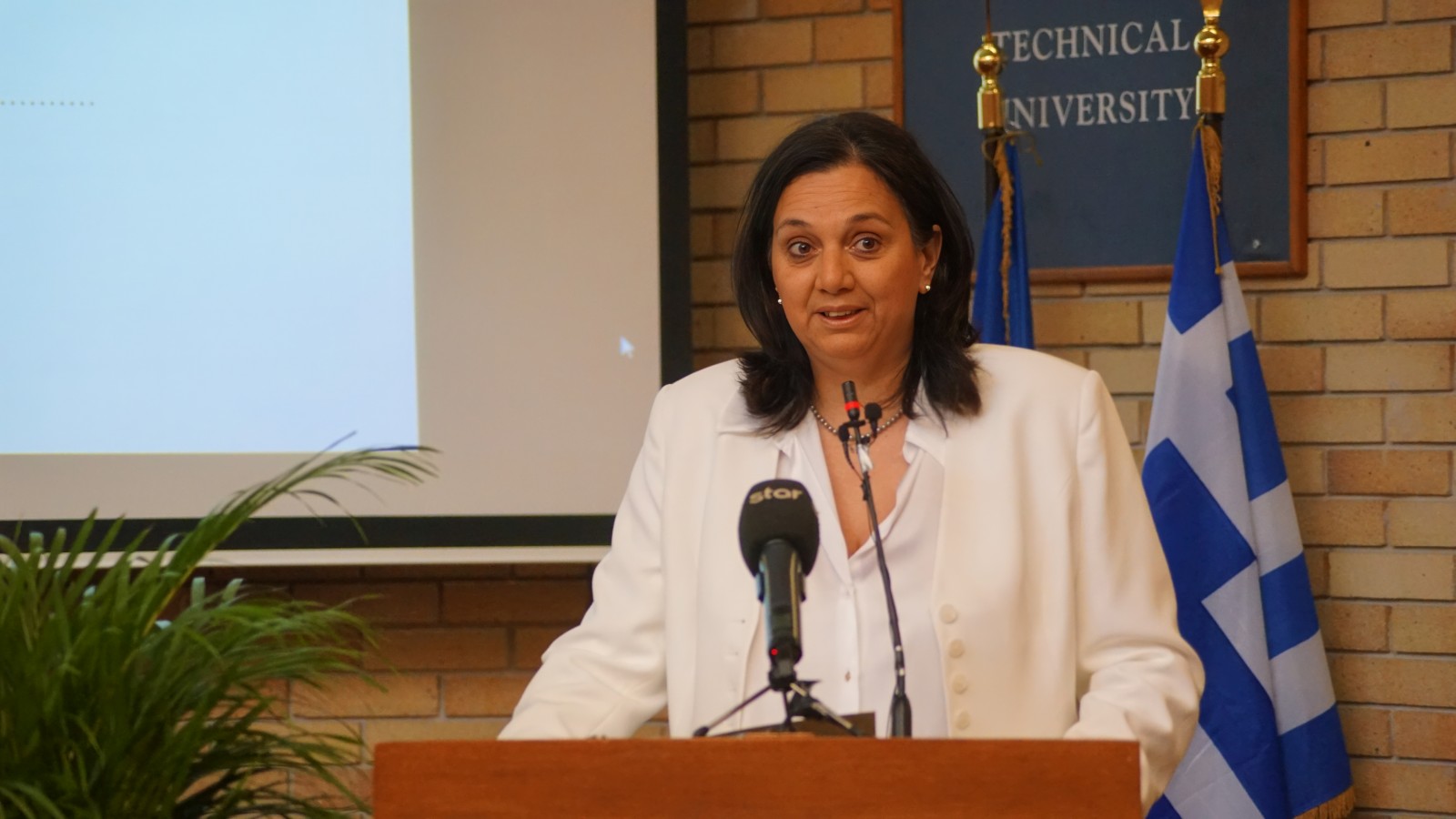
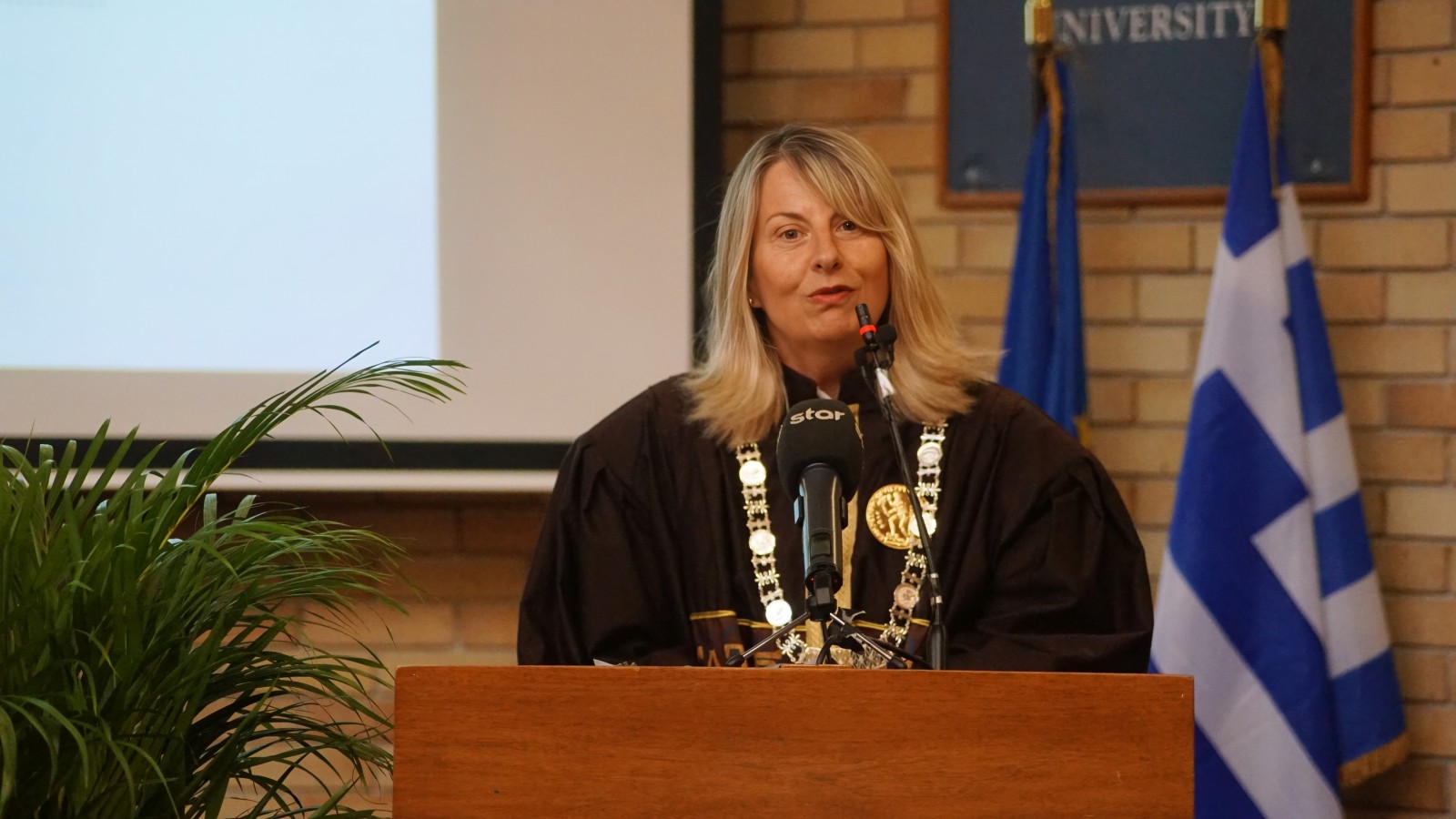
This was followed by an address by the Dean of the School of Rural, Surveying & Geoinformatics Engineering, Professor Maria Tsakiri, who highlighted the honouree’s enduring relationship with the School and the special significance of his conferral.
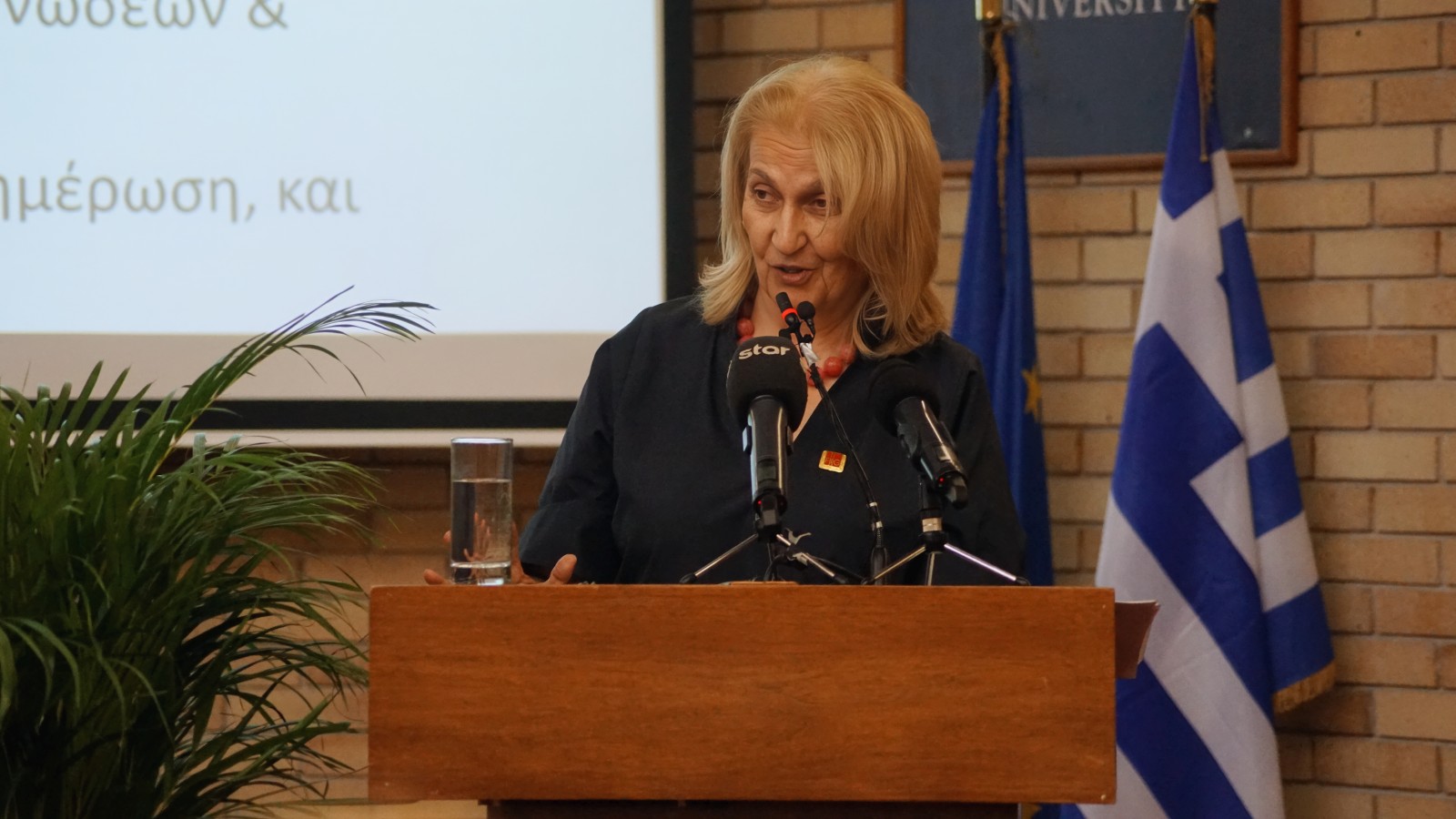
Subsequently, Professor of the School of Rural, Surveying & Geoinformatics Engineering, Chryssi Potsiou, presented an emblematic historical retrospective, connecting the timeless evolution of the science of Surveying Engineering with its social recognition and with politics. The discipline traces its origins to the «Harpedonaptai» of Ancient Egypt (3000 BC), who re-established land boundaries after the annual floods of the Nile and positioned the iconic monuments of the Pharaonic era — the pyramids — and evolves into axiomatic Geometry through Euclid. She reminded the audience that knowledge of the physical space has always been inextricably linked to governance, citing as examples prominent leaders who were themselves surveying engineers.
As she noted, this historical knowledge is today evolving into the science of Geoinformatics and the modern systems of Cadastre and Land Administration — the principal scientific fields of the School and of the honouree, Ioannis Maniatis — which also constitute the fundamental pillar for achieving the Sustainable Development Goals of the United Nations 2030 Agenda, ensuring social stability, the economic prosperity of citizens, and the protection of the environment. She referred to the School and its enduring historical contribution to the reconstruction of the country. In perfect harmony with this legacy, she analysed in depth the multifaceted work of the honouree across seven principal axes: 1) his academic contribution; 2) his rational and substantive political discourse, as opposed to empty rhetoric; 3) public recognition of his work and his repeated election as a Member of Parliament over a series of contests, as well as his many years of governmental and administrative experience in positions of responsibility; 4) his international standing and his parliamentary influence in Europe, where he has assumed strategic portfolios; 5) his geopolitical and legislative imprint, centred on the historic «Maniatis Law» (Law 4001/2011) on the delineation of the Greek Exclusive Economic Zone and the continental shelf, and the strategy behind major energy infrastructure projects such as the TAP and IGB pipelines, the FSRU terminal in Alexandroupolis, and the Great Sea Interconnector; 6) the social and environmental dimension of his work, including the «Exoikonomo kat’ Oikon» (Home Energy Saving) programme, the Social Household Tariff for vulnerable consumers, and the Social Solidarity Fund of Generations for supporting the social insurance system; and 7) his contribution to geopolitical stability for peace and prosperity. In conclusion, Professor Potsiou emphasised that the deeper significance of conferring an Honorary Doctorate upon Ioannis Maniatis represents a powerful and open rallying call, with a message to society that:
«Politics needs science in order to be genuinely beneficial, and science needs integrity in order to remain human.»
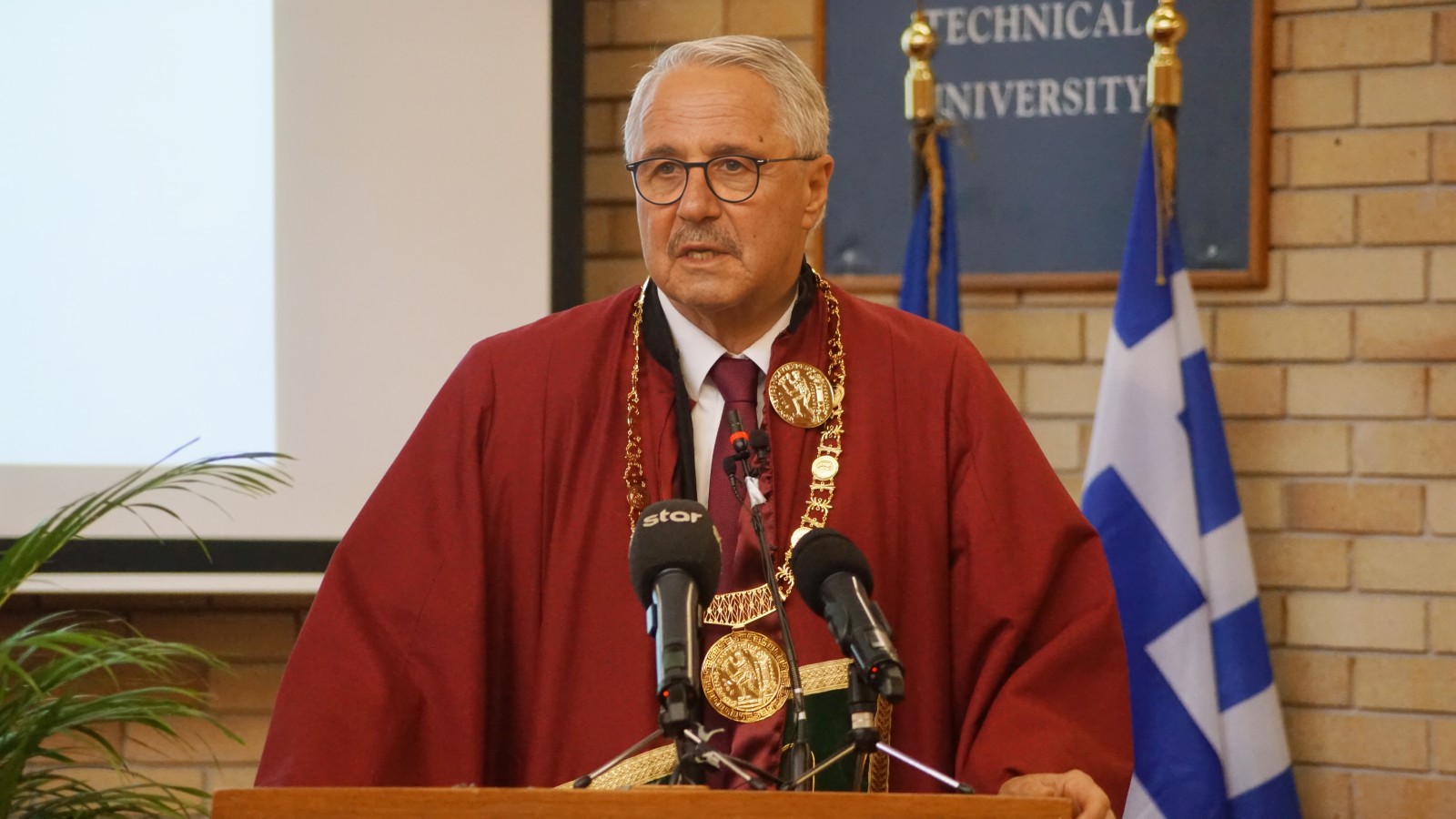
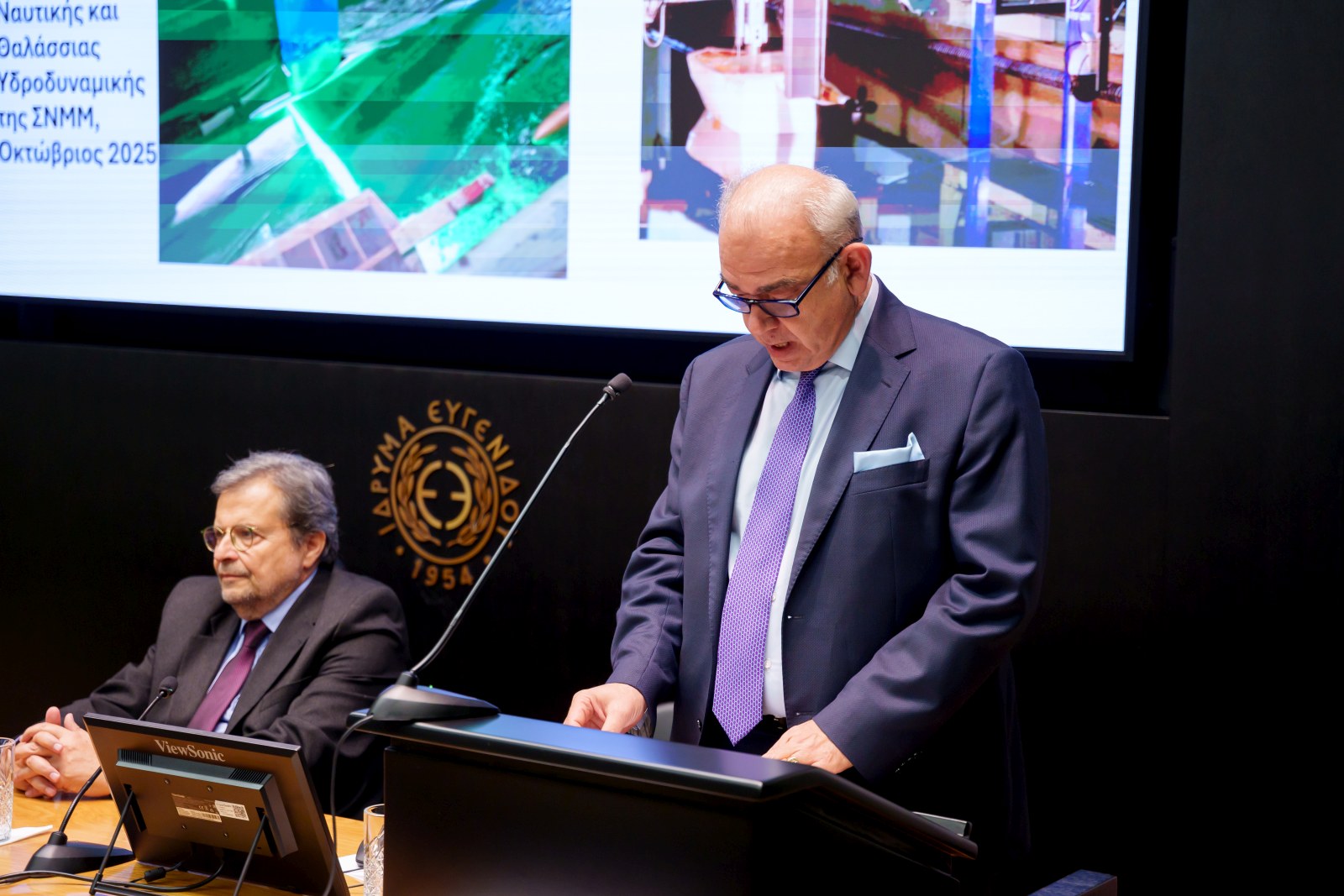
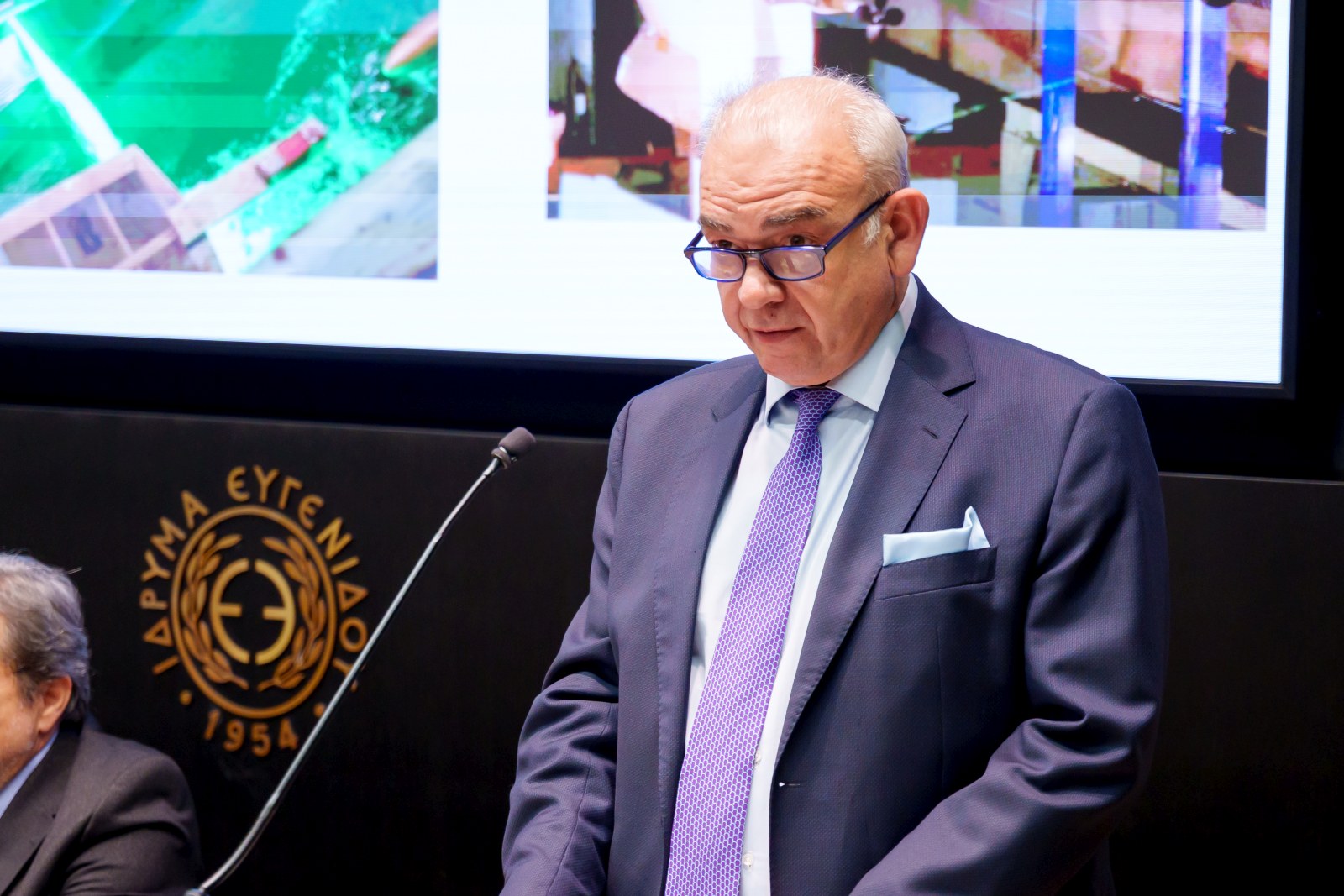
This was followed by the investiture of the honouree with the academic gown and his lecture entitled «Challenges and Prospects for the Strategic Autonomy of Europe and Greece». In his address, Ioannis Maniatis stressed that Greece needs an ambitious and progressive plan for the next decade. As he stated, this plan must transform the country into a hub not only for energy transit but also for energy production. He further underscored that Greece must undertake a historic shift, becoming a country that produces, manufactures, and develops goods and services in support of the green and digital transition, as well as for the strengthening of its defence capabilities.
The ceremony concluded with the presentation of the NTUA Medal by the Rector to the honouree, sealing his conferral and the special honour that the Institution bestowed upon his person and work.
With the conferral of an Honorary Doctorate upon Ioannis Maniatis, the National Technical University of Athens honours a distinguished alumnus and, at the same time, reaffirms its enduring commitment to excellence, international outreach, and the connection of scientific knowledge with the needs of contemporary society.