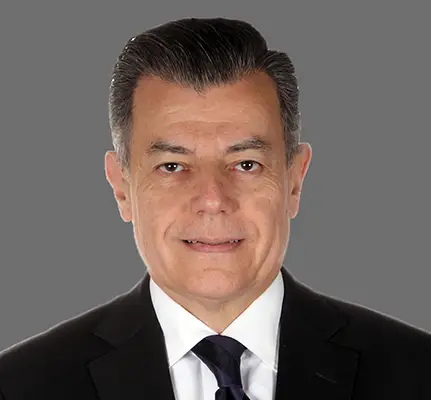
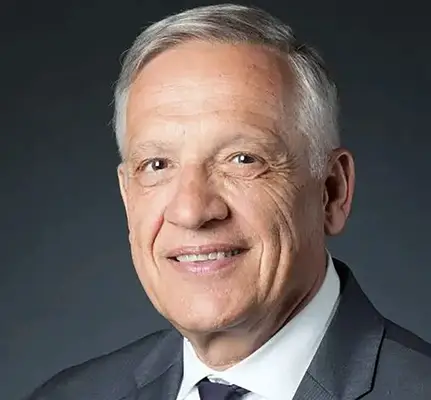
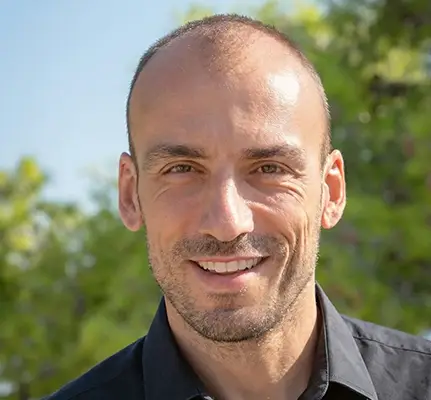
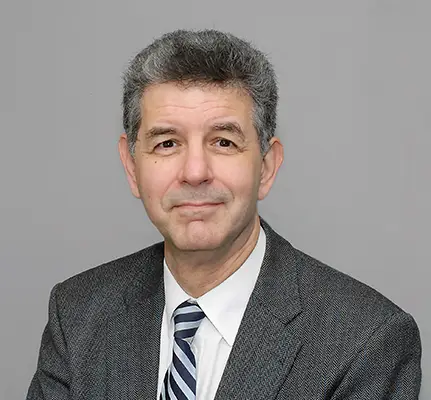
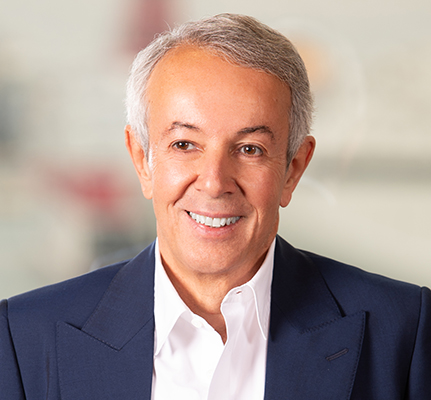
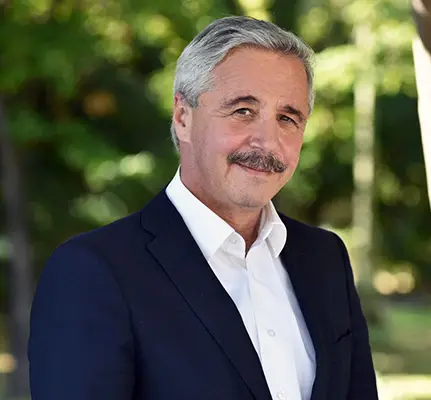
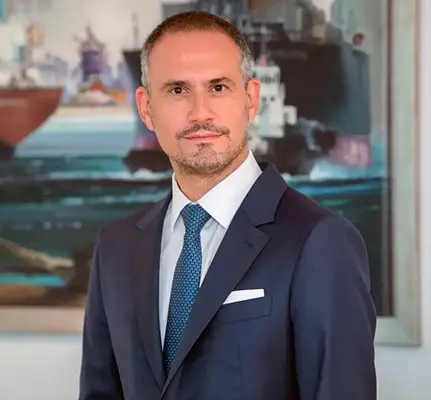
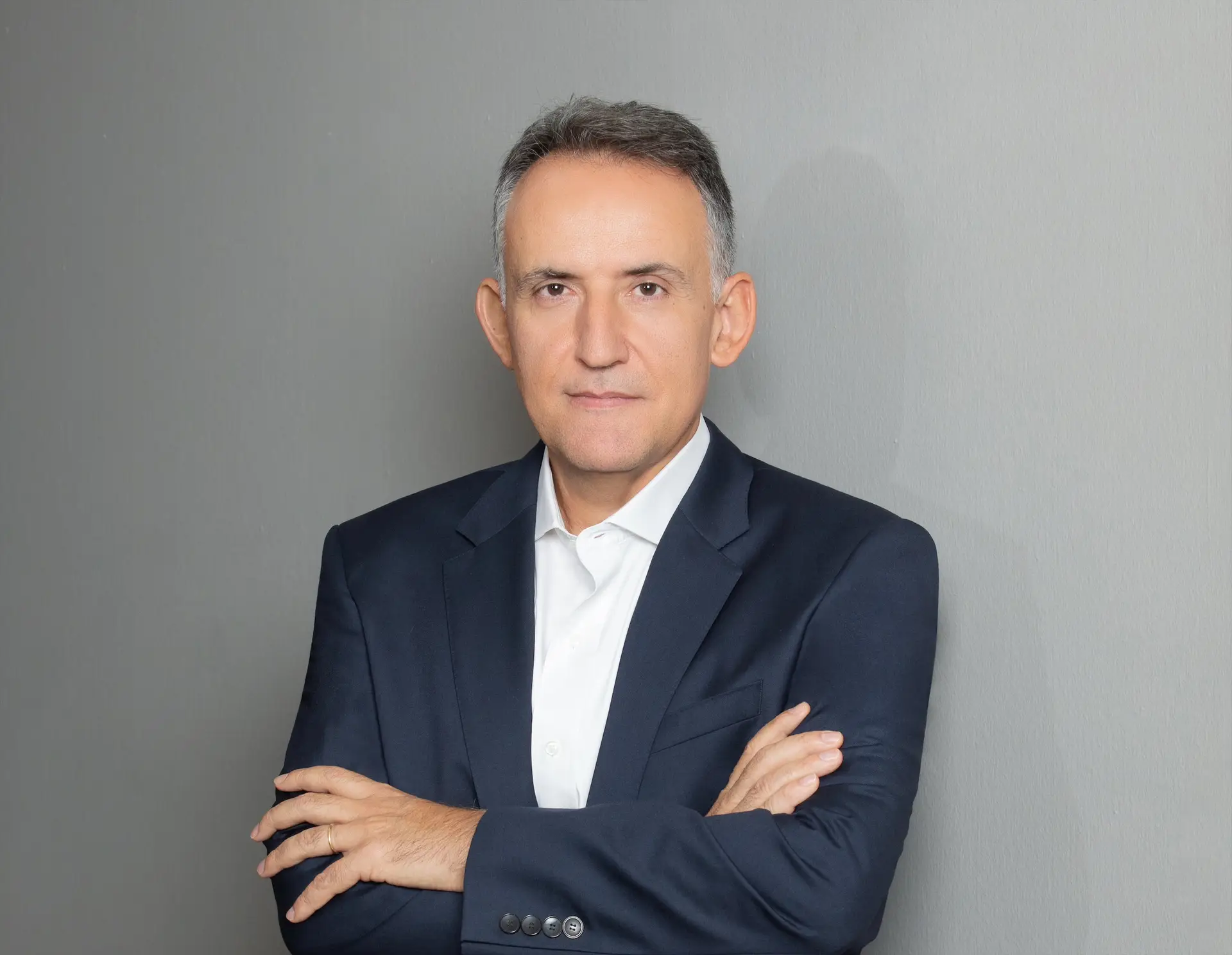
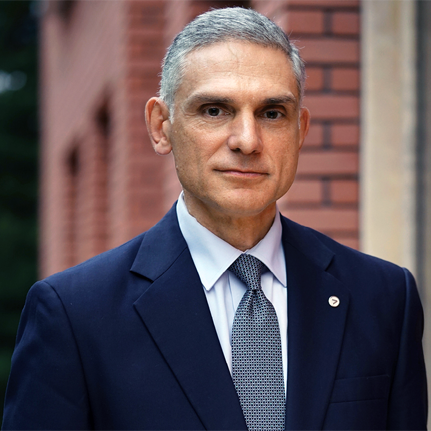
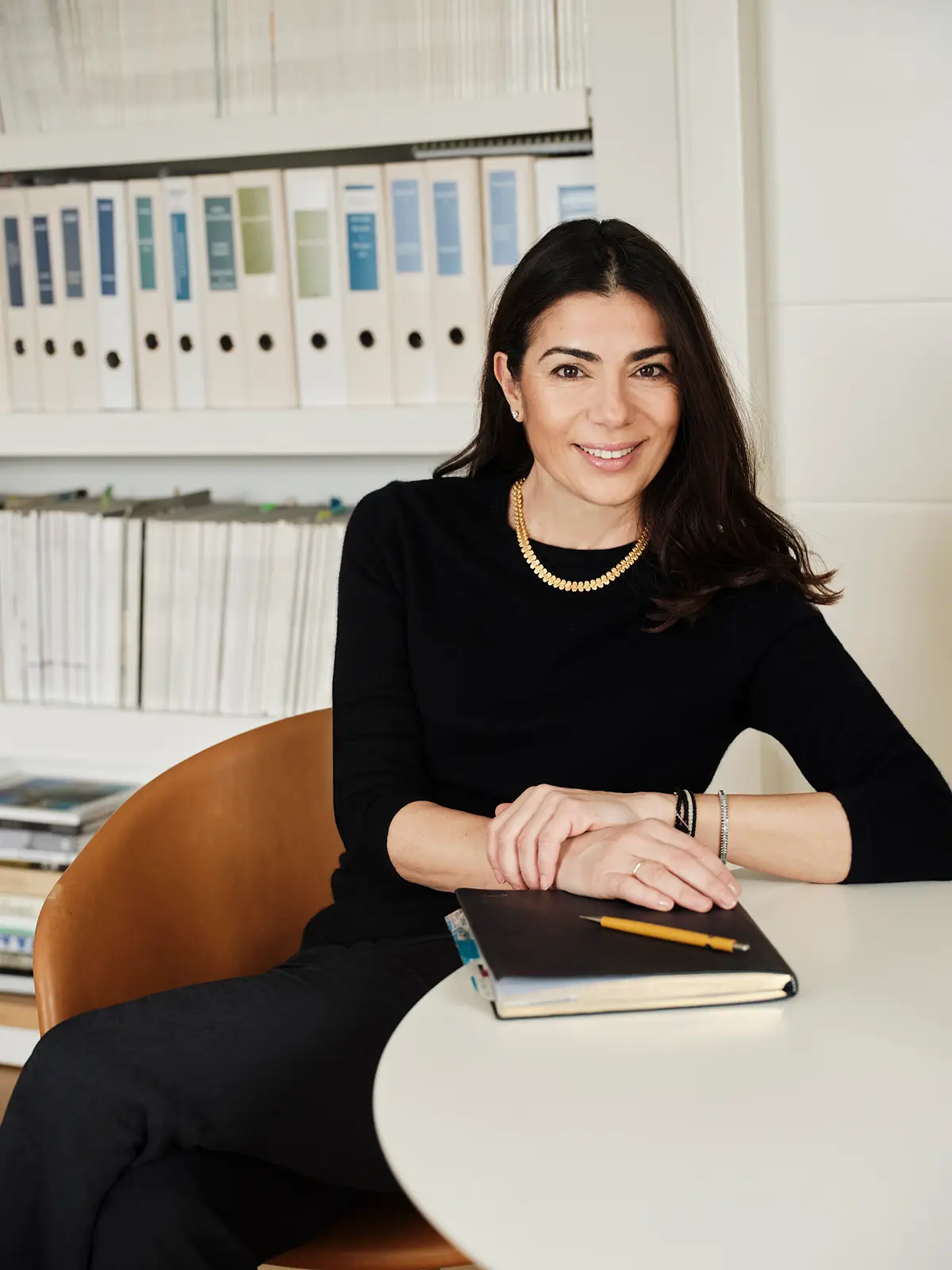
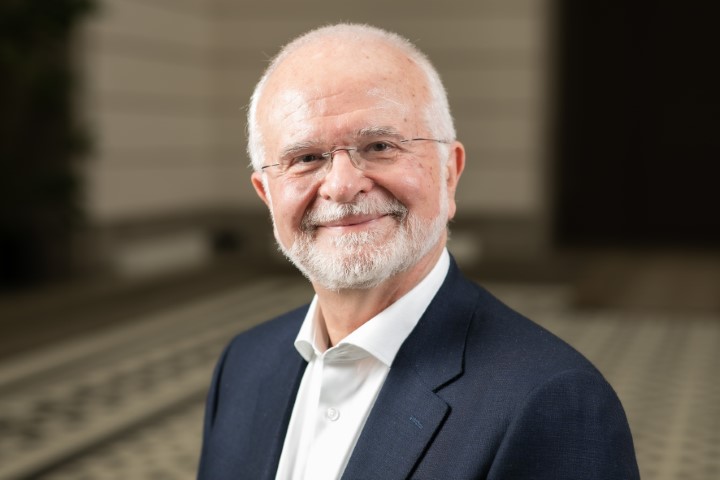
Fokion Karavias
- Chief Executive Officer, Eurobank
- School of Chemical Engineering
NTUA graduates belong to a community. Neither we nor NTUA had actively sought to define it until now. It emerged naturally, through the shared experience of studying here — an experience that left its mark on us — and through an affinity in our way of thinking that is recognisable even in entirely different social or professional environments. How did this affinity arise? Everyone has their own personal lived experiences, of course.
For me, it is primarily about fellow students. In many university faculties, students were admitted not by choice or preference but by circumstance. At NTUA, by contrast — given the nature of its programmes and the professional paths that follow, and because it was composed of schools that demanded high entrance scores and were therefore first-choice options — students generally followed a path they had themselves chosen. We therefore knew what we wanted, to the extent that is possible at the age of eighteen. We already had an initial point of connection, and it grew stronger during our years of study. We learned not only from our professors but also from our fellow students — attending classes together, studying together, working on assignments together, sitting examinations together, and complementing one another both intellectually and socially. What today has been recognised as a key ingredient in the success of great organisations was already a reality: an “ecosystem” of knowledge and experience grounded in their exchange.
At the same time, the osmosis among fellow students led many of us to think seriously about postgraduate studies, even from the early years of our undergraduate programme. This was further encouraged by the fact that a number of professors had experience at American universities and maintained academic networks through which they pushed and helped their students to continue at the world’s leading universities — which in those decades were predominantly in the United States — securing full scholarships. In this way, a network developed of NTUA graduates studying in the US together with Greek professors who were pursuing academic careers there, and they helped us — just as we later helped those who came after — to find their footing in the American academic world. To some extent, as students who already had expectations of postgraduate study, we regarded a master’s or doctoral programme in the United States as almost a natural next step. We encouraged one another. And in precisely the same way, NTUA’s reputation had already spread to American universities and the academic community, opening doors for those who knocked on them armed with a degree from the Polytechnic.
NTUA’s reputation in America was not a matter of chance, either. My own experience — and I am not the only one — confirmed that the standard of education at the Polytechnic was fully comparable with that of other institutions from around the world, graduates of which we met as postgraduate classmates in America. Starting from a small, peripheral country, we entered the arena of open global competition in knowledge and research fully equipped academically. No other advantage could have been more valuable.
All of this shapes and reinforces the sense of community among graduates. I have observed it repeatedly, and over a long span of time, during a professional career of 35 years. NTUA graduates, regardless of when they graduated, possess something that sets them apart and makes them recognisable. They can succeed in fields different from the specific subject of their studies because, beyond knowledge, NTUA forges a way of thinking characterised by systematic and methodical rigour. This is my own experience as well. It is a distinctive feeling to know that you belong to this community. And that is the debt we owe to our shared alma mater, NTUA.
Alumni
-
Giannis Alavanos
-
Thomas Acheimastos
-
Ioannis Ventikos
-
Emmanouel Gdoutos
-
† Giorgos Gerardos
-
Giannis Giortsos
-
Maria Damanaki
-
Katerina Daskalaki
-
Giorgos Deodatis
-
Vasilis Dimos
-
Eleni Diamanti
-
Thalia Zariphopoulou
-
Dimitris Theodosiou
-
Theodoros N. Theodorou
-
Fokion Karavias
-
Dafni Karaiskaki
-
Spyros Kinnas
-
Efstratios Kechagias
-
Panagiotis Kokkalis
-
Antonis Kounadis
-
Ioannis Koustas
-
Fani Kostourou
-
Giannis Maniatis
-
Anastasios Manos
-
Eirini Eleni Markantanatou
-
Dionysios S. Balodimos
-
Michalis M. Bernitsas
-
Dimitris Bertsimas
-
Dimitrios Papastergiou
-
Giannis Papachristou
-
Errikos Pavlis
-
Asimina Pelegri
-
Giorgos Polychroniou
-
Kyriakos Sabatakakis
-
Kostantza Sbokou-Konstantakopoulou
-
Theodoros Stathopoulos
-
Giorgos Stefanopoulos
-
Anna Stefanopoulou
-
Fotis Sotiropoulos
-
Theodosios Tasios
-
Michalis Triantafyllou
-
Georgios Tsatsaronis
-
Spyros Chatzifotis
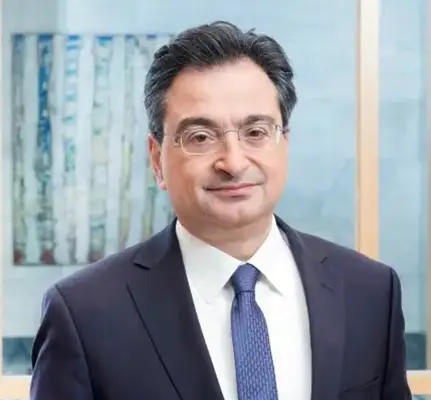
Fokion Karavias
- Chief Executive Officer, Eurobank
- School of Chemical Engineering
NTUA graduates belong to a community. Neither we nor NTUA had actively sought to define it until now. It emerged naturally, through the shared experience of studying here — an experience that left its mark on us — and through an affinity in our way of thinking that is recognisable even in entirely different social or professional environments. How did this affinity arise? Everyone has their own personal lived experiences, of course.
For me, it is primarily about fellow students. In many university faculties, students were admitted not by choice or preference but by circumstance. At NTUA, by contrast — given the nature of its programmes and the professional paths that follow, and because it was composed of schools that demanded high entrance scores and were therefore first-choice options — students generally followed a path they had themselves chosen. We therefore knew what we wanted, to the extent that is possible at the age of eighteen. We already had an initial point of connection, and it grew stronger during our years of study. We learned not only from our professors but also from our fellow students — attending classes together, studying together, working on assignments together, sitting examinations together, and complementing one another both intellectually and socially. What today has been recognised as a key ingredient in the success of great organisations was already a reality: an “ecosystem” of knowledge and experience grounded in their exchange.
At the same time, the osmosis among fellow students led many of us to think seriously about postgraduate studies, even from the early years of our undergraduate programme. This was further encouraged by the fact that a number of professors had experience at American universities and maintained academic networks through which they pushed and helped their students to continue at the world’s leading universities — which in those decades were predominantly in the United States — securing full scholarships. In this way, a network developed of NTUA graduates studying in the US together with Greek professors who were pursuing academic careers there, and they helped us — just as we later helped those who came after — to find their footing in the American academic world. To some extent, as students who already had expectations of postgraduate study, we regarded a master’s or doctoral programme in the United States as almost a natural next step. We encouraged one another. And in precisely the same way, NTUA’s reputation had already spread to American universities and the academic community, opening doors for those who knocked on them armed with a degree from the Polytechnic.
NTUA’s reputation in America was not a matter of chance, either. My own experience — and I am not the only one — confirmed that the standard of education at the Polytechnic was fully comparable with that of other institutions from around the world, graduates of which we met as postgraduate classmates in America. Starting from a small, peripheral country, we entered the arena of open global competition in knowledge and research fully equipped academically. No other advantage could have been more valuable.
All of this shapes and reinforces the sense of community among graduates. I have observed it repeatedly, and over a long span of time, during a professional career of 35 years. NTUA graduates, regardless of when they graduated, possess something that sets them apart and makes them recognisable. They can succeed in fields different from the specific subject of their studies because, beyond knowledge, NTUA forges a way of thinking characterised by systematic and methodical rigour. This is my own experience as well. It is a distinctive feeling to know that you belong to this community. And that is the debt we owe to our shared alma mater, NTUA.
Fokion Karavias
- Chief Executive Officer, Eurobank
- School of Chemical Engineering
NTUA graduates belong to a community. Neither we nor NTUA had actively sought to define it until now. It emerged naturally, through the shared experience of studying here — an experience that left its mark on us — and through an affinity in our way of thinking that is recognisable even in entirely different social or professional environments. How did this affinity arise? Everyone has their own personal lived experiences, of course.
For me, it is primarily about fellow students. In many university faculties, students were admitted not by choice or preference but by circumstance. At NTUA, by contrast — given the nature of its programmes and the professional paths that follow, and because it was composed of schools that demanded high entrance scores and were therefore first-choice options — students generally followed a path they had themselves chosen. We therefore knew what we wanted, to the extent that is possible at the age of eighteen. We already had an initial point of connection, and it grew stronger during our years of study. We learned not only from our professors but also from our fellow students — attending classes together, studying together, working on assignments together, sitting examinations together, and complementing one another both intellectually and socially. What today has been recognised as a key ingredient in the success of great organisations was already a reality: an “ecosystem” of knowledge and experience grounded in their exchange.
At the same time, the osmosis among fellow students led many of us to think seriously about postgraduate studies, even from the early years of our undergraduate programme. This was further encouraged by the fact that a number of professors had experience at American universities and maintained academic networks through which they pushed and helped their students to continue at the world’s leading universities — which in those decades were predominantly in the United States — securing full scholarships. In this way, a network developed of NTUA graduates studying in the US together with Greek professors who were pursuing academic careers there, and they helped us — just as we later helped those who came after — to find their footing in the American academic world. To some extent, as students who already had expectations of postgraduate study, we regarded a master’s or doctoral programme in the United States as almost a natural next step. We encouraged one another. And in precisely the same way, NTUA’s reputation had already spread to American universities and the academic community, opening doors for those who knocked on them armed with a degree from the Polytechnic.
NTUA’s reputation in America was not a matter of chance, either. My own experience — and I am not the only one — confirmed that the standard of education at the Polytechnic was fully comparable with that of other institutions from around the world, graduates of which we met as postgraduate classmates in America. Starting from a small, peripheral country, we entered the arena of open global competition in knowledge and research fully equipped academically. No other advantage could have been more valuable.
All of this shapes and reinforces the sense of community among graduates. I have observed it repeatedly, and over a long span of time, during a professional career of 35 years. NTUA graduates, regardless of when they graduated, possess something that sets them apart and makes them recognisable. They can succeed in fields different from the specific subject of their studies because, beyond knowledge, NTUA forges a way of thinking characterised by systematic and methodical rigour. This is my own experience as well. It is a distinctive feeling to know that you belong to this community. And that is the debt we owe to our shared alma mater, NTUA.
Alumni
-
Giannis Alavanos
-
Thomas Acheimastos
-
Ioannis Ventikos
-
Emmanouel Gdoutos
-
† Giorgos Gerardos
-
Giannis Giortsos
-
Maria Damanaki
-
Katerina Daskalaki
-
Giorgos Deodatis
-
Vasilis Dimos
-
Eleni Diamanti
-
Thalia Zariphopoulou
-
Dimitris Theodosiou
-
Theodoros N. Theodorou
-
Fokion Karavias
-
Dafni Karaiskaki
-
Spyros Kinnas
-
Efstratios Kechagias
-
Panagiotis Kokkalis
-
Antonis Kounadis
-
Ioannis Koustas
-
Fani Kostourou
-
Giannis Maniatis
-
Anastasios Manos
-
Eirini Eleni Markantanatou
-
Dionysios S. Balodimos
-
Michalis M. Bernitsas
-
Dimitris Bertsimas
-
Dimitrios Papastergiou
-
Giannis Papachristou
-
Errikos Pavlis
-
Asimina Pelegri
-
Giorgos Polychroniou
-
Kyriakos Sabatakakis
-
Kostantza Sbokou-Konstantakopoulou
-
Theodoros Stathopoulos
-
Giorgos Stefanopoulos
-
Anna Stefanopoulou
-
Fotis Sotiropoulos
-
Theodosios Tasios
-
Michalis Triantafyllou
-
Georgios Tsatsaronis
-
Spyros Chatzifotis