Email: alumni@mail.ntua.gr

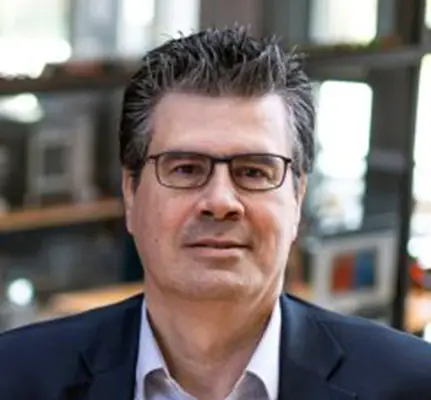
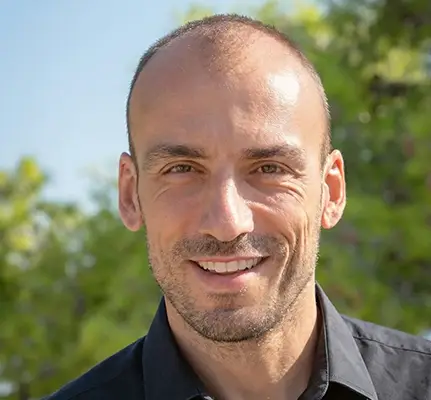
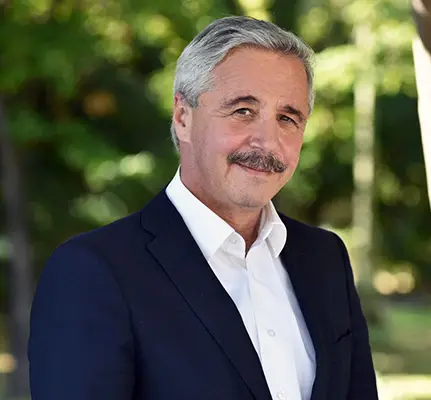
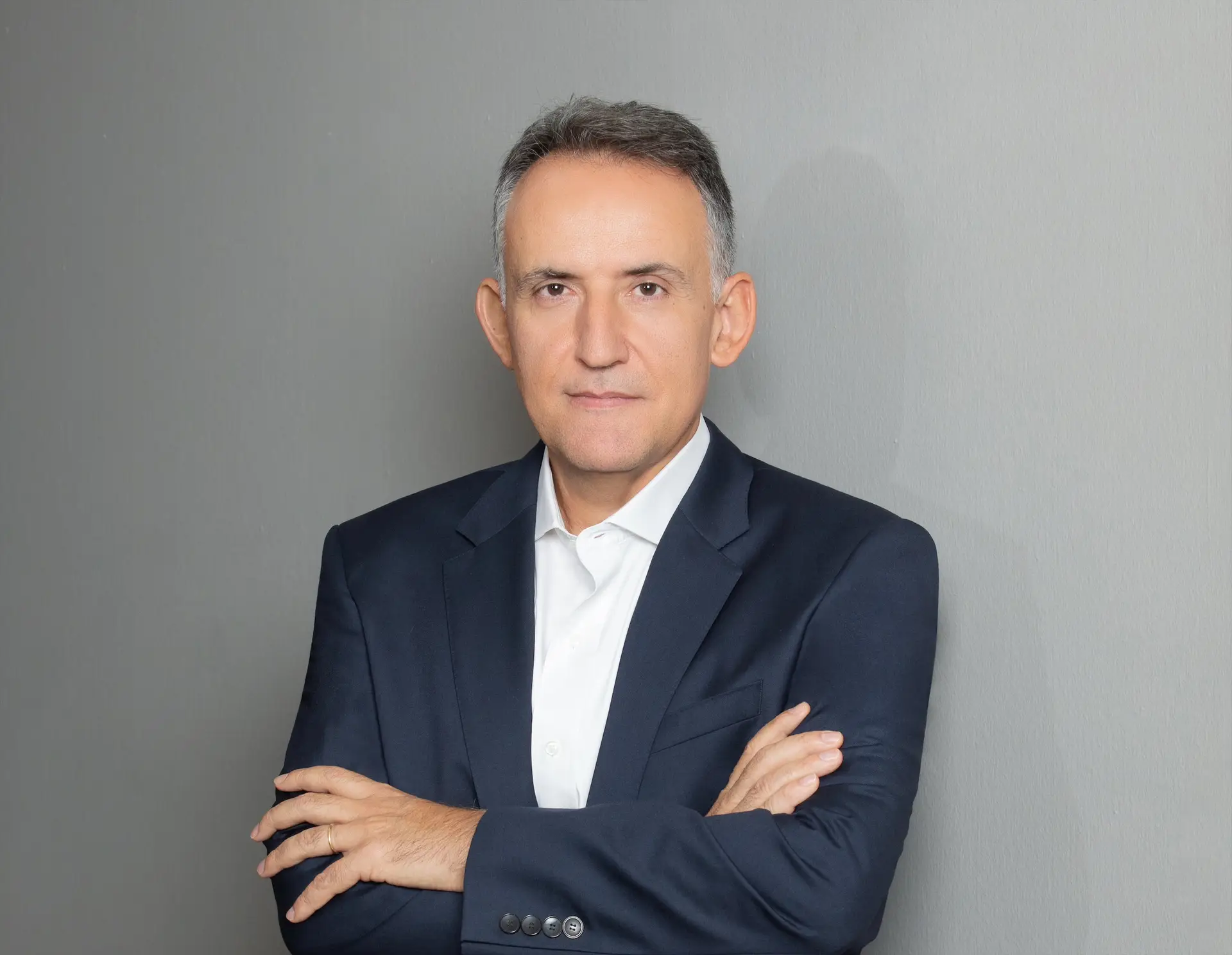
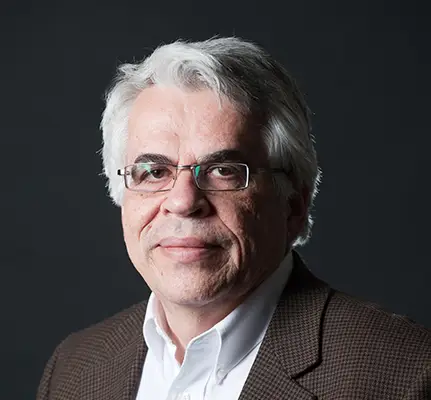
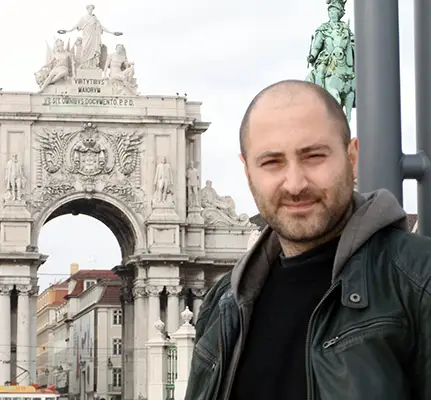
Panagiotis Kokkalis

From childhood, the world around me fascinated me — not only the phenomena I could see, but above all the invisible forces that shaped the weather, the climate and atmospheric change. This innate curiosity evolved into a keen interest in the natural sciences. Later, during my studies, I was particularly captivated by understanding the physics behind the interaction of light with the constituents of the atmosphere. Light, as a carrier of information, and the atmosphere, as a multi-dimensional field of study, revealed to me an invisible yet measurable world. It was this fascination that led me, in 2008, to choose the Laser Remote Sensing Unit (LRSU) at NTUA for my doctoral dissertation, under the supervision of Professor Alexandros Papayannis. From the very first day I felt that NTUA was not merely an academic institution, but a living research organism that actively promoted knowledge, experimental experience and innovation. My dissertation, entitled “Study of Tropospheric Aerosols Using Ground-Based and Satellite Techniques”, served as the bridge between theory and application — a journey from the design of advanced optical systems and the development of specialised instruments, to the collection and analysis of complex atmospheric data using innovative remote sensing techniques.

During the period 2008–2014, I had the good fortune to participate actively in many experimental campaigns, several of which were coordinated by NTUA within the framework of European research projects. I still remember the night-time measurements with the Raman lidar — assembling the system, checking the stability of its alignment, and recording data under the stars, with no company other than the sound of the laser and the computer. Those were difficult but magical moments. Particularly unforgettable was our contribution to the monitoring of volcanic ash from the Eyjafjallajökull eruption that was transported from Iceland across the Attic sky in 2010, an event that demonstrated in the most direct way the importance of remote sensing for understanding and managing natural disasters at a European level.

My research activity was not confined within national borders. Soon, with a Raman lidar mounted on a specially equipped vehicle of the European Space Agency (ESA), I travelled across almost all of Europe, following satellite orbits and comparing ground-based with satellite measurements of suspended particles. I participated in experimental campaigns ranging from the plains and meadows of France and Germany to the forests of the Bohemian highlands, in the White Carpathian Mountains of the Czech Republic, supporting the future FLEX mission — an ambitious effort to monitor plant photosynthesis from space via fluorescence phenomena.

During these missions I came into contact with leading research groups and advanced observation instruments, while I had the opportunity to contribute to the development and use of lidar depolarisation techniques — a field in which I was the first to work systematically in Greece, under the guidance and support of the NTUA team. The experience of assembling equipment in remote areas, collecting data under adverse conditions and observing the “breaths” of the atmosphere was one of the most thrilling and formative periods of my life.

These first tentative scientific steps were also accompanied by the familiar everyday life of NTUA. The endless hours of study in the library, the brief breaks in the canteen with fellow students who shared the same passion and the same anxieties. I still remember the spontaneous conversations in the laboratory corridor that often led to ideas for new experiments. Above all, however, I was always guided by the words of my supervisor, Professor Papayannis: “Every day of your doctorate, try to learn something new.” That piece of advice became for me far more than scientific guidance — it became a way of life.

NTUA was not only the framework for my education but also a source of inspiration. It offered me the scientific tools, the research discipline and the culture of collaboration that accompany me to this day. I feel profound gratitude for having been a member of this academic community, and for continuing to carry with me the values and experiences it gave me.
Panagiotis Kokkalis

From childhood, the world around me fascinated me — not only the phenomena I could see, but above all the invisible forces that shaped the weather, the climate and atmospheric change. This innate curiosity evolved into a keen interest in the natural sciences. Later, during my studies, I was particularly captivated by understanding the physics behind the interaction of light with the constituents of the atmosphere. Light, as a carrier of information, and the atmosphere, as a multi-dimensional field of study, revealed to me an invisible yet measurable world. It was this fascination that led me, in 2008, to choose the Laser Remote Sensing Unit (LRSU) at NTUA for my doctoral dissertation, under the supervision of Professor Alexandros Papayannis. From the very first day I felt that NTUA was not merely an academic institution, but a living research organism that actively promoted knowledge, experimental experience and innovation. My dissertation, entitled “Study of Tropospheric Aerosols Using Ground-Based and Satellite Techniques”, served as the bridge between theory and application — a journey from the design of advanced optical systems and the development of specialised instruments, to the collection and analysis of complex atmospheric data using innovative remote sensing techniques.

During the period 2008–2014, I had the good fortune to participate actively in many experimental campaigns, several of which were coordinated by NTUA within the framework of European research projects. I still remember the night-time measurements with the Raman lidar — assembling the system, checking the stability of its alignment, and recording data under the stars, with no company other than the sound of the laser and the computer. Those were difficult but magical moments. Particularly unforgettable was our contribution to the monitoring of volcanic ash from the Eyjafjallajökull eruption that was transported from Iceland across the Attic sky in 2010, an event that demonstrated in the most direct way the importance of remote sensing for understanding and managing natural disasters at a European level.

My research activity was not confined within national borders. Soon, with a Raman lidar mounted on a specially equipped vehicle of the European Space Agency (ESA), I travelled across almost all of Europe, following satellite orbits and comparing ground-based with satellite measurements of suspended particles. I participated in experimental campaigns ranging from the plains and meadows of France and Germany to the forests of the Bohemian highlands, in the White Carpathian Mountains of the Czech Republic, supporting the future FLEX mission — an ambitious effort to monitor plant photosynthesis from space via fluorescence phenomena.

During these missions I came into contact with leading research groups and advanced observation instruments, while I had the opportunity to contribute to the development and use of lidar depolarisation techniques — a field in which I was the first to work systematically in Greece, under the guidance and support of the NTUA team. The experience of assembling equipment in remote areas, collecting data under adverse conditions and observing the “breaths” of the atmosphere was one of the most thrilling and formative periods of my life.

These first tentative scientific steps were also accompanied by the familiar everyday life of NTUA. The endless hours of study in the library, the brief breaks in the canteen with fellow students who shared the same passion and the same anxieties. I still remember the spontaneous conversations in the laboratory corridor that often led to ideas for new experiments. Above all, however, I was always guided by the words of my supervisor, Professor Papayannis: “Every day of your doctorate, try to learn something new.” That piece of advice became for me far more than scientific guidance — it became a way of life.

NTUA was not only the framework for my education but also a source of inspiration. It offered me the scientific tools, the research discipline and the culture of collaboration that accompany me to this day. I feel profound gratitude for having been a member of this academic community, and for continuing to carry with me the values and experiences it gave me.
Panagiotis Kokkalis

From childhood, the world around me fascinated me — not only the phenomena I could see, but above all the invisible forces that shaped the weather, the climate and atmospheric change. This innate curiosity evolved into a keen interest in the natural sciences. Later, during my studies, I was particularly captivated by understanding the physics behind the interaction of light with the constituents of the atmosphere. Light, as a carrier of information, and the atmosphere, as a multi-dimensional field of study, revealed to me an invisible yet measurable world. It was this fascination that led me, in 2008, to choose the Laser Remote Sensing Unit (LRSU) at NTUA for my doctoral dissertation, under the supervision of Professor Alexandros Papayannis. From the very first day I felt that NTUA was not merely an academic institution, but a living research organism that actively promoted knowledge, experimental experience and innovation. My dissertation, entitled “Study of Tropospheric Aerosols Using Ground-Based and Satellite Techniques”, served as the bridge between theory and application — a journey from the design of advanced optical systems and the development of specialised instruments, to the collection and analysis of complex atmospheric data using innovative remote sensing techniques.

During the period 2008–2014, I had the good fortune to participate actively in many experimental campaigns, several of which were coordinated by NTUA within the framework of European research projects. I still remember the night-time measurements with the Raman lidar — assembling the system, checking the stability of its alignment, and recording data under the stars, with no company other than the sound of the laser and the computer. Those were difficult but magical moments. Particularly unforgettable was our contribution to the monitoring of volcanic ash from the Eyjafjallajökull eruption that was transported from Iceland across the Attic sky in 2010, an event that demonstrated in the most direct way the importance of remote sensing for understanding and managing natural disasters at a European level.

My research activity was not confined within national borders. Soon, with a Raman lidar mounted on a specially equipped vehicle of the European Space Agency (ESA), I travelled across almost all of Europe, following satellite orbits and comparing ground-based with satellite measurements of suspended particles. I participated in experimental campaigns ranging from the plains and meadows of France and Germany to the forests of the Bohemian highlands, in the White Carpathian Mountains of the Czech Republic, supporting the future FLEX mission — an ambitious effort to monitor plant photosynthesis from space via fluorescence phenomena.

During these missions I came into contact with leading research groups and advanced observation instruments, while I had the opportunity to contribute to the development and use of lidar depolarisation techniques — a field in which I was the first to work systematically in Greece, under the guidance and support of the NTUA team. The experience of assembling equipment in remote areas, collecting data under adverse conditions and observing the “breaths” of the atmosphere was one of the most thrilling and formative periods of my life.

These first tentative scientific steps were also accompanied by the familiar everyday life of NTUA. The endless hours of study in the library, the brief breaks in the canteen with fellow students who shared the same passion and the same anxieties. I still remember the spontaneous conversations in the laboratory corridor that often led to ideas for new experiments. Above all, however, I was always guided by the words of my supervisor, Professor Papayannis: “Every day of your doctorate, try to learn something new.” That piece of advice became for me far more than scientific guidance — it became a way of life.

NTUA was not only the framework for my education but also a source of inspiration. It offered me the scientific tools, the research discipline and the culture of collaboration that accompany me to this day. I feel profound gratitude for having been a member of this academic community, and for continuing to carry with me the values and experiences it gave me.
Scroll to Top