Email: alumni@mail.ntua.gr

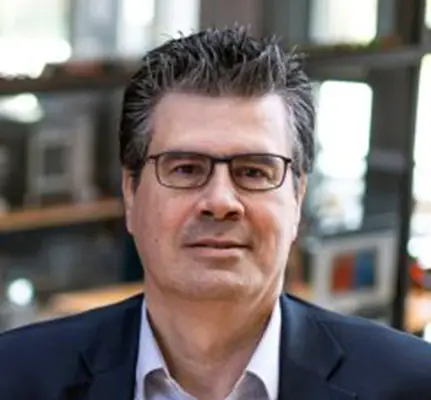
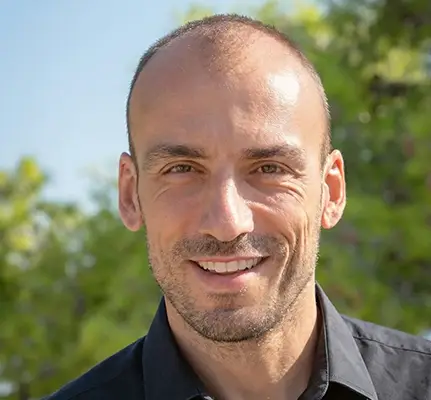
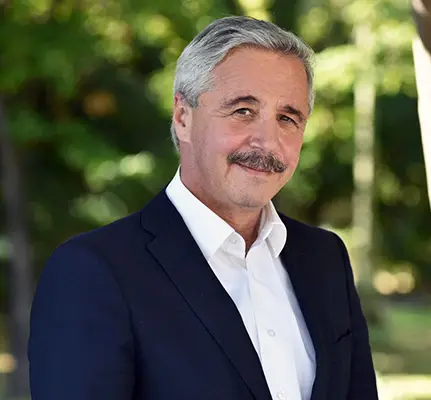
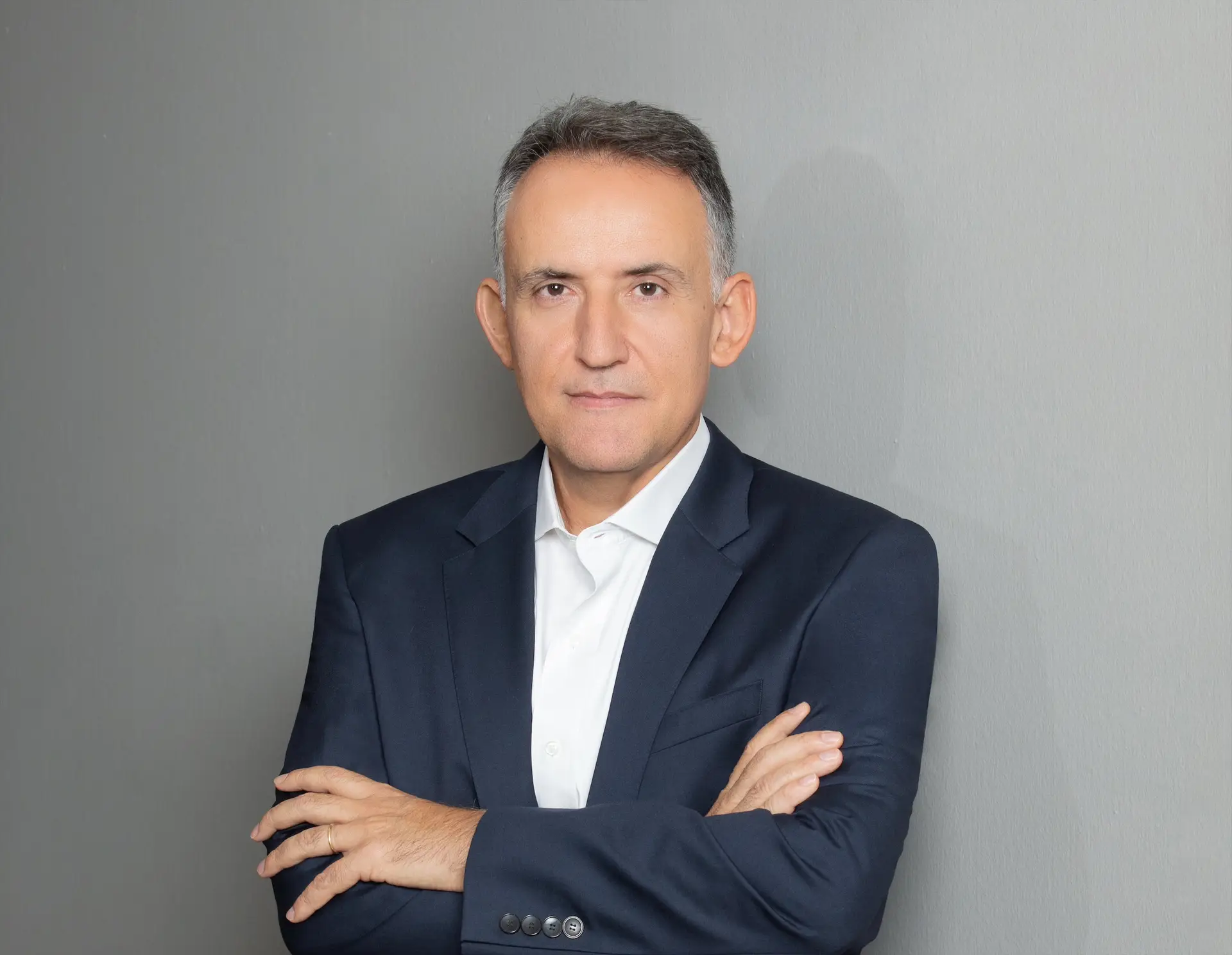
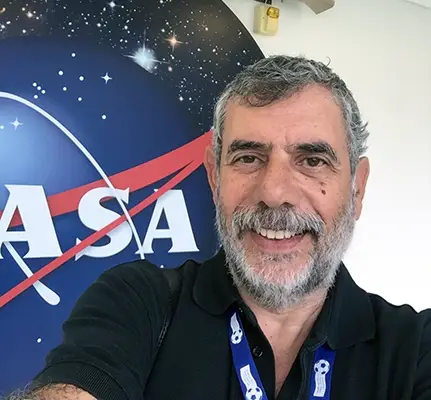
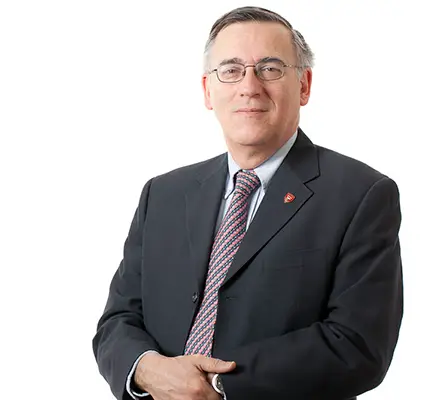
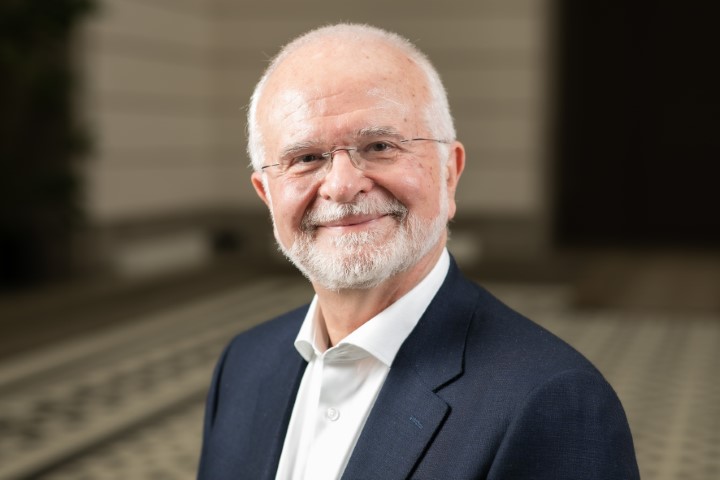
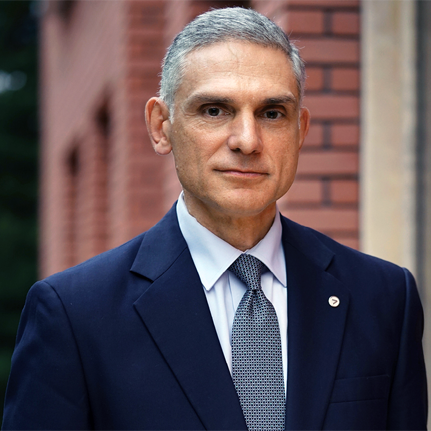
Kyriakos Sabatakakis

After secondary school I was admitted to the NTUA entrance-level class in the School of Electrical Engineering in 1982, but decided to go to the United States.
In this rather unusual way, I began a professional relationship with NTUA before I had effectively established an academic one.

I had just returned from my studies in the United States to fulfil my military obligations as a Sergeant in the Hellenic Air Force. In the mornings I served in the Air Force’s Information Technology Department, and in the afternoons I earned some money doing contracted research for NTUA’s Department of Electrical Engineering on European-funded projects. I was a member of the research team of Professors Protonotarios, Stassinopoulos, and Sykas, working on simulation models and the application of queuing theory to telecommunications problems.

After my discharge and nearly two years of research work, Professor Protonotarios suggested that I stay at NTUA to pursue a doctoral degree, which I eventually did.
Under the supervision of Professor Giorgos Stassinopoulos — an ETH-trained academic with a cosmopolitan outlook that I shared — I completed my doctoral dissertation on ATM networks, which were only just being defined at the time.

I have very warm memories of my years at NTUA, primarily because of the people I met, the stimulating discussions we had, and the great joy of discovering how European industry operated and how collaboration worked through participation in many European projects. I genuinely enjoyed that European experience. It was precisely the expertise I developed during that period — bringing together various research organisations to work toward specific goals — that equipped me with the knowledge my future employer, the Swiss Centre for Electronics and Microtechnology (CSEM), valued, and that led them to entrust me with their then-nascent Communications Division. This gave me the opportunity to build the first pan-European consortia that defined the new 3rd-generation (3G) mobile communications, both at the radio-technology and the network level. Subsequently, my team was the first in the world to demonstrate an end-to-end integrated 3G call, while I represented Swiss industry in the 3G standardisation process.

Had it not been for the skills I acquired at NTUA, I would not have been able to navigate successfully the complex world of pre-competitive industrial alliances.
The self-discipline I learned at NTUA was also invaluable in my subsequent career at Accenture. Growing a consulting practice from a few dozen people to several thousand over the years, and delivering highly complex projects for the largest organisations in the country, would not have been possible without such discipline, results-orientation, and an engineering approach to problem-solving — all qualities that NTUA helped me develop.

NTUA is full of smart people with a natural aptitude for innovation, representing the finest engineering minds in the country.

I am proud to be one of its graduates and look forward to seeing future students and faculty build the backbone of Greece’s technology economy.
Kyriakos Sabatakakis

After secondary school I was admitted to the NTUA entrance-level class in the School of Electrical Engineering in 1982, but decided to go to the United States.
In this rather unusual way, I began a professional relationship with NTUA before I had effectively established an academic one.

I had just returned from my studies in the United States to fulfil my military obligations as a Sergeant in the Hellenic Air Force. In the mornings I served in the Air Force’s Information Technology Department, and in the afternoons I earned some money doing contracted research for NTUA’s Department of Electrical Engineering on European-funded projects. I was a member of the research team of Professors Protonotarios, Stassinopoulos, and Sykas, working on simulation models and the application of queuing theory to telecommunications problems.

After my discharge and nearly two years of research work, Professor Protonotarios suggested that I stay at NTUA to pursue a doctoral degree, which I eventually did.
Under the supervision of Professor Giorgos Stassinopoulos — an ETH-trained academic with a cosmopolitan outlook that I shared — I completed my doctoral dissertation on ATM networks, which were only just being defined at the time.

I have very warm memories of my years at NTUA, primarily because of the people I met, the stimulating discussions we had, and the great joy of discovering how European industry operated and how collaboration worked through participation in many European projects. I genuinely enjoyed that European experience. It was precisely the expertise I developed during that period — bringing together various research organisations to work toward specific goals — that equipped me with the knowledge my future employer, the Swiss Centre for Electronics and Microtechnology (CSEM), valued, and that led them to entrust me with their then-nascent Communications Division. This gave me the opportunity to build the first pan-European consortia that defined the new 3rd-generation (3G) mobile communications, both at the radio-technology and the network level. Subsequently, my team was the first in the world to demonstrate an end-to-end integrated 3G call, while I represented Swiss industry in the 3G standardisation process.

Had it not been for the skills I acquired at NTUA, I would not have been able to navigate successfully the complex world of pre-competitive industrial alliances.
The self-discipline I learned at NTUA was also invaluable in my subsequent career at Accenture. Growing a consulting practice from a few dozen people to several thousand over the years, and delivering highly complex projects for the largest organisations in the country, would not have been possible without such discipline, results-orientation, and an engineering approach to problem-solving — all qualities that NTUA helped me develop.

NTUA is full of smart people with a natural aptitude for innovation, representing the finest engineering minds in the country.

I am proud to be one of its graduates and look forward to seeing future students and faculty build the backbone of Greece’s technology economy.
Kyriakos Sabatakakis

After secondary school I was admitted to the NTUA entrance-level class in the School of Electrical Engineering in 1982, but decided to go to the United States.
In this rather unusual way, I began a professional relationship with NTUA before I had effectively established an academic one.

I had just returned from my studies in the United States to fulfil my military obligations as a Sergeant in the Hellenic Air Force. In the mornings I served in the Air Force’s Information Technology Department, and in the afternoons I earned some money doing contracted research for NTUA’s Department of Electrical Engineering on European-funded projects. I was a member of the research team of Professors Protonotarios, Stassinopoulos, and Sykas, working on simulation models and the application of queuing theory to telecommunications problems.

After my discharge and nearly two years of research work, Professor Protonotarios suggested that I stay at NTUA to pursue a doctoral degree, which I eventually did.
Under the supervision of Professor Giorgos Stassinopoulos — an ETH-trained academic with a cosmopolitan outlook that I shared — I completed my doctoral dissertation on ATM networks, which were only just being defined at the time.

I have very warm memories of my years at NTUA, primarily because of the people I met, the stimulating discussions we had, and the great joy of discovering how European industry operated and how collaboration worked through participation in many European projects. I genuinely enjoyed that European experience. It was precisely the expertise I developed during that period — bringing together various research organisations to work toward specific goals — that equipped me with the knowledge my future employer, the Swiss Centre for Electronics and Microtechnology (CSEM), valued, and that led them to entrust me with their then-nascent Communications Division. This gave me the opportunity to build the first pan-European consortia that defined the new 3rd-generation (3G) mobile communications, both at the radio-technology and the network level. Subsequently, my team was the first in the world to demonstrate an end-to-end integrated 3G call, while I represented Swiss industry in the 3G standardisation process.

Had it not been for the skills I acquired at NTUA, I would not have been able to navigate successfully the complex world of pre-competitive industrial alliances.
The self-discipline I learned at NTUA was also invaluable in my subsequent career at Accenture. Growing a consulting practice from a few dozen people to several thousand over the years, and delivering highly complex projects for the largest organisations in the country, would not have been possible without such discipline, results-orientation, and an engineering approach to problem-solving — all qualities that NTUA helped me develop.

NTUA is full of smart people with a natural aptitude for innovation, representing the finest engineering minds in the country.

I am proud to be one of its graduates and look forward to seeing future students and faculty build the backbone of Greece’s technology economy.
Scroll to Top