Email: alumni@mail.ntua.gr

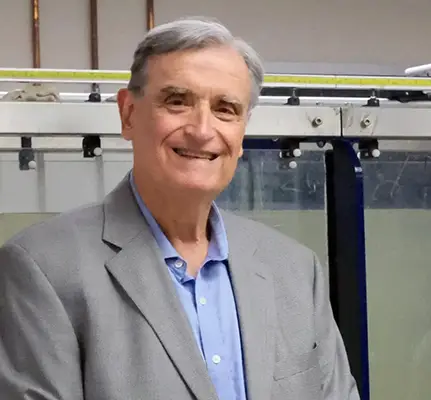
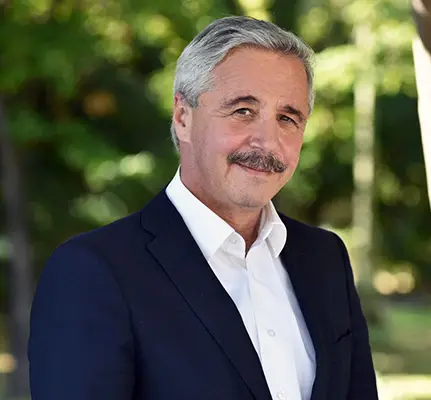
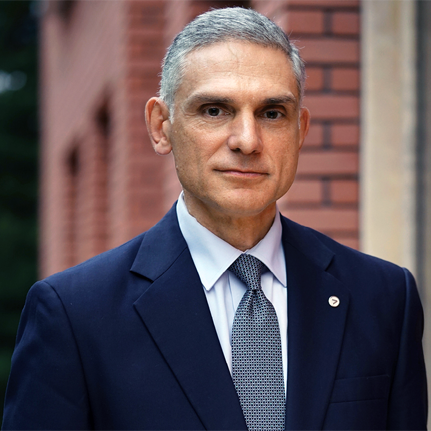
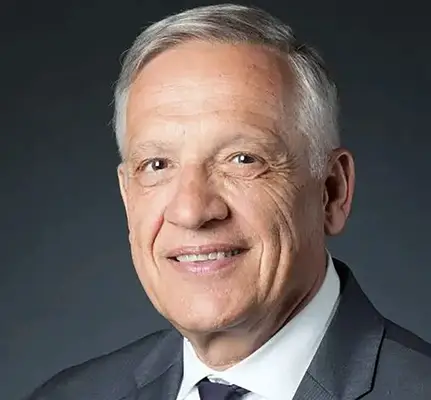
Giannis Giortsos

It is sometimes said that a university is nothing more than a safe space for the development of an 18-year-old. Of course, this is a tremendous oversimplification. Yet it also contains some truths. When I look back on my years as an undergraduate student of Chemical Engineering at NTUA, I can identify three core areas of that development: intellectual and academic growth, the expansion of social bonds and horizons, and confronting challenges from different directions and for different purposes. I will elaborate on all of these below. I will preface them, first, by saying how fortunate I was to be part of NTUA for five years — years of unusual enthusiasm, years that were uplifting, optimistic, and forward-looking. Although all my undergraduate years took place during the military dictatorship in Greece, the future-oriented, positive mindsets I mentioned stemmed from the environment of excellence, ambition, and achievement that permeated NTUA — an academic institution with strong and uncompromising standards and expectations. An environment that I am certain continues to this day.

Having grown up on the island of Rhodes, the idea of gaining admission to NTUA — the highest tier of mathematical and technological excellence in Greece — was simultaneously a fantasy and a reason for focused determination. My classmates from Venetókleio secondary school and I had heard that our fellow applicants from cities such as Athens were better prepared, in better schools, with better teachers, with private tutoring centres. Some of their names appeared prominently in the bulletin of the Mathematical Society. Surely we, as islanders, were well out of their league. Faced with these daunting odds, I decided then to supplement my knowledge with books we did not use, to undertake my own self-instruction and my own self-tutoring, so to speak. So I bought a book on Algebra by the legendary Mantas and one on Geometry by another legend of the era, Ioannidis. Thus, when the time came to sit the university entrance examinations, I felt better prepared and with greater self-confidence. Perhaps that contributed to my achieving a high score and being admitted on an IKY scholarship.

Upon entering NTUA, an astonishing new world of science and mathematics opened up — a world that continued to captivate me with increasing fascination until my graduation. Inorganic Chemistry and Quantum Mechanics (an elective course we attended in our fourth year), Physical Chemistry, Thermodynamics, Chemical Kinetics, and Transport Phenomena were all new, magical subjects that provided the foundation for understanding and applying the many transformations of materials and energy (the two fundamental components of engineering, the third being information) that enrich our lives. Four outstanding professors, some of whom had only recently been appointed at NTUA, contributed to this panorama: Georgios Parissakis, Theodoros Skoulikidis, Nikolaos Koumoutsos, and Ioannis Maragkozis. But the person who had the greatest influence on me was Professor Koumoutsos, under whose supervision, and together with the guidance of Lecturer Giannis Palyvos, I completed — jointly with my colleague Moyisis Boudouris — my diploma thesis on atmospheric pollution in Athens.

Those were years before the Internet and personal computers. And while most professors had lecture notes for their courses that were distributed to us, there was a real need for more. So, as in my secondary school years, I turned to self-help. I visited the Eleftheroudakis bookshop in Athens — a paradise for mathematics, chemistry, and related subjects by acclaimed authors. This helped me fill gaps, find answers to questions, and generally expand my knowledge base. In passing, I will add that I also bought the celebrated differential calculus books by Tom Apostol, Professor of Mathematics at Caltech. I never imagined then that a few years later I would meet Tom — who also had Greek heritage — at Caltech when I joined as a graduate student. A small world indeed!

The cohort of my fellow students in chemical engineering helped open yet another window onto the NTUA environment — one that fosters and continues to foster excellence and achievement. It was filled with talented students from all over Greece, ambitious, friendly, yet simultaneously fiercely competitive — in all likelihood, the top pupils in their respective secondary school classes. For someone who had grown up in the smaller space of an island, the environment was exhilarating, competitive, yet also thoroughly stimulating. And so we learned how to adapt, how to compete, and how to enrich our knowledge from colleagues with different backgrounds, ideas, and ways of thinking. In other words, how to grow day by day. The NTUA experience was decisive in navigating the subsequent transition to a new level of competitiveness and achievement, on a broader and more global scale, for those of us who went on to pursue postgraduate programmes abroad (nearly all of us in the United States). I should also add that a significant aid in this adjustment was the contribution of two summer internships I was fortunate to obtain through the IAESTE programme (which I understand, happily, still exists): one in Strasbourg, France, at Gaz de France, and another in Mänttä, Finland, at Serlachius Oy. Collectively, all these experiences brought the realisation that the world of science and engineering is global, that the pursuit of excellence is essential, and that through engineering we can strive to build a better world for all of humanity.

I will close with two additional notes. When the time came to decide on postgraduate studies, the few of us (about six, if I recall correctly) fellow chemical engineering students planning to apply to American universities decided to divide the United States into regions, each of us covering only one region, so as not to compete against one another. My region turned out to be the West Coast of the United States. I had very little knowledge of the universities there (or, to be more precise, anywhere else, in those pre-Internet times). But I was also given the additional privilege of applying to two institutions whose language of instruction we believed to be French (the first foreign language I had studied) and in which the others had no interest: the École Polytechnique de Montréal and the University of Notre Dame. Of course, the language of instruction at the University of Notre Dame is and always has been English, but in those pre-Internet days the name sounded very French! So I applied there as well. Fortunate that many universities accepted me, I ultimately decided to attend Caltech (the California Institute of Technology) — a decision based primarily on information we received from the Fulbright office in Athens. The rest of the story unfolded from there. It would be an omission not to mention that the path of chemical engineering from NTUA to American graduate programmes had been paved before us by exceptional chemical engineering graduates of NTUA: people such as Giorgos Gavalas (who was my dissertation supervisor at Caltech), Giorgos Stefanopoulos, Christos Georgakis, Alkis Pagiatakis, Nikos Peppas, and many others.

In closing, I could not reflect on my years of study at NTUA without speaking of the student protest movement against the military dictatorship — a movement alive and powerful, which brought a pulse of dissent to the stately buildings of NTUA, then on Patission Street. My most vivid memory is from my fourth and fifth years, when the military government permitted, for the first time, students to elect representatives. Having been elected in my fifth year as president of the three-member electoral commission of the Chemical Engineering Department students, I bore the responsibility of ensuring that the student elections would be fair and honest. Despite our fears to the contrary, we fortunately conducted the elections without incident. The opposition student movement intensified in the aftermath of those elections. Later that year, my cohort graduated. And while I was a graduate student at Caltech in the United States in the autumn of 1973, I learned from very far away about the events of 17 November 1973. One year later, democracy was restored in Greece. It is the shared experience during those formative years that has bound us and continues to bind us strongly.
Giannis Giortsos

It is sometimes said that a university is nothing more than a safe space for the development of an 18-year-old. Of course, this is a tremendous oversimplification. Yet it also contains some truths. When I look back on my years as an undergraduate student of Chemical Engineering at NTUA, I can identify three core areas of that development: intellectual and academic growth, the expansion of social bonds and horizons, and confronting challenges from different directions and for different purposes. I will elaborate on all of these below. I will preface them, first, by saying how fortunate I was to be part of NTUA for five years — years of unusual enthusiasm, years that were uplifting, optimistic, and forward-looking. Although all my undergraduate years took place during the military dictatorship in Greece, the future-oriented, positive mindsets I mentioned stemmed from the environment of excellence, ambition, and achievement that permeated NTUA — an academic institution with strong and uncompromising standards and expectations. An environment that I am certain continues to this day.

Having grown up on the island of Rhodes, the idea of gaining admission to NTUA — the highest tier of mathematical and technological excellence in Greece — was simultaneously a fantasy and a reason for focused determination. My classmates from Venetókleio secondary school and I had heard that our fellow applicants from cities such as Athens were better prepared, in better schools, with better teachers, with private tutoring centres. Some of their names appeared prominently in the bulletin of the Mathematical Society. Surely we, as islanders, were well out of their league. Faced with these daunting odds, I decided then to supplement my knowledge with books we did not use, to undertake my own self-instruction and my own self-tutoring, so to speak. So I bought a book on Algebra by the legendary Mantas and one on Geometry by another legend of the era, Ioannidis. Thus, when the time came to sit the university entrance examinations, I felt better prepared and with greater self-confidence. Perhaps that contributed to my achieving a high score and being admitted on an IKY scholarship.

Upon entering NTUA, an astonishing new world of science and mathematics opened up — a world that continued to captivate me with increasing fascination until my graduation. Inorganic Chemistry and Quantum Mechanics (an elective course we attended in our fourth year), Physical Chemistry, Thermodynamics, Chemical Kinetics, and Transport Phenomena were all new, magical subjects that provided the foundation for understanding and applying the many transformations of materials and energy (the two fundamental components of engineering, the third being information) that enrich our lives. Four outstanding professors, some of whom had only recently been appointed at NTUA, contributed to this panorama: Georgios Parissakis, Theodoros Skoulikidis, Nikolaos Koumoutsos, and Ioannis Maragkozis. But the person who had the greatest influence on me was Professor Koumoutsos, under whose supervision, and together with the guidance of Lecturer Giannis Palyvos, I completed — jointly with my colleague Moyisis Boudouris — my diploma thesis on atmospheric pollution in Athens.

Those were years before the Internet and personal computers. And while most professors had lecture notes for their courses that were distributed to us, there was a real need for more. So, as in my secondary school years, I turned to self-help. I visited the Eleftheroudakis bookshop in Athens — a paradise for mathematics, chemistry, and related subjects by acclaimed authors. This helped me fill gaps, find answers to questions, and generally expand my knowledge base. In passing, I will add that I also bought the celebrated differential calculus books by Tom Apostol, Professor of Mathematics at Caltech. I never imagined then that a few years later I would meet Tom — who also had Greek heritage — at Caltech when I joined as a graduate student. A small world indeed!

The cohort of my fellow students in chemical engineering helped open yet another window onto the NTUA environment — one that fosters and continues to foster excellence and achievement. It was filled with talented students from all over Greece, ambitious, friendly, yet simultaneously fiercely competitive — in all likelihood, the top pupils in their respective secondary school classes. For someone who had grown up in the smaller space of an island, the environment was exhilarating, competitive, yet also thoroughly stimulating. And so we learned how to adapt, how to compete, and how to enrich our knowledge from colleagues with different backgrounds, ideas, and ways of thinking. In other words, how to grow day by day. The NTUA experience was decisive in navigating the subsequent transition to a new level of competitiveness and achievement, on a broader and more global scale, for those of us who went on to pursue postgraduate programmes abroad (nearly all of us in the United States). I should also add that a significant aid in this adjustment was the contribution of two summer internships I was fortunate to obtain through the IAESTE programme (which I understand, happily, still exists): one in Strasbourg, France, at Gaz de France, and another in Mänttä, Finland, at Serlachius Oy. Collectively, all these experiences brought the realisation that the world of science and engineering is global, that the pursuit of excellence is essential, and that through engineering we can strive to build a better world for all of humanity.

I will close with two additional notes. When the time came to decide on postgraduate studies, the few of us (about six, if I recall correctly) fellow chemical engineering students planning to apply to American universities decided to divide the United States into regions, each of us covering only one region, so as not to compete against one another. My region turned out to be the West Coast of the United States. I had very little knowledge of the universities there (or, to be more precise, anywhere else, in those pre-Internet times). But I was also given the additional privilege of applying to two institutions whose language of instruction we believed to be French (the first foreign language I had studied) and in which the others had no interest: the École Polytechnique de Montréal and the University of Notre Dame. Of course, the language of instruction at the University of Notre Dame is and always has been English, but in those pre-Internet days the name sounded very French! So I applied there as well. Fortunate that many universities accepted me, I ultimately decided to attend Caltech (the California Institute of Technology) — a decision based primarily on information we received from the Fulbright office in Athens. The rest of the story unfolded from there. It would be an omission not to mention that the path of chemical engineering from NTUA to American graduate programmes had been paved before us by exceptional chemical engineering graduates of NTUA: people such as Giorgos Gavalas (who was my dissertation supervisor at Caltech), Giorgos Stefanopoulos, Christos Georgakis, Alkis Pagiatakis, Nikos Peppas, and many others.

In closing, I could not reflect on my years of study at NTUA without speaking of the student protest movement against the military dictatorship — a movement alive and powerful, which brought a pulse of dissent to the stately buildings of NTUA, then on Patission Street. My most vivid memory is from my fourth and fifth years, when the military government permitted, for the first time, students to elect representatives. Having been elected in my fifth year as president of the three-member electoral commission of the Chemical Engineering Department students, I bore the responsibility of ensuring that the student elections would be fair and honest. Despite our fears to the contrary, we fortunately conducted the elections without incident. The opposition student movement intensified in the aftermath of those elections. Later that year, my cohort graduated. And while I was a graduate student at Caltech in the United States in the autumn of 1973, I learned from very far away about the events of 17 November 1973. One year later, democracy was restored in Greece. It is the shared experience during those formative years that has bound us and continues to bind us strongly.
Giannis Giortsos

It is sometimes said that a university is nothing more than a safe space for the development of an 18-year-old. Of course, this is a tremendous oversimplification. Yet it also contains some truths. When I look back on my years as an undergraduate student of Chemical Engineering at NTUA, I can identify three core areas of that development: intellectual and academic growth, the expansion of social bonds and horizons, and confronting challenges from different directions and for different purposes. I will elaborate on all of these below. I will preface them, first, by saying how fortunate I was to be part of NTUA for five years — years of unusual enthusiasm, years that were uplifting, optimistic, and forward-looking. Although all my undergraduate years took place during the military dictatorship in Greece, the future-oriented, positive mindsets I mentioned stemmed from the environment of excellence, ambition, and achievement that permeated NTUA — an academic institution with strong and uncompromising standards and expectations. An environment that I am certain continues to this day.

Having grown up on the island of Rhodes, the idea of gaining admission to NTUA — the highest tier of mathematical and technological excellence in Greece — was simultaneously a fantasy and a reason for focused determination. My classmates from Venetókleio secondary school and I had heard that our fellow applicants from cities such as Athens were better prepared, in better schools, with better teachers, with private tutoring centres. Some of their names appeared prominently in the bulletin of the Mathematical Society. Surely we, as islanders, were well out of their league. Faced with these daunting odds, I decided then to supplement my knowledge with books we did not use, to undertake my own self-instruction and my own self-tutoring, so to speak. So I bought a book on Algebra by the legendary Mantas and one on Geometry by another legend of the era, Ioannidis. Thus, when the time came to sit the university entrance examinations, I felt better prepared and with greater self-confidence. Perhaps that contributed to my achieving a high score and being admitted on an IKY scholarship.

Upon entering NTUA, an astonishing new world of science and mathematics opened up — a world that continued to captivate me with increasing fascination until my graduation. Inorganic Chemistry and Quantum Mechanics (an elective course we attended in our fourth year), Physical Chemistry, Thermodynamics, Chemical Kinetics, and Transport Phenomena were all new, magical subjects that provided the foundation for understanding and applying the many transformations of materials and energy (the two fundamental components of engineering, the third being information) that enrich our lives. Four outstanding professors, some of whom had only recently been appointed at NTUA, contributed to this panorama: Georgios Parissakis, Theodoros Skoulikidis, Nikolaos Koumoutsos, and Ioannis Maragkozis. But the person who had the greatest influence on me was Professor Koumoutsos, under whose supervision, and together with the guidance of Lecturer Giannis Palyvos, I completed — jointly with my colleague Moyisis Boudouris — my diploma thesis on atmospheric pollution in Athens.

Those were years before the Internet and personal computers. And while most professors had lecture notes for their courses that were distributed to us, there was a real need for more. So, as in my secondary school years, I turned to self-help. I visited the Eleftheroudakis bookshop in Athens — a paradise for mathematics, chemistry, and related subjects by acclaimed authors. This helped me fill gaps, find answers to questions, and generally expand my knowledge base. In passing, I will add that I also bought the celebrated differential calculus books by Tom Apostol, Professor of Mathematics at Caltech. I never imagined then that a few years later I would meet Tom — who also had Greek heritage — at Caltech when I joined as a graduate student. A small world indeed!

The cohort of my fellow students in chemical engineering helped open yet another window onto the NTUA environment — one that fosters and continues to foster excellence and achievement. It was filled with talented students from all over Greece, ambitious, friendly, yet simultaneously fiercely competitive — in all likelihood, the top pupils in their respective secondary school classes. For someone who had grown up in the smaller space of an island, the environment was exhilarating, competitive, yet also thoroughly stimulating. And so we learned how to adapt, how to compete, and how to enrich our knowledge from colleagues with different backgrounds, ideas, and ways of thinking. In other words, how to grow day by day. The NTUA experience was decisive in navigating the subsequent transition to a new level of competitiveness and achievement, on a broader and more global scale, for those of us who went on to pursue postgraduate programmes abroad (nearly all of us in the United States). I should also add that a significant aid in this adjustment was the contribution of two summer internships I was fortunate to obtain through the IAESTE programme (which I understand, happily, still exists): one in Strasbourg, France, at Gaz de France, and another in Mänttä, Finland, at Serlachius Oy. Collectively, all these experiences brought the realisation that the world of science and engineering is global, that the pursuit of excellence is essential, and that through engineering we can strive to build a better world for all of humanity.

I will close with two additional notes. When the time came to decide on postgraduate studies, the few of us (about six, if I recall correctly) fellow chemical engineering students planning to apply to American universities decided to divide the United States into regions, each of us covering only one region, so as not to compete against one another. My region turned out to be the West Coast of the United States. I had very little knowledge of the universities there (or, to be more precise, anywhere else, in those pre-Internet times). But I was also given the additional privilege of applying to two institutions whose language of instruction we believed to be French (the first foreign language I had studied) and in which the others had no interest: the École Polytechnique de Montréal and the University of Notre Dame. Of course, the language of instruction at the University of Notre Dame is and always has been English, but in those pre-Internet days the name sounded very French! So I applied there as well. Fortunate that many universities accepted me, I ultimately decided to attend Caltech (the California Institute of Technology) — a decision based primarily on information we received from the Fulbright office in Athens. The rest of the story unfolded from there. It would be an omission not to mention that the path of chemical engineering from NTUA to American graduate programmes had been paved before us by exceptional chemical engineering graduates of NTUA: people such as Giorgos Gavalas (who was my dissertation supervisor at Caltech), Giorgos Stefanopoulos, Christos Georgakis, Alkis Pagiatakis, Nikos Peppas, and many others.

In closing, I could not reflect on my years of study at NTUA without speaking of the student protest movement against the military dictatorship — a movement alive and powerful, which brought a pulse of dissent to the stately buildings of NTUA, then on Patission Street. My most vivid memory is from my fourth and fifth years, when the military government permitted, for the first time, students to elect representatives. Having been elected in my fifth year as president of the three-member electoral commission of the Chemical Engineering Department students, I bore the responsibility of ensuring that the student elections would be fair and honest. Despite our fears to the contrary, we fortunately conducted the elections without incident. The opposition student movement intensified in the aftermath of those elections. Later that year, my cohort graduated. And while I was a graduate student at Caltech in the United States in the autumn of 1973, I learned from very far away about the events of 17 November 1973. One year later, democracy was restored in Greece. It is the shared experience during those formative years that has bound us and continues to bind us strongly.
Scroll to Top