Email: alumni@mail.ntua.gr

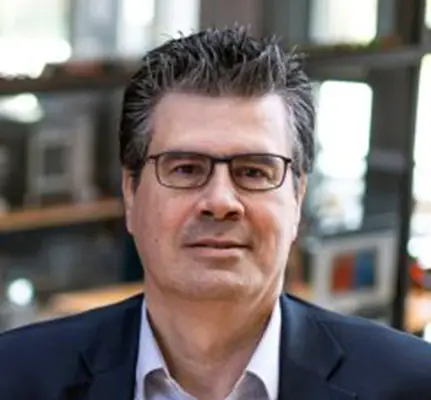
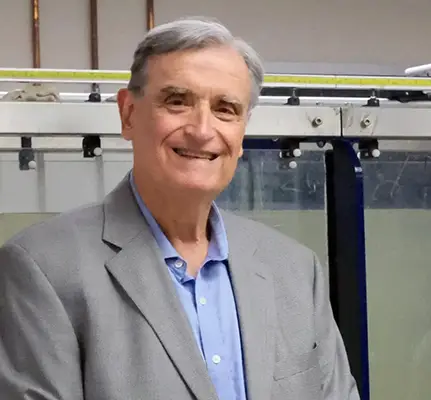
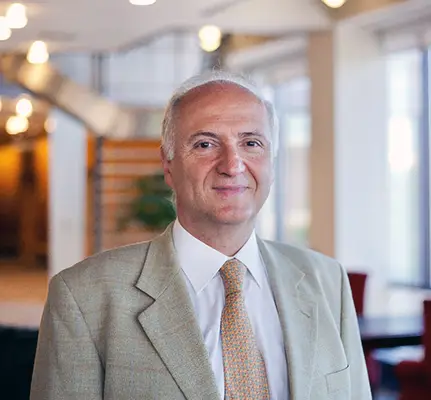
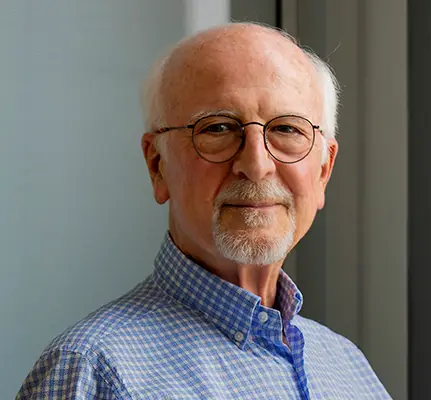
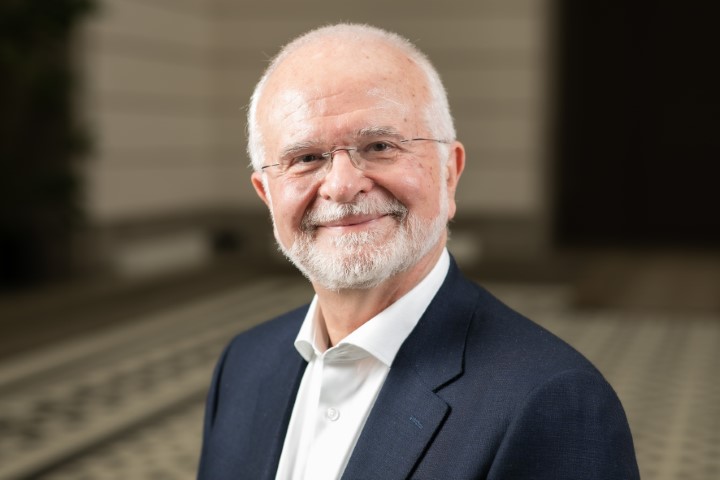
Georgios Tsatsaronis

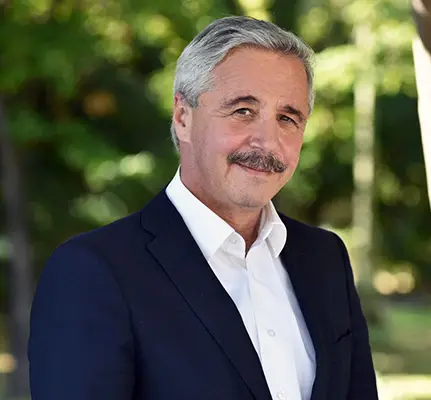
Ever since I was a young child, my father would tell me: “You will become an engineer and study at the Polytechnic.” So the choice of what to study was easy; what remained was to gain admission to NTUA. In working towards that important goal, I learned to work hard and effectively. During my time at the School of Mechanical-Electrical Engineering from 1967 to 1972, I came to know many distinguished professors who opened my eyes to the broad field of mechanical engineering — including elements from electrical engineering, production engineering, and naval architecture — and to the importance of economics in engineering decisions. Through their advice and their conduct, even on political matters, they influenced me profoundly. I retain positive and pleasant memories of nearly all the professors from that period; I mention in particular Professors Athanasiadis, Dimopoulos, and Konofagos.

In our year there were no female classmates. Mechanical engineering was still regarded as a male profession. Some of my fellow students wondered why I had chosen mechanical engineering, since I had no interest in repairing cars! The truth is that, then as now, my interests were of a theoretical nature. I worked on the simulation of various processes and energy-conversion systems without ever engaging in experimental work. I would be unfair, however, if I attributed the absence of a more balanced approach in this area solely to the lack of better laboratory facilities at the time.

The atmosphere in class — usually in the Ginis Building — was pleasant, and there was a strong spirit of cooperation. Friendships formed during our student years have endured to this day. Whenever we meet, we recall the late-night sessions working to submit the following morning — that is, within a few hours — demanding assignments, especially those in mechanical drawing. And of course we do not forget certain humorous incidents involving various professors. Given the heavy workload, we were often forced to prepare everything at the last minute, a habit I carried with me throughout the years that followed.

When I went to Aachen, Germany, in September 1972 for a master’s degree in economics and a doctorate at the Chair of Thermodynamics, I encountered no difficulties with the recognition of my degree, owing to NTUA’s reputation at foreign universities. Later, as a professor, I collaborated — and continue to collaborate — with colleagues from NTUA on research programmes and the organisation of conferences. Of all the honours I have received, none moved me as deeply as being awarded an honorary doctorate by NTUA. On many occasions I have compared my studies at NTUA with those offered by other universities: the selection of the best students at NTUA is a very important factor, as is the quality and breadth of the knowledge imparted to us, as well as the mode of thinking instilled in us by the Polytechnic. All of this helped us engage with relative ease in a wide variety of subjects.
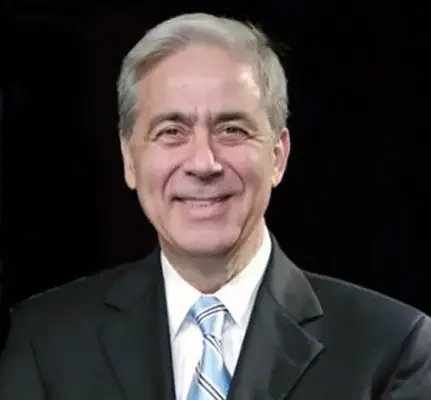
Georgios Tsatsaronis

Ever since I was a young child, my father would tell me: “You will become an engineer and study at the Polytechnic.” So the choice of what to study was easy; what remained was to gain admission to NTUA. In working towards that important goal, I learned to work hard and effectively. During my time at the School of Mechanical-Electrical Engineering from 1967 to 1972, I came to know many distinguished professors who opened my eyes to the broad field of mechanical engineering — including elements from electrical engineering, production engineering, and naval architecture — and to the importance of economics in engineering decisions. Through their advice and their conduct, even on political matters, they influenced me profoundly. I retain positive and pleasant memories of nearly all the professors from that period; I mention in particular Professors Athanasiadis, Dimopoulos, and Konofagos.

In our year there were no female classmates. Mechanical engineering was still regarded as a male profession. Some of my fellow students wondered why I had chosen mechanical engineering, since I had no interest in repairing cars! The truth is that, then as now, my interests were of a theoretical nature. I worked on the simulation of various processes and energy-conversion systems without ever engaging in experimental work. I would be unfair, however, if I attributed the absence of a more balanced approach in this area solely to the lack of better laboratory facilities at the time.

The atmosphere in class — usually in the Ginis Building — was pleasant, and there was a strong spirit of cooperation. Friendships formed during our student years have endured to this day. Whenever we meet, we recall the late-night sessions working to submit the following morning — that is, within a few hours — demanding assignments, especially those in mechanical drawing. And of course we do not forget certain humorous incidents involving various professors. Given the heavy workload, we were often forced to prepare everything at the last minute, a habit I carried with me throughout the years that followed.

When I went to Aachen, Germany, in September 1972 for a master’s degree in economics and a doctorate at the Chair of Thermodynamics, I encountered no difficulties with the recognition of my degree, owing to NTUA’s reputation at foreign universities. Later, as a professor, I collaborated — and continue to collaborate — with colleagues from NTUA on research programmes and the organisation of conferences. Of all the honours I have received, none moved me as deeply as being awarded an honorary doctorate by NTUA. On many occasions I have compared my studies at NTUA with those offered by other universities: the selection of the best students at NTUA is a very important factor, as is the quality and breadth of the knowledge imparted to us, as well as the mode of thinking instilled in us by the Polytechnic. All of this helped us engage with relative ease in a wide variety of subjects.
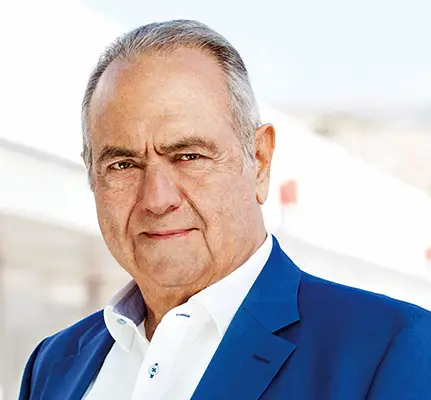
Georgios Tsatsaronis

Ever since I was a young child, my father would tell me: “You will become an engineer and study at the Polytechnic.” So the choice of what to study was easy; what remained was to gain admission to NTUA. In working towards that important goal, I learned to work hard and effectively. During my time at the School of Mechanical-Electrical Engineering from 1967 to 1972, I came to know many distinguished professors who opened my eyes to the broad field of mechanical engineering — including elements from electrical engineering, production engineering, and naval architecture — and to the importance of economics in engineering decisions. Through their advice and their conduct, even on political matters, they influenced me profoundly. I retain positive and pleasant memories of nearly all the professors from that period; I mention in particular Professors Athanasiadis, Dimopoulos, and Konofagos.

In our year there were no female classmates. Mechanical engineering was still regarded as a male profession. Some of my fellow students wondered why I had chosen mechanical engineering, since I had no interest in repairing cars! The truth is that, then as now, my interests were of a theoretical nature. I worked on the simulation of various processes and energy-conversion systems without ever engaging in experimental work. I would be unfair, however, if I attributed the absence of a more balanced approach in this area solely to the lack of better laboratory facilities at the time.

The atmosphere in class — usually in the Ginis Building — was pleasant, and there was a strong spirit of cooperation. Friendships formed during our student years have endured to this day. Whenever we meet, we recall the late-night sessions working to submit the following morning — that is, within a few hours — demanding assignments, especially those in mechanical drawing. And of course we do not forget certain humorous incidents involving various professors. Given the heavy workload, we were often forced to prepare everything at the last minute, a habit I carried with me throughout the years that followed.

When I went to Aachen, Germany, in September 1972 for a master’s degree in economics and a doctorate at the Chair of Thermodynamics, I encountered no difficulties with the recognition of my degree, owing to NTUA’s reputation at foreign universities. Later, as a professor, I collaborated — and continue to collaborate — with colleagues from NTUA on research programmes and the organisation of conferences. Of all the honours I have received, none moved me as deeply as being awarded an honorary doctorate by NTUA. On many occasions I have compared my studies at NTUA with those offered by other universities: the selection of the best students at NTUA is a very important factor, as is the quality and breadth of the knowledge imparted to us, as well as the mode of thinking instilled in us by the Polytechnic. All of this helped us engage with relative ease in a wide variety of subjects.
Scroll to Top